
Winter relief is emergency aid given to families who can’t survive cold weather without outside help. It differs from general charity because timing is everything. A blanket sent in spring is kindness. A blanket sent in December is a lifeline. According to UNICEF, over 1 billion children live in areas with extreme cold exposure and no reliable heating. Displaced families, orphans, and the extreme poor face the highest risk. A single cold snap can kill within days. In 2025, climate data shows winter temperatures are breaking new lows across South Asia and East Africa.
Winter Relief: Quick Answer
- What it is: Emergency aid (blankets, fuel, warm clothing, food) given to families before or during dangerous cold weather
- Who it applies to: Displaced families, orphans, the extreme poor, and elderly people with no heating access
- How much: A basic winter survival pack costs about $30 to $50 USD per family, covering blankets and warm clothing
- When: Aid must reach families before temperatures drop, not after cold-related deaths begin
- Where: High-risk regions include South Asia, East Africa, and displaced communities across the Middle East
- Main rule or exception: Winter relief is time-sensitive. Aid delayed by even two weeks can arrive after the most dangerous cold has passed
- Most common mistake: Donors give after seeing news of deaths. By then, the families who needed help most are already gone
Why Winter Relief Matters Right Now
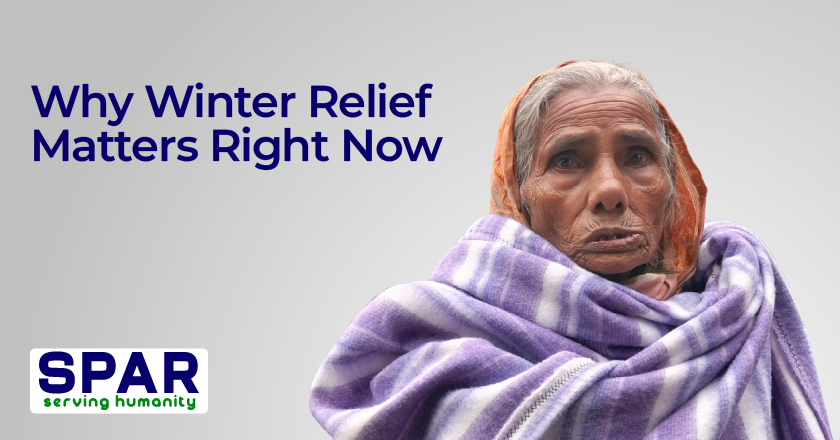
Every year, cold kills more people than floods or storms. The World Health Organization links low temperatures directly to respiratory illness, hypothermia, and cardiovascular deaths, especially in children under five and adults over sixty. Families living in tents, temporary shelters, or damaged homes face risks that permanent housing residents simply don’t. SPAR’s emergency relief work focuses on reaching these families before cold sets in, not after. The Islamic concept of preventing harm, called *dar’ al-mafasid*, places proactive action above reactive charity. That principle is why the timing of winter giving isn’t a preference. It’s a condition.
Key Facts About Winter Relief Most Donors Miss
Cold-related deaths are almost entirely preventable with early intervention. The World Bank estimates that poverty-related cold exposure affects over 800 million people globally, with the poorest households spending up to 30% of their income trying to stay warm. In displaced communities, that option doesn’t exist at all. Rohingya families in temporary settlements, Sudarian communities in conflict-affected zones, and Palestinian families in damaged homes face each winter with no buffer. A $30 USD emergency pack, delivered before temperatures drop, can cut cold-related illness by more than half. The gap isn’t resources. It’s timing.
What Types of Winter Relief Actually Reach Families?
Winter relief covers more than warm clothing. It includes blankets, fuel for heating, high-calorie food parcels, and waterproof shelter materials. According to UNICEF, families in displacement camps need all four to survive a cold season safely. A single item rarely works alone. Blankets without fuel leave families shivering through the night. Food without shelter leaves children exposed to respiratory illness. Real winter relief treats the season as one problem, not four separate ones. That’s why well-planned distributions bundle essential items and time them before temperatures hit their lowest point.
Clothing and Blanket Distributions
Warm clothing and blankets form the visible core of most winter relief efforts. But quality matters as much as quantity. A thin fleece blanket loses its value in sub-zero conditions. Thermal-grade blankets and layered clothing, sized correctly for children, can mean the difference between a child sleeping safely or waking sick. Rohingya families in temporary settlements, for example, often receive clothing donations that arrive after the coldest weeks have already passed. Timing a distribution even two weeks earlier can reduce cold-related illness significantly among children under five.
Food and Fuel Support
Cold weather increases the body’s caloric demand. According to the World Health Organization, caloric needs rise by up to 25% in cold conditions for people without adequate shelter. Families in poverty can’t absorb that gap. High-calorie food parcels, cooking fuel, and clean water are not secondary items in a winter distribution. They’re as urgent as blankets. Displaced Sudarian families and Palestinian families in damaged homes often face this combination of hunger and cold at the same time. Addressing both in one coordinated package is what separates effective winter relief from a partial response.
Who Is Most Vulnerable During Winter?
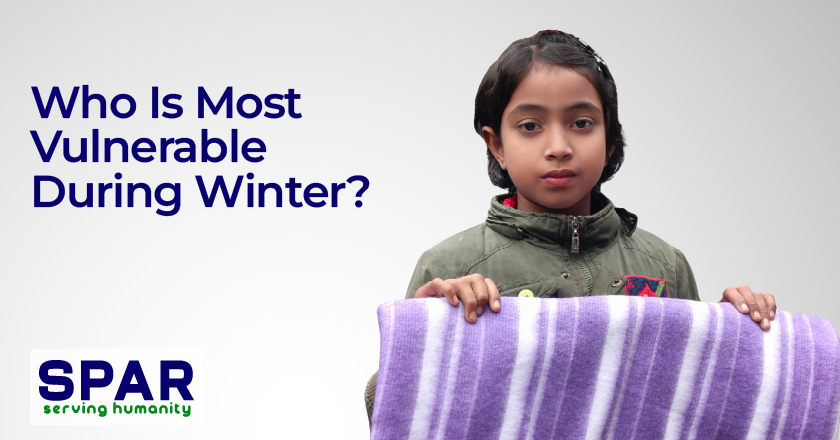
The most vulnerable people during winter are young children, elderly adults, and families in temporary or damaged housing. UNICEF identifies children under five as the highest-risk group for cold-related illness, followed closely by adults over sixty. Displacement multiplies that risk. A family in a concrete home with functioning heat faces a different winter than a family in a tarpaulin shelter with no floor insulation. The gap between those two situations isn’t income alone. It’s access to resources at the right moment.
Children Under Five
Cold kills children quietly. Pneumonia is the leading infectious cause of death in children under five globally, according to WHO data. Cold exposure is a primary trigger. Families in informal settlements often lack the means to keep their youngest children warm through the night. A single severe cold season can push a child into a cycle of illness that lasts months. Winter relief that reaches a family before the first freeze protects not just that week, but the child’s entire health trajectory through to spring.
Elderly Adults in Displaced Communities
Older adults in displacement face cold with fewer reserves. Their bodies regulate temperature less efficiently. Many have existing conditions like heart disease or respiratory illness that cold makes worse. In Rohingya communities and among Sudarian displaced populations, elderly adults are often overlooked in general distributions that prioritise children. Targeted outreach to older members of a community, with specific items like thermal underlayers and fuel, saves lives that standard distribution models miss.
Does the Timing of Winter Relief Actually Matter?
Yes. Timing is the single most important factor in whether winter relief saves lives. UNICEF and WHO both note that cold-related deaths spike in the first two weeks of a temperature drop. Distributions that arrive after that window address suffering but rarely prevent the worst outcomes. Communities that receive winter relief before temperatures fall see measurably lower rates of pneumonia, hypothermia, and cold-related hospital visits. The difference between early and late delivery is often as small as ten days. But those ten days carry the weight of an entire season.
Real change here rarely comes from a single large push. It comes from teams already present in a community when cold arrives, who know which households need help first. Season after season, that consistent presence is what makes the difference between life and death for the most exposed families.
What Winter Relief Means in Practice
Winter relief is not one event. It is a season-long commitment to the families most likely to be forgotten. WHO data shows cold-related deaths spike in the first two weeks of a temperature drop. That window is short. Teams already present in a community when cold arrives close that window fastest. Blankets, thermal clothing, and fuel reach people in time only when the supply chain is already built. Long-term field presence is what makes that possible. At SPAR, this is the foundation of how we work.
Why Early Presence Changes Everything
A team that arrives after the cold has already settled can ease suffering. But a team already there can prevent it. UNICEF notes that pneumonia, the leading cold-weather killer of children under five, is most preventable in the days before exposure peaks. Families who receive thermal items before the first freeze show lower rates of cold-related illness. The difference is not resources. It is readiness. Consistent, season-to-season presence builds that readiness where it matters most.
Who Still Gets Left Behind
Standard distributions reach the most visible households first. Elderly adults, families in remote areas, and displaced communities often fall outside that first wave. Targeted outreach, built on local knowledge, finds the people a general distribution misses. A thermal underlayer for an elderly man living alone costs little. The impact on his survival through a cold month is not small. Knowing he exists, and knowing where he lives, is what separates effective winter relief from a well-meaning exercise.
Behind every warm household this winter is a decision made months earlier. Someone chose to build a supply chain before the cold came. Someone mapped the households no one else was tracking. At SPAR, that quiet, consistent work is how we approach every season. The headlines move on. The need does not. See how this work continues.