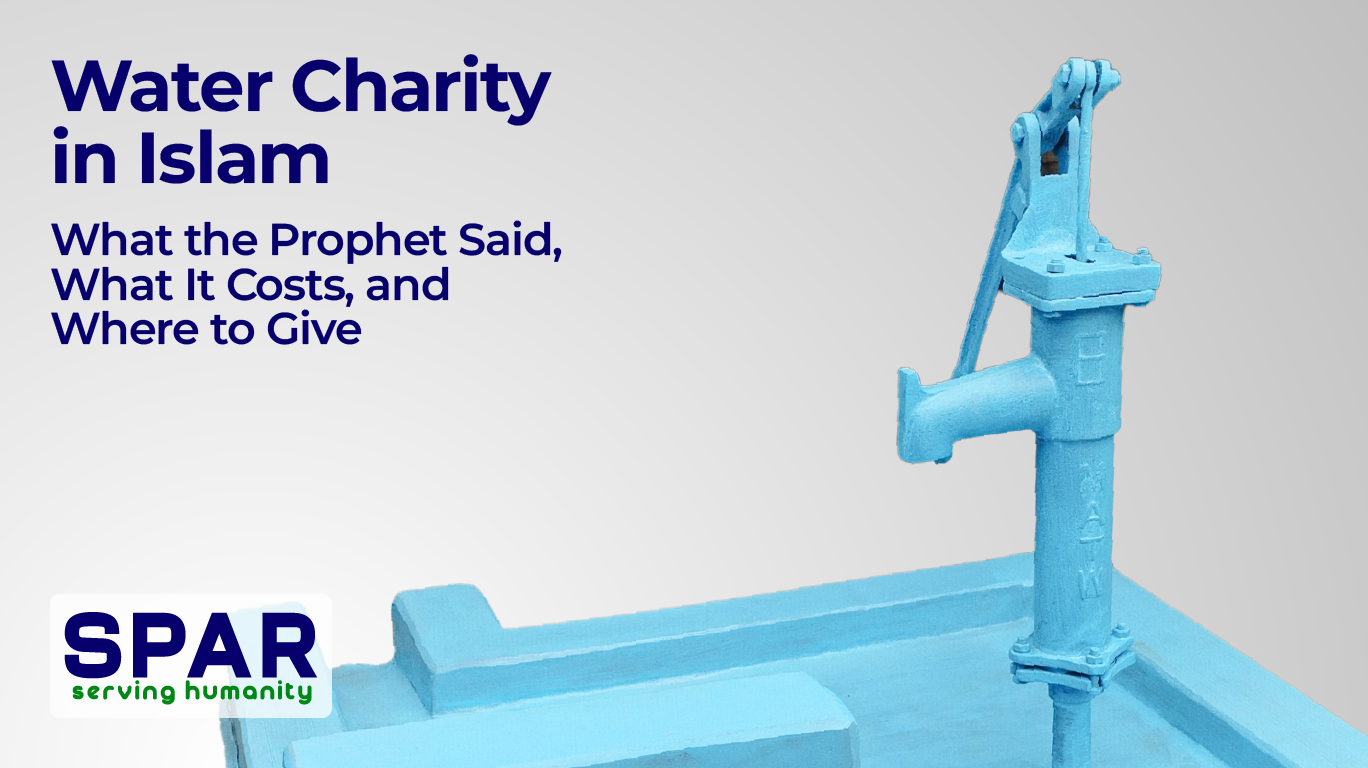
Giving water as charity is one of the most praised acts in Islam. The Prophet Muhammad ﷺ ranked it among the highest forms of Sadaqah Jariyah, meaning continuous reward that flows even after death. Unlike Zakat, which follows strict rules on amount and who must pay, water charity is open to every Muslim at any level of wealth. According to WHO, about 2 billion people still lack safe drinking water at home. Even $30 USD can give one family access for a full year. In 2026, that gap hasn’t closed.
Water Charity Islam: Quick Answer
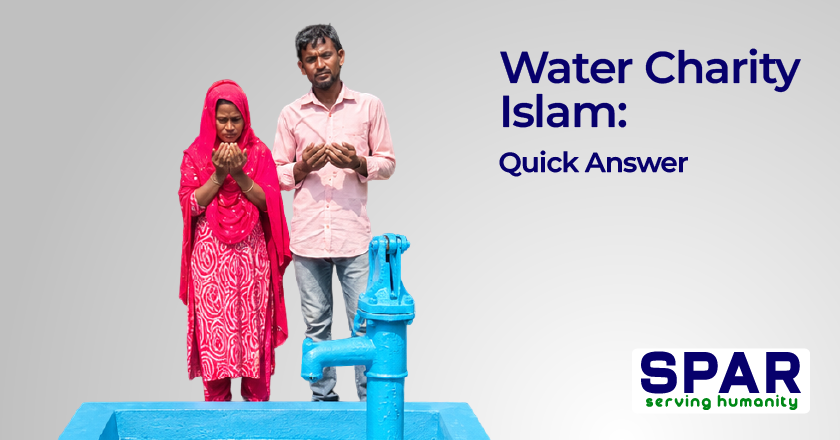
- What it is: A voluntary act of giving clean water to those in need, classed as Sadaqah Jariyah in Islamic teaching
- Who it applies to: Every Muslim, regardless of wealth, age, or location, can give water charity
- How much: No fixed minimum. A well can cost from $300 to $3,000 USD. A family’s annual water access costs about $30 USD
- When: Any time of year. Reward is considered ongoing as long as people drink from the source
- Where: Highest need areas include Bangladeshi villages, Somali communities, Sudarian towns, and Palestinian families
- Main rule: Water charity given on behalf of a deceased person still counts and earns reward for the donor, per Sahih Muslim
- Most common mistake: Many donors give water charity once and stop. Islamic teaching rewards those who build lasting sources, not one-time gifts
Why Water Charity in Islam Matters Right Now
Clean water isn’t just a health issue. It’s a faith issue. The Prophet ﷺ said giving water to a thirsty person is among the acts that earns the most reward from Allah. UNICEF data shows children in at-risk communities miss school because they spend hours collecting water each day. Girls are hit hardest. Families in Bangladeshi rural areas and Rohingya settlements still face this daily. It’s not abstract. You can see it in our ongoing water projects at SPAR. Water charity in Islam bridges a timeless religious obligation and a very real, current need.
Key Facts About Water Charity Islam: What Most People Don’t Know
Water charity has a unique place in Islamic law. Most Muslims know Zakat. Far fewer know that the Prophet ﷺ named water as one of three things where reward never stops, alongside knowledge shared and a righteous child who prays for you. This hadith appears in Sahih Muslim and has been cited by scholars including Imam al-Nawawi in his commentary. The World Bank estimates that waterborne disease costs low-income countries over $260 billion USD each year in lost productivity. Somali and Sudarian families in displaced areas face water costs that can eat up 20% of their daily income, according to UN-Water data. That’s the gap water charity fills.
What Forms Does Water Charity Islam Take?
Water charity in Islam takes several forms. Each one fits a different budget and intent. The most direct form is the well or borehole, where a donor funds clean water for an entire village. This is the classic sadaqah jariyah act. But smaller acts count too. Sharing a cup, fixing a broken tap, or funding a water filter for one family all carry reward. According to WHO, about 2 billion people still lack safe water at home. So the need matches every level of giving, from a few dollars to a full infrastructure project.
Single Wells vs. Long-Term Programs
One well can serve hundreds of families. But a single well is not always enough. Pipes crack. Pumps fail. Filters clog. Long-term water programs keep things running. They train local people to fix problems fast. They check water quality each season. This kind of steady work costs more up front but lasts far longer. The families we serve in our programs don’t just get water once. They get a system that holds.
Urban Water Charity vs. Rural Water Charity
Most water charity focuses on rural villages. That’s where the need is deepest. But Somali families in dense urban camps also face water shortages. Rohingya families in Cox’s Bazar often pay high prices for clean water each day. Urban water charity means pipes, tanks, and shared points. Rural water charity means wells, boreholes, and filters. Both are valid. Both save lives. The form changes. The reward does not.
Who Suffers Most From the Water Crisis?
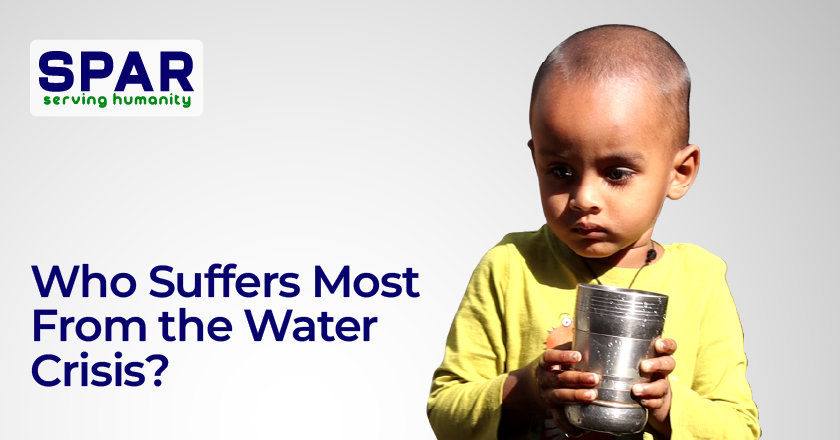
Children under five bear the heaviest cost. UNICEF reports that dirty water kills more children each year than bullets do. Girls aged eight to fourteen lose the most school time, spending hours each day collecting water. Bangladeshi families in flood-prone areas face a double threat: floods destroy wells, and then dirty floodwater spreads disease fast. Sudarian families in displaced camps face prices for water that can wipe out a day’s wages. The water crisis is not random. It hits the poorest families hardest, and it hits children first.
Common Mistakes in Water Charity Islam
Many donors give once and think the work is done. This is the most common mistake. A well built without follow-up can fail within months. A pump left without spare parts sits broken for years. The second mistake is ignoring water quality. Clear water is not always safe water. Arsenic, bacteria, and salt all hide in water that looks clean. According to WHO, some of the worst water-quality issues affect areas where wells look fine on the surface. Good water charity Islam means asking not just “is there water?” but “is the water safe?”
The One-Time Donation Problem
Real change here is rarely sudden. It comes from small, sustained efforts, season after season. A donor who gives $30 once does good. A donor who gives $30 every year, year after year, does something deeper. Consistent support lets field teams plan ahead. It lets them train locals, stock spare parts, and test water before problems grow. The communities we serve are slowly turning this around. But they need that quiet, continued attention from people far from the crisis to keep the work going.
How Water Charity Islam Connects to Zakat
Zakat and water charity overlap more than most Muslims realize. Zakat funds must go to specific groups listed in the Quran, including the poor and those in need. Where water is the primary cause of poverty, funding clean water directly serves Zakat’s purpose. Scholars like Ibn Uthaymeen have noted that essential needs, including clean water, fall within the spirit of obligatory giving. So a Muslim paying Zakat can, in many scholarly views, direct part of it toward clean water projects. Sadaqah covers the rest, with no cap and no end to the reward.
What Water Charity Islam Means for You Right Now
Clean water is not a luxury. It is the base of everything else: health, school, work, prayer, and life. WHO estimates that 2 billion people still lack safe water at home. Most of them live in regions where Muslim donors can make a real difference. Sadaqah jariyah through water is one of the most cited acts in Islamic tradition. The need is vast. The path is clear. Long-term, consistent attention to water programs is how real change takes hold.
Why Ongoing Support Matters More Than One Gift
A single gift opens a door. Steady support keeps it open. Field teams need to plan ahead. They need parts, testing kits, and trained locals on the ground. Without that, wells fall quiet and families go back to unsafe sources. The communities SPAR serves face this risk every season. Sustained attention, year after year, is what turns a working pump into a lasting change for the families who depend on it.
How Zakat and Sadaqah Work Together Here
Zakat covers the basic duty. Sadaqah covers everything beyond that. On water, the two can work side by side. Zakat reaches those in dire need, and unsafe water is one of the clearest signs of that need. Sadaqah fills the gaps: extra wells, repairs, water testing, and training. Used together, they fund not just a project but a way of life. That is the strength of water charity Islam when it is practiced with both intention and care.
Behind every working pump is a long line of people who chose to stay involved long after the headlines moved on. At SPAR, we are one of those quiet lines. The work across the regions we serve keeps going because of it. Wells do not last by chance. They last because someone, far from the crisis, decided this was worth their continued care. See how this work continues.