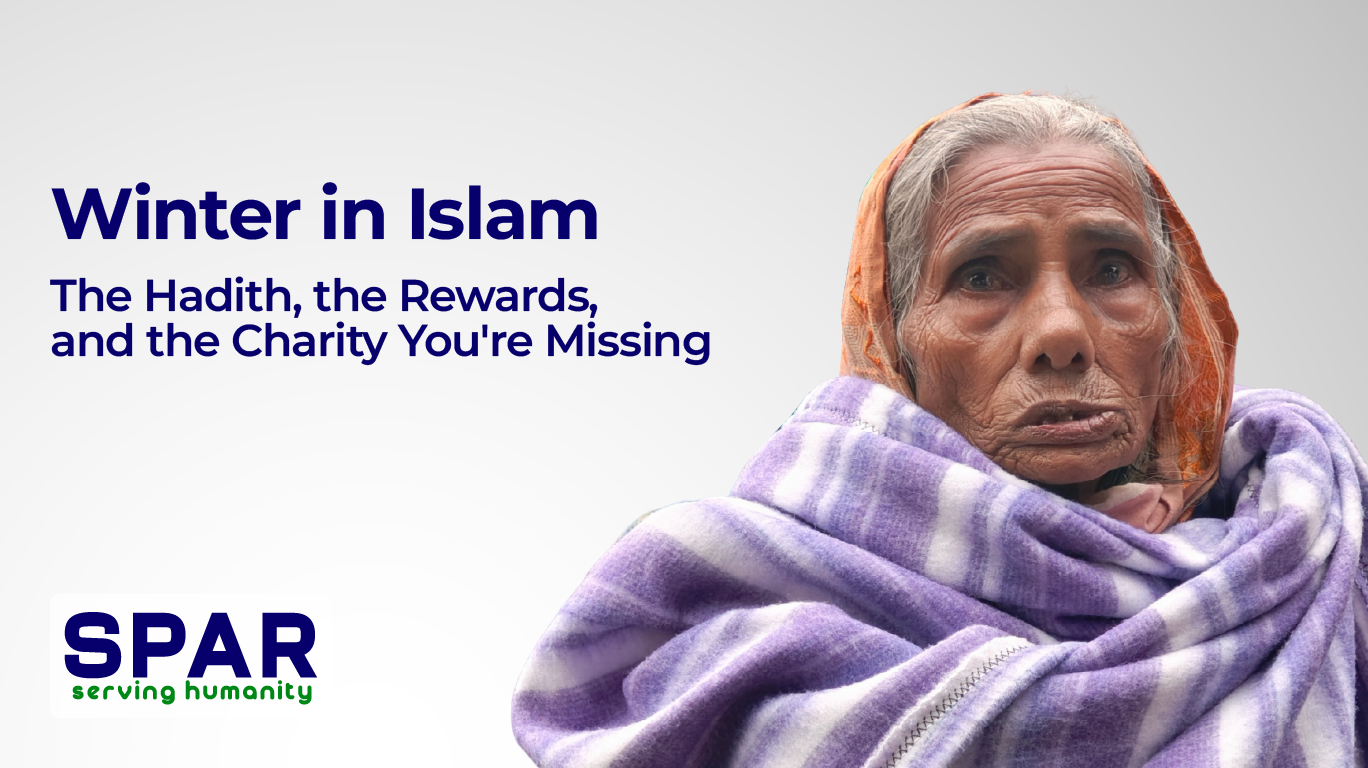
Winter in Islam is described as a gift to the believer, because its short days make fasting easier and its long nights allow more voluntary prayer. The Prophet Muhammad ﷺ called winter “the spring of the believer” (rabi’ al-mu’min), a phrase recorded in authenticated collections. This description separates winter from other seasons, which carry no such named blessing in the hadith literature. The Quran does not assign a single season to worship, but the Prophet ﷺ gave winter a specific spiritual rank. A believer who fasts in winter gains the full reward of a day’s fast with far less physical strain. In 2026, as Muslim communities across the northern hemisphere enter colder months, this teaching is worth revisiting.
Winter in Islam: Quick Answer
- What it is: A season the Prophet ﷺ called “the spring of the believer,” linked to easy fasting and long nights for prayer.
- Who it benefits: All Muslims who fast voluntary days or pray tahajjud, especially in northern-hemisphere winters with 10-to-16-hour nights.
- Fasting reward: A full day’s fast reward applies in winter because daylight hours shrink, reducing hunger and thirst without reducing the merit.
- Key hadith: The Prophet ﷺ described winter as rabi’ al-mu’min (spring of the believer), reported in Tirmidhi and authenticated collections.
- Night prayer: Long winter nights extend the tahajjud window, making voluntary night prayer accessible even for those with early morning commitments.
- Main rule: No separate winter-only worship is required. Winter amplifies the reward of existing practices, it doesn’t replace them.
- Most common mistake: Many Muslims treat winter as spiritually inactive, not knowing the Prophet ﷺ ranked it as the believer’s most productive season for worship.
Why Winter in Islam Matters Right Now
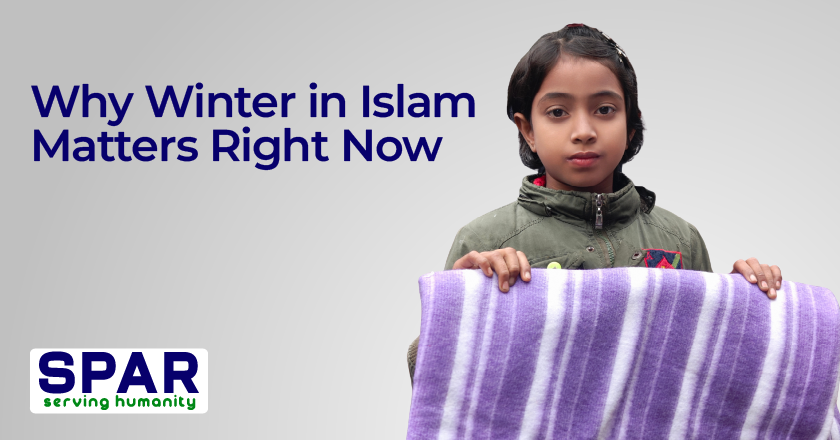
Winter matters spiritually because it removes one of the hardest parts of fasting: thirst. Short daylight hours, sometimes as few as eight hours in northern countries, mean a fasting Muslim goes without food or water for far less time than in summer. According to Pew Research, over 800 million Muslims live in Europe, North America, and Central Asia, where winter days are short. That’s a huge share of the ummah placed, by geography, in the season the Prophet ﷺ praised. SPAR’s work reaches communities where winter also means real hardship, from Bangladeshi families facing cold nights without heating to Rohingya families in exposed shelters. You can read about our seasonal relief work at SPAR to see how spiritual seasons and practical need connect. Winter in Islam isn’t only a personal opportunity. It’s a call to act.
Key Facts About Winter in Islam Most People Don’t Know
The Arabic phrase rabi’ al-mu’min, meaning “the spring of the believer,” comes from a hadith recorded by Imam at-Tirmidhi. Scholars like Imam Ibn Rajab al-Hanbali wrote at length about the virtue of this season in his work “Lata’if al-Ma’arif.” Ibn Rajab noted that winter combines two rare gifts: the chance to fast without suffering and the chance to stand in night prayer without losing sleep. Classical scholars also noted that the Quraysh used to mark two annual trade seasons, the “rihlat al-shita'” (winter journey) and the summer journey, referenced in Surah Quraysh (106:2). This shows winter was already a recognised season in the Arab world when Islam arrived. What Islam did was reframe it, not as a trade season, but as a season of worship and reward.
What Did Classical Scholars Say About Winter in Islam?
Classical scholars didn’t just mention winter in passing. They wrote about it with real care. Imam Ibn Rajab al-Hanbali dedicated a full chapter to it in “Lata’if al-Ma’arif,” his work on the virtues of seasons and days. He called winter a gift given to the believer twice over: short days make fasting easy, and long nights make prayer possible without exhaustion. Imam al-Nawawi also noted that acts of worship in hard conditions carry greater weight. These weren’t casual opinions. They were grounded in hadith and careful reasoning about how physical ease can open the door to spiritual gain.
How Did Ibn Rajab Frame the Winter Opportunity?
Ibn Rajab wrote that the wise believer treats seasons the way a farmer treats rain. You don’t ignore rain when it comes. You use it. He applied this to winter directly, saying the believer who wastes the long nights of winter misses something that won’t return for another year. This framing matters because it shifts winter from a passive experience into an active choice. You’re not just waiting for spring. You’re working inside a window that closes.
Did the Companions Treat Winter Differently?
Early Muslim scholars recorded that some of the Companions of the Prophet (peace be upon him) used to welcome winter out loud. Ibn Mas’ud reportedly said: “Welcome, winter! Blessings descend in it, prayers lengthen in it, and fasting becomes easy.” This report is widely cited in classical literature on the seasons of worship. It shows that recognising winter in Islam as a season of reward wasn’t a later scholarly invention. It was part of how the early community understood the calendar of faith.
Common Misconceptions About Winter in Islam
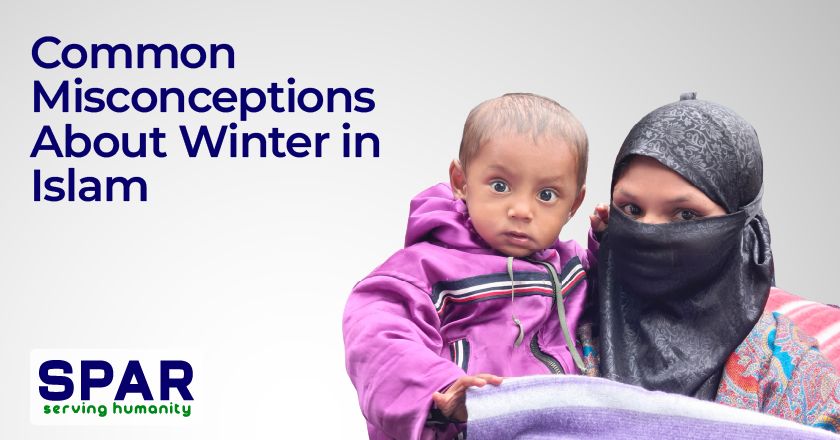
The biggest misconception is that winter is spiritually neutral, just weather. Many Muslims treat winter as something to endure until Ramadan arrives. But the hadith recorded by Imam at-Tirmidhi explicitly calls winter “the spring of the believer,” which flips that view completely. A second misconception is that these seasonal rewards only apply to people in cold climates. Scholars have noted that the principle holds wherever the seasons bring longer nights and shorter days. The underlying logic is about opportunity, not temperature. Wherever winter creates easier conditions for worship, the reward applies.
Who Feels the Weight of Winter Most?
Winter in Islam is a season of reward for those with shelter and warmth. But for millions without either, it’s something harder. According to UNICEF, over 340 million children worldwide live in extreme poverty. Many of them face winter nights without heating, warm clothes, or enough food. Bangladeshi families in flood-affected areas, Rohingya families in Cox’s Bazar, and Somali children in displaced settlements all share one thing: winter arrives the same for everyone, but its cost lands unevenly. Real change for these families is rarely sudden. It comes from small, consistent efforts. Season after season.
How Does Winter in Islam Connect to Sadaqah?
Winter creates a direct connection between personal worship and communal responsibility. The Prophet Muhammad (peace be upon him) said: “The believer’s shade on the Day of Resurrection will be his charity.” This hadith, recorded in Musnad Ahmad, links giving with protection, shade against heat in the next life. Winter makes that link visible. A warm coat, a meal, a blanket: these are sadaqah made physical. For many Muslims, winter is when the abstract duty to give stops being abstract. The cold outside makes the cost of inaction clear. Scholars like Imam al-Nawawi consistently taught that sadaqah given in response to visible need carries both material and spiritual weight.
What Winter in Islam Teaches Us Today
Winter in Islam is not just a season. It is a test of how we treat the most exposed among us. UNICEF estimates over 340 million children live in extreme poverty, many without warm clothes or shelter when temperatures drop. Classical scholars like Imam al-Nawawi taught that charity given in times of visible suffering carries a distinct weight. The ummah has always understood winter as a call to act, not to wait. Families across the regions where SPAR works feel this every year. The cold does not pause.
What Should Muslims Focus on During Winter?
Focus on the needs closest to you first, then extend outward. The Prophet Muhammad (peace be upon him) said that the believer’s example is like one body: when one part suffers, the rest responds. Winter makes that suffering visible. Warm clothing, food, and shelter are not luxuries for the poor. They are urgent needs. Muslims who treat winter as a season of increased giving align their actions with that prophetic model.
How Does the Islamic Calendar Shape Winter Observance?
The Islamic calendar is lunar, so winter does not fall in the same Hijri months each year. But the values attached to giving do not depend on a fixed date. Scholars like Ibn al-Qayyim wrote that acts of sadaqah carry reward in every season. The obligation to care for the poor, the orphan, and the traveler holds across all twelve months. Winter only makes those obligations more urgent, not more narrow.