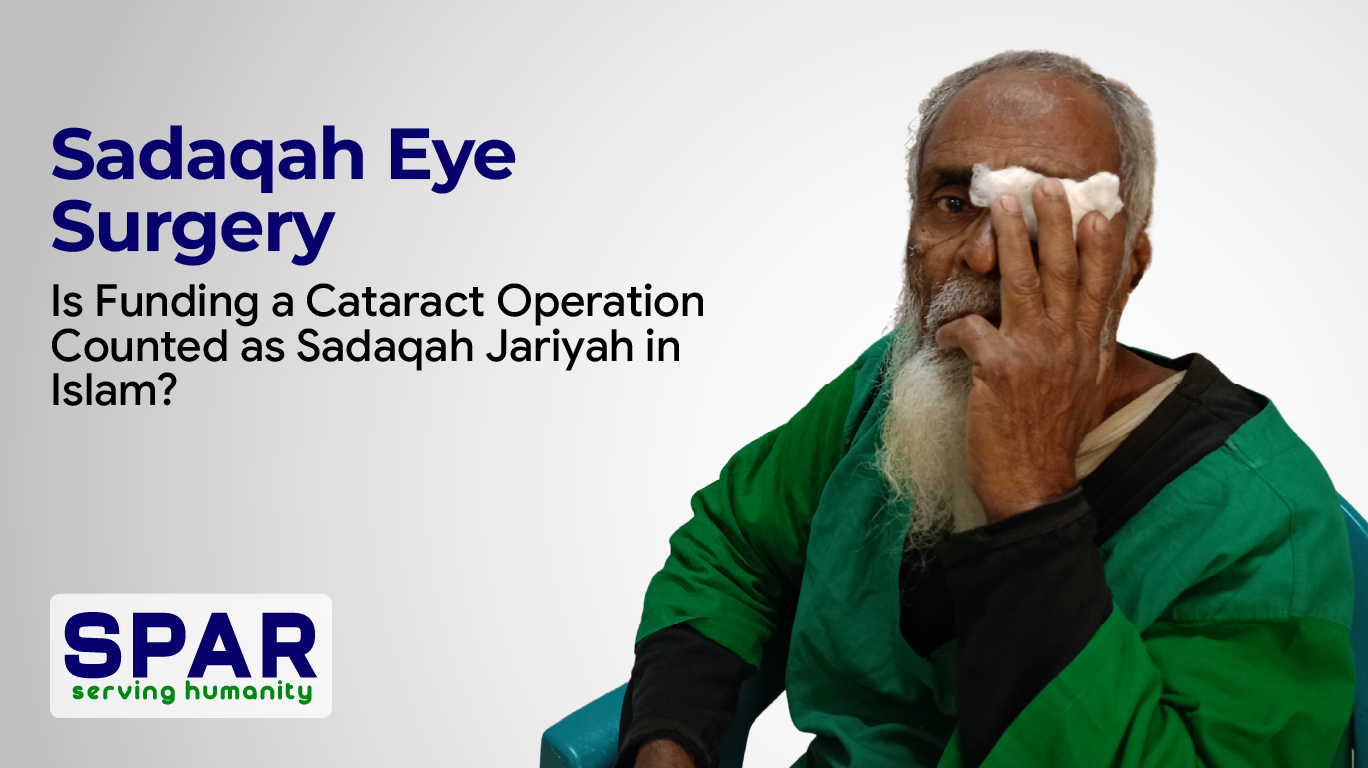
Sadaqah eye surgery is the act of paying for a blind or visually impaired person’s cataract or vision procedure as voluntary charity. It differs from zakat because it carries no minimum threshold and no fixed rules on who may give. According to the World Health Organization, at least 2.2 billion people worldwide live with vision impairment, and roughly half of those cases are preventable or treatable. A single cataract operation costs as little as $25 to $50 USD in many low-income countries. That price can return full sight to a person in under an hour.
Why Sadaqah Eye Surgery Matters Right Now
Preventable blindness is one of the most solvable problems in global health. Yet millions of people in low-income communities across South Asia, sub-Saharan Africa, and the broader Muslim world still lose their sight to conditions that cost less to fix than a phone bill. The Prophet Muhammad (peace be upon him) said that charity given in secret extinguishes sins as water extinguishes fire. Restoring someone’s sight is among the most personal forms of that giving. Families can’t work, children can’t study, and elders lose their independence when cataract blindness goes untreated. SPAR’s eye care and vision programs connect donors with communities where this gap is widest. It’s one of the most direct ways a donor can trace their sadaqah to a specific, life-changing outcome.
Key Facts About Sadaqah Eye Surgery
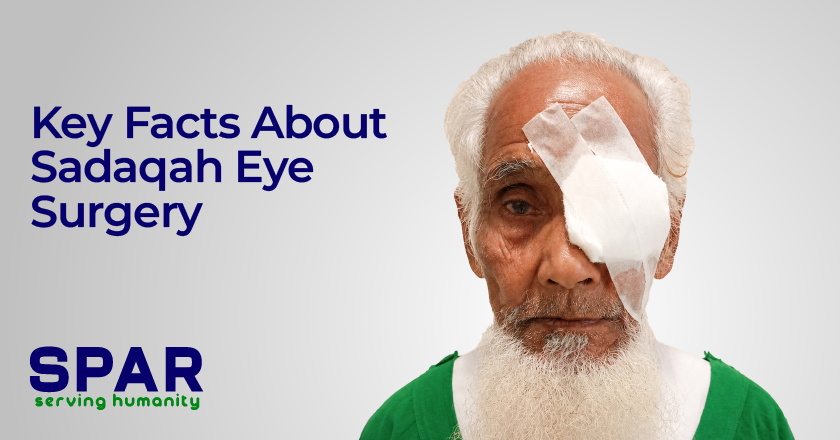
Cataract surgery is the single most cost-effective medical procedure measured by years of healthy life restored, according to data published by the World Bank and IHME. The WHO estimates that 90% of visually impaired people live in low-income countries. In Bangladesh alone, the Fred Hollows Foundation has documented cataract prevalence rates above 50% among adults over 50 in rural areas. A standard manual small-incision cataract surgery takes about 15 minutes and costs between $25 and $100 USD at subsidised eye camps. For many Bangladeshi, Somali, and Pakistani families, that amount is months of savings. That’s why donor-funded sadaqah eye surgery programs fill a gap that public health systems can’t always close on their own. The reward in Islam for restoring someone’s sight is described in classical scholarship as among the highest forms of sadaqah jariyah, because the benefit continues for as long as the person can see.
Who Is Most Affected by Preventable Blindness?
Preventable blindness falls hardest on older adults in low-income communities. According to WHO data, adults over 50 account for more than 80% of all blindness worldwide, and most cases trace back to untreated cataracts. Rural communities carry the heaviest burden. Distance to a clinic, cost of travel, and lack of information about treatment all stack against them. Women face greater risk than men, partly because they live longer and partly because they access healthcare less often. For Bangladeshi, Somali, and Pakistani families, these gaps in care have persisted across generations.
Why Women Carry a Disproportionate Burden
Women make up roughly 55% of all blind people globally, according to WHO. Cultural barriers often stop women from seeking care alone. Family resources go elsewhere. Many don’t know that a short procedure could fully restore their sight. When sadaqah eye surgery programs reach these communities, women are often the first to benefit from simple, accessible outreach. And when a mother or grandmother regains her sight, the effect on her family runs deep.
Why Rural Populations Wait Longest
Distance is the most stubborn barrier. A family living far from a district hospital may need a full day of travel just to reach an eye clinic. Many can’t afford to lose that day of work. Sadaqah-funded mobile eye camps bring the surgery to the patient instead. This single shift, from clinic-based to community-based care, has changed outcomes in places where waiting lists once stretched for years.
Common Misconceptions About Sadaqah Eye Surgery
Many donors assume eye surgery is complicated, expensive, or risky for elderly patients. None of these are fully accurate. Manual small-incision cataract surgery is one of the safest operations in modern medicine. UNICEF and WHO have both endorsed it as a cost-effective intervention for low-income settings. The procedure takes about 15 minutes. Recovery is fast. Most patients see results within 24 hours. The real barrier isn’t medical complexity. It’s funding, logistics, and trust within communities that have been underserved for a long time.
“It Only Helps Older People”
This is a common assumption. But not all preventable blindness is cataract-related. Children suffer from corneal disease, vitamin A deficiency, and trauma-related vision loss. Sadaqah eye surgery programs run by committed field teams often screen whole families, not just elders. When a child’s vision problem is caught early, the window for effective treatment is much wider. The Islamic tradition of caring for the vulnerable doesn’t sort by age.
How Sadaqah Eye Surgery Connects to a Broader Islamic Duty
Restoring sight is not just a medical act. It’s an act of worship. The Prophet Muhammad (peace be upon him) taught that removing harm from someone’s path counts as sadaqah. Classical scholars, including Imam al-Nawawi in his commentary on Sahih Muslim, described acts that relieve suffering as among the highest expressions of this giving. Eye surgery removes a profound harm, one that limits work, prayer, family life, and independence. Donors who fund these procedures don’t just give money. They participate in something the tradition has long called a form of ongoing mercy.
The Role of Quiet, Consistent Support
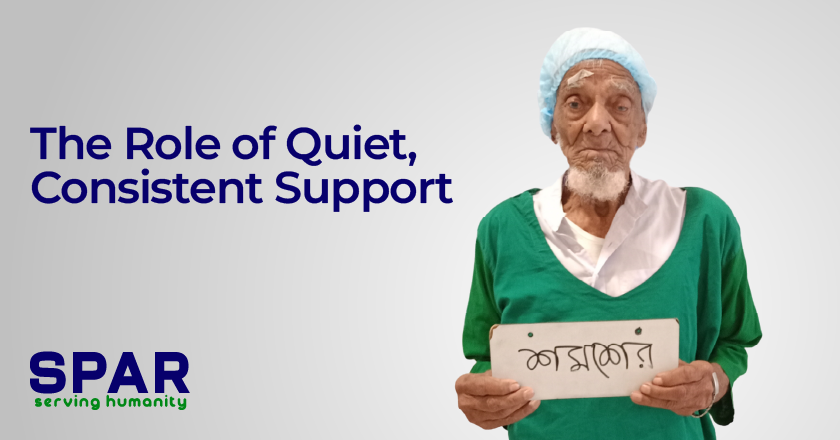
Sadaqah eye surgery programs don’t run on single donations. They depend on people who return, year after year, to keep the funding alive. Mobile eye camps need fuel, equipment, trained staff, and follow-up care. One surgery is a moment. A program is a structure. SPAR’s work across the communities it serves reflects this long view. Real change here is rarely sudden. It comes from small, sustained efforts, season after season. That’s what keeps the lights on for the families waiting at the edge of the village when the medical team arrives.
What Sadaqah Eye Surgery Means for the Ummah Today
Sight loss is one of the most preventable crises the Muslim world faces. According to WHO, over 90% of the world’s visually impaired people live in low-income communities. Most cases are treatable. Cataracts, the leading cause of blindness globally, can be corrected in under 30 minutes with a simple procedure. Sadaqah eye surgery turns this fact into action. It connects the Islamic duty to relieve harm with a medical reality: one surgery, one person, one life restored. The ummah has the means. The need is real and it is now.
Why Cataract Surgery Is the Starting Point
Cataracts cause over half of all preventable blindness worldwide, according to WHO data. A person with cataracts loses the ability to work, to read Quran, to pray with full awareness of their surroundings. Surgery costs as little as $30 in some field settings. That low cost is what makes sadaqah eye surgery one of the most efficient acts of charitable giving available to Muslims today. Restoring one person’s sight can restore their whole livelihood.
Who Carries This Work Forward
Programs like the ones SPAR runs depend on consistent, structured effort. Mobile eye camps need trained surgeons, transport, equipment, and follow-up teams. A single camp visit may serve dozens of patients. But it takes months of planning and sustained funding to make that visit happen. The families in the communities SPAR serves do not need sympathy. They need a system that shows up for them reliably, season after season.
Behind every restored pair of eyes is a long chain of quiet decisions. Someone chose to fund a camp. Someone trained a surgeon. Someone drove the equipment to a remote village at dawn. At SPAR, this is what the work looks like, not headlines, but logistics, care, and follow-through. The ummah’s capacity to heal is real. It only needs the right channels to flow through. See how this work continues.