
Orphanages in Bangladesh are residential care facilities that house and support children who’ve lost one or both parents, or whose families can’t provide basic care. Unlike Western models, most Bangladeshi orphanages run under Islamic charity principles, where donors fund food, shelter, and education directly. According to UNICEF, Bangladesh has roughly 1.5 million registered orphans, but fewer than 15% receive formal institutional support. Children from the poorest rural districts make up the largest share of residents. The key distinction: many children in these facilities still have a surviving parent but live in extreme poverty. That single fact changes how effective care programs are designed and measured.
Orphanages in Bangladesh: Quick Answer
What it is: Residential facilities in Bangladesh caring for orphaned or vulnerable children through Islamic charity and government frameworks.
Who it applies to: Children who’ve lost one or both parents, or come from families earning below $2 USD per day.
How much: Monthly sponsorship for one child typically costs $30 to $50 USD, covering food, shelter, and schooling.
When: Need peaks after monsoon flooding (June to October), when displacement separates families.
Where: Highest concentration in northern and coastal Bangladeshi districts, including flood-prone rural areas.
Main rule or exception: Many residents are “social orphans” — a living parent exists but cannot provide care due to poverty or illness.
Most common mistake: Donors assume “orphan” means both parents are dead. In Bangladesh, most sponsored children have at least one living parent.
Why Orphanages in Bangladesh Matter Right Now
Bangladesh faces one of the largest child vulnerability gaps in South Asia. UNICEF data shows that nearly 3.7 million Bangladeshi children live without adequate parental care, yet formal support systems reach only a fraction of that number. Seasonal flooding, early parental death from treatable illness, and extreme rural poverty push children into care facilities faster than funding arrives. You can see the scale of this need reflected in our orphan sponsorship program, which works across Bangladeshi communities where family income collapses after a single crisis. The gap between need and resource isn’t narrowing. It’s growing. That makes sustained, structured giving more important than ever in 2026.
Key Facts About Orphanages in Bangladesh Most People Get Wrong
Bangladesh’s orphan care system isn’t a single network. It’s a mix of government-registered homes, madrasa-linked facilities, and NGO-run programs operating under very different standards. The World Bank notes that child poverty in Bangladesh remains concentrated in the Char and Haor regions, where seasonal flooding destroys livelihoods each year. Most Islamic orphanages in Bangladesh operate on a model where community donations cover 80% or more of running costs, with no reliable state subsidy. That makes donor consistency the single biggest factor in whether a child stays enrolled in school. Without it, children drop out. Many never return.
What Types of Orphanages Operate in Bangladesh?
Bangladesh runs three distinct models of orphan care. Government-registered homes fall under the Department of Social Services. Madrasa-linked facilities operate through mosque networks and Islamic charitable trusts. NGO-run programs work independently, often funded by international donors. Each model serves a different child profile. Government homes tend to house older children. Madrasa facilities often take in younger children from deeply rural families. NGO programs focus on education continuity and vocational training. According to UNICEF, community-based care consistently produces better long-term outcomes than institutional care alone, which is why the most effective Bangladeshi orphanages blend both approaches.
Who Do These Facilities Primarily Serve?
Most orphanages in Bangladesh serve children aged five to fifteen. Many are not full orphans. A large share are “social orphans,” children with one surviving parent who cannot afford food, shelter, or school fees. UNICEF data shows that poverty, not death, drives most child placements in South Asian care facilities. Boys and girls enter at roughly equal rates, though girls face greater barriers to reintegration later. Children from Char and Haor regions, where flooding erases family income each monsoon, make up a significant share of new arrivals every year.
What Standards Do These Facilities Follow?
The Bangladesh Department of Social Services sets minimum registration standards. These cover staff ratios, sleeping space, and food provisions. But enforcement is uneven. Rural facilities operate with far less oversight than urban ones. Many madrasa-linked homes run entirely on community trust and donor reputation. The absence of a unified inspection framework means quality varies sharply between facilities. Some homes provide strong education and healthcare. Others struggle to meet basic nutritional needs. Understanding this gap is important for anyone trying to direct support toward facilities that genuinely serve children well.
What Are the Most Common Misconceptions About Orphanages in Bangladesh?
Most people assume orphanages in Bangladesh are last resorts, places of poverty and despair. The reality is more complex. Many Bangladeshi orphanages function as community anchors. They provide consistent schooling, meals, and Islamic education that families in crisis simply cannot offer. The bigger misconception is that institutional care always harms children. Research from the Lancet shows that quality of care, not the care setting itself, determines a child’s development. The worst outcomes come from underfunded, unstable facilities, not from orphan care as a practice. The best outcomes come from facilities with consistent resources and trained, committed staff.
How Does Poverty Drive Children Into Orphanages in Bangladesh?
Poverty is the dominant driver. According to the World Bank, about 18 percent of Bangladeshis still live below the national poverty line, with rural rates far higher. A single crisis, a father’s death, a mother’s illness, a flood that destroys a harvest, can collapse a family’s income overnight. When that happens, Bangladeshi families often have no savings, no insurance, and no state safety net to catch them. Orphanages fill that gap. They’re not replacing families. They’re holding space until families can recover. But recovery takes time. And in that gap, children need continuity. They need school. They need food, every day. Real change here is rarely sudden. It comes from small, sustained efforts, season after season.
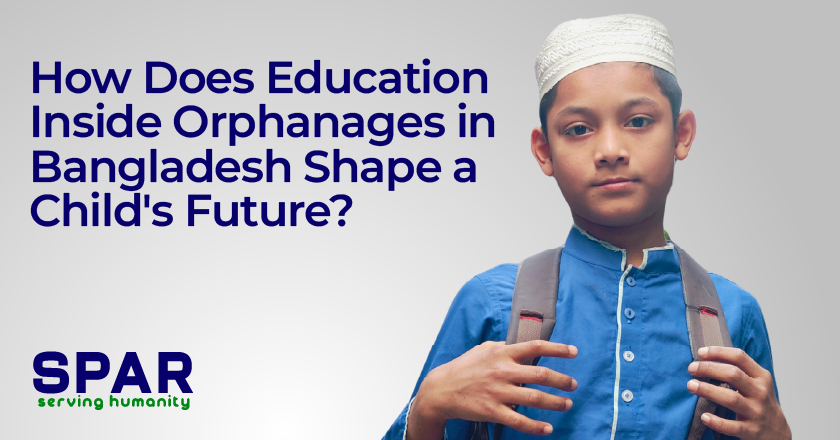
How Does Education Inside Orphanages in Bangladesh Shape a Child’s Future?
Education is the single most powerful factor in breaking the cycle. Bangladeshi children who stay in school past age twelve are far less likely to return to poverty as adults. UNESCO data shows that each additional year of schooling raises a child’s future earnings by about ten percent. Orphanages that fund school enrollment, uniforms, and exam fees give children a genuine exit from the cycle their parents couldn’t escape. Facilities that focus only on shelter, without education, produce a different outcome. Children age out at eighteen with no skills, no certificates, and no path forward. The difference between these two models often comes down to one thing: consistent, long-term funding.
What the Future of Orphanages in Bangladesh Depends On
Orphanages in Bangladesh are only as strong as the networks behind them. UNICEF estimates roughly 4.8 million children in Bangladesh have lost one or both parents. Most facilities run on thin margins. Without steady backing, staff leave, meals get cut, and school enrollment drops. The gap between a child who finishes school and one who doesn’t often traces back to one thing: whether someone stayed involved long enough to matter. Short-term attention helps. Long-term commitment changes lives.
Why Consistent Support Matters More Than One-Time Help
One donation opens a door. Consistent involvement keeps it open. A child entering an orphanage at age seven needs school fees, meals, and care for at least a decade. According to UNESCO, each additional year of schooling raises a child’s future earnings by around ten percent. That math only works if support continues year after year. Facilities that receive steady backing retain trained staff. Children in those facilities stay enrolled, pass exams, and age out with real skills.
What Good Orphan Care in Bangladesh Actually Looks Like
The best facilities in Bangladesh combine shelter with structured education, health checks, and emotional care. They keep family links alive where possible. They track each child’s progress. They plan for what happens at eighteen. UNICEF and child welfare researchers both point to the same model: small group care, qualified caregivers, and school integration. That model costs more upfront. But it produces adults who can work, earn, and support their own families. The cycle ends there.
Behind every child who finishes school is a long line of people who chose to stay involved. They didn’t make headlines. They just kept showing up. At SPAR, that kind of quiet, sustained work is what we do across the communities we serve. The need in Bangladesh is real, and it doesn’t pause between seasons.