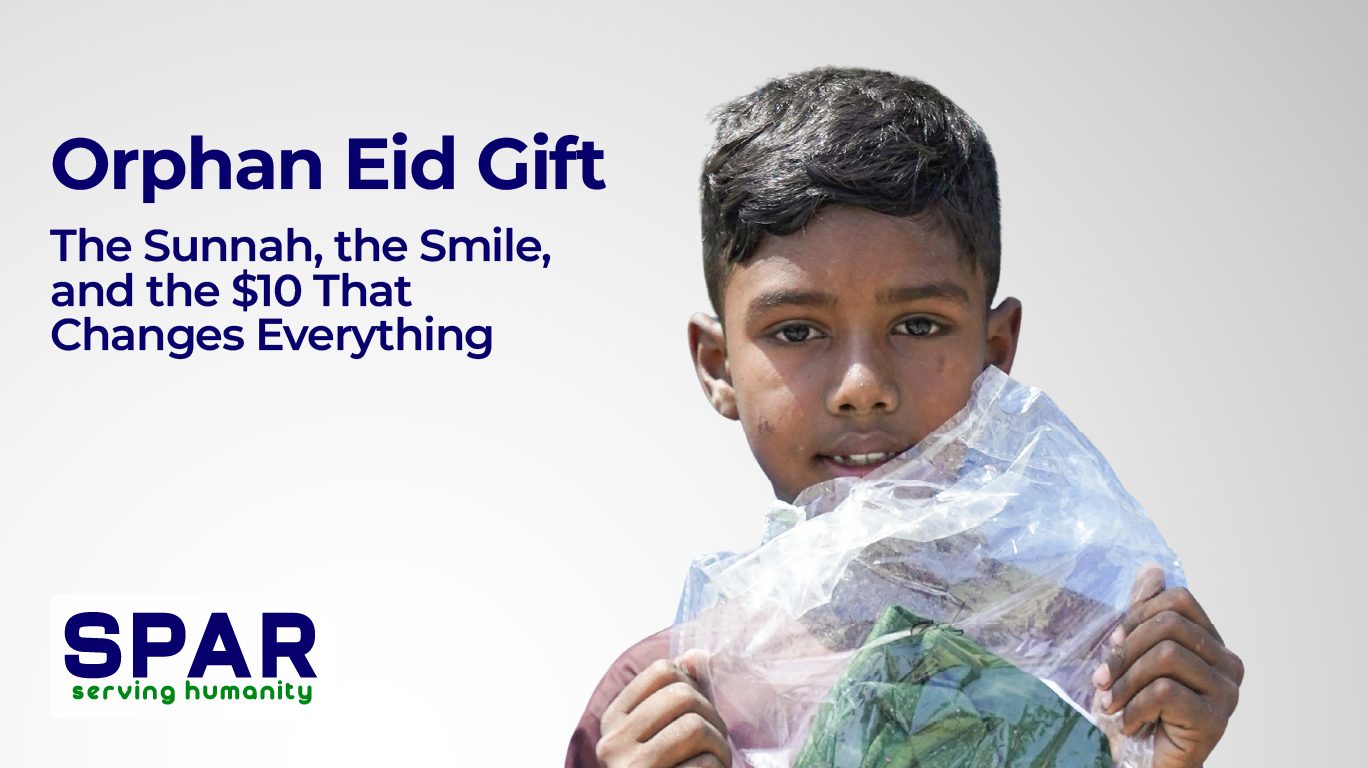
An orphan Eid gift is a voluntary act of charity given to a fatherless child on Eid al-Fitr or Eid al-Adha, rooted directly in prophetic practice. It’s not Zakat, and it’s not Fitrah. Those are obligations. An orphan Eid gift is sadaqah, given freely, specifically so a child doesn’t feel invisible on the day every Muslim celebrates. UNICEF estimates 140 million children worldwide qualify as orphans. As little as $10 to $20 USD can cover new clothes, a meal, and a small gift for one child. The timing matters: it must reach the child before Eid morning prayers to mirror the Sunnah properly.
Orphan Eid Gift: Quick Answer
- What it is: A voluntary Eid gift given to a fatherless child so they can celebrate alongside other Muslim children.
- Who it applies to: Any Muslim with means to give; benefits children who’ve lost their fathers, aged 0–18.
- How much: No fixed amount. Most programs set 10–30 USD per child as the minimum meaningful gift.
- When: Before Eid morning salah on Eid al-Fitr or Eid al-Adha, ideally the night before.
- Where: Globally practiced. Orphan Eid gift programs run across Bangladeshi, Palestinian, Somali, and Rohingya communities.
- Main rule: It’s sadaqah, not Zakat. It can’t substitute for Zakat al-Fitr or Qurbani obligations.
- Most common mistake: Donors give after Eid ends. The gift loses its prophetic timing and much of its emotional impact for the child.
Why Orphan Eid Gift Matters Right Now
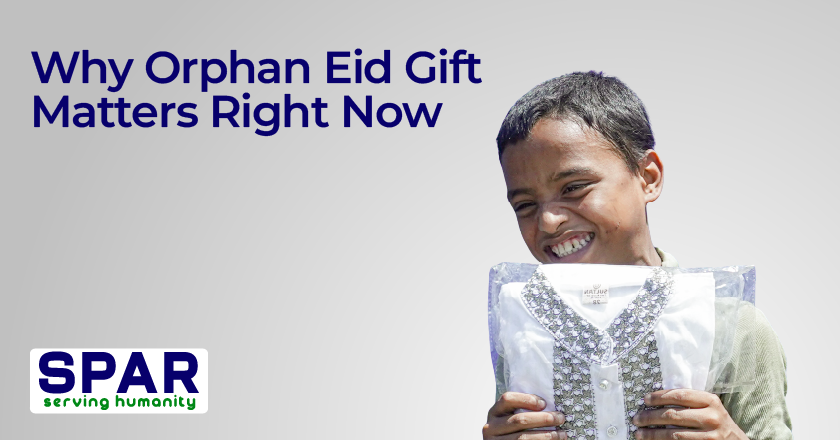
Eid is the one day Muslim children expect joy. But for an orphan, that expectation can become a reminder of what’s missing. The Prophet Muhammad ﷺ responded to this pain directly. He is reported to have stroked the heads of fatherless children before Eid prayers and ensured they received gifts before the celebration began (Shu’ab al-Iman, al-Bayhaqi). UNICEF reported in 2021 that orphaned and separated children face measurably higher rates of depression, food insecurity, and school dropout. A single Eid gift doesn’t fix poverty. But it tells a child they belong to the ummah. You can see how our orphan sponsorship program extends that belonging well beyond a single day, with sustained support for families through every season.
Orphan Eid Gift: What Most People Don’t Know
The gift isn’t just charity. It’s a form of emotional Zakat for a child’s dignity. Ibn al-Qayyim wrote that sadaqah given at moments of communal joy carries a multiplied spiritual weight, because its impact is felt immediately and personally. According to a 2022 World Bank report, children in low-income households experience Eid as a period of stress when they can’t match their peers’ new clothes or food. That stress compounds grief for orphans. Giving before Eid morning, not after, is the Sunnah-consistent timing, and it’s what separates a meaningful orphan Eid gift from a late donation that arrives after the moment has passed. In communities across Bangladeshi villages and Rohingya refugee settlements, this one act can define a child’s entire memory of that year’s Eid.
Does the Size of an Orphan Eid Gift Actually Matter?
The size matters less than the timing and the thought behind it. UNICEF notes that children in poverty measure belonging through comparison with peers. A small, well-chosen gift given before Eid prayer carries more weight than a large sum arriving a week later. What orphaned children remember isn’t the price tag. They remember whether someone thought of them at all. In many communities, a new outfit, a small toy, or a $10 meal package can mark the line between a child feeling seen and a child feeling forgotten on the most communal day of the Islamic year.
What Counts as a Meaningful Gift?
A meaningful orphan Eid gift covers at least one visible, peer-comparable need. Clothes are the most cited item across cultures. In most Bangladeshi and Somali communities, a new set of Eid clothes costs between $8 and $15. Food packages for a family of four run about $20 to $30. A small Eid envelope with cash, common in many Muslim cultures, costs whatever the giver decides. The key is that the child can participate visibly in Eid, not observe it from the outside.
Does Giving Money Directly Work?
Cash gives a family choice. But for orphaned children without a stable guardian, direct cash can create risk. Most programs channel gifts through trusted caregivers or local workers. This keeps the child safe and makes sure the gift reaches its purpose. Indirect giving through a structured program often delivers more than well-meaning cash passed hand to hand.
Who Needs an Orphan Eid Gift Most
The children who need an orphan Eid gift most are those without a male guardian and without a stable income source at home. According to the World Bank, households led by widowed mothers in low-income regions spend up to 30% less on children during festive periods than two-parent households. That gap is most visible at Eid, when social spending peaks. Children aged 5 to 12 are the most affected. They’re old enough to notice the difference between their Eid and their classmates’ Eid, but too young to process it as an economic fact rather than a personal one. Palestinian, Rohingya, Somali, and Bangladeshi communities with high rates of conflict-related bereavement see the largest need.
Common Mistakes People Make With Orphan Eid Gifts
Most mistakes come from good intentions with poor timing. Sending a gift after Eid morning has passed means the child spent the whole celebration without it. Buying culturally mismatched items, like non-halal food items or toys from outside the child’s cultural context, can also fall flat. Another common error is routing gifts through too many intermediaries, where delays mean the gift arrives late or not at all. Givers who act through structured programs with local field teams almost always see better results. The teams in the regions where SPAR works understand what children in each community actually use and wear. That local knowledge makes the difference.
How an Orphan Eid Gift Connects to Long-Term Wellbeing
A single orphan Eid gift is a short action with a long shadow. Research cited by UNICEF shows that positive emotional experiences during childhood celebrations help anchor a child’s sense of identity and group belonging well into adulthood. For orphaned children, that anchor is often missing. One Eid gift doesn’t replace a parent. But it adds one more thread of connection to a community that could otherwise feel indifferent. Real change in a child’s life comes from small, consistent acts, season after season. The gift is a beginning, not a conclusion.
What an Orphan Eid Gift Really Means for the Children You Reach
An orphan Eid gift is more than a seasonal gesture. It’s one of the most direct ways to act on the Islamic duty to honor the vulnerable. UNICEF estimates over 140 million children globally live without one or both parents. Many of these children grow up in communities where Eid passes without acknowledgment. A well-timed, culturally fitting gift signals inclusion. It tells a child that the ummah sees them. Programs built on local knowledge and field presence, like those SPAR runs across the regions it serves, close the gap between good intentions and real impact.
The narrative of an orphan receiving an Eid gift doesn’t start with a package. It starts with someone choosing to stay involved after the urgency fades. SPAR’s long-term programs across Bangladeshi, Palestinian, and Rohingya communities reflect that kind of steady presence. The work isn’t loud. It isn’t seasonal. It runs because of people who decided that consistency matters more than a one-time act. See how this work continues.