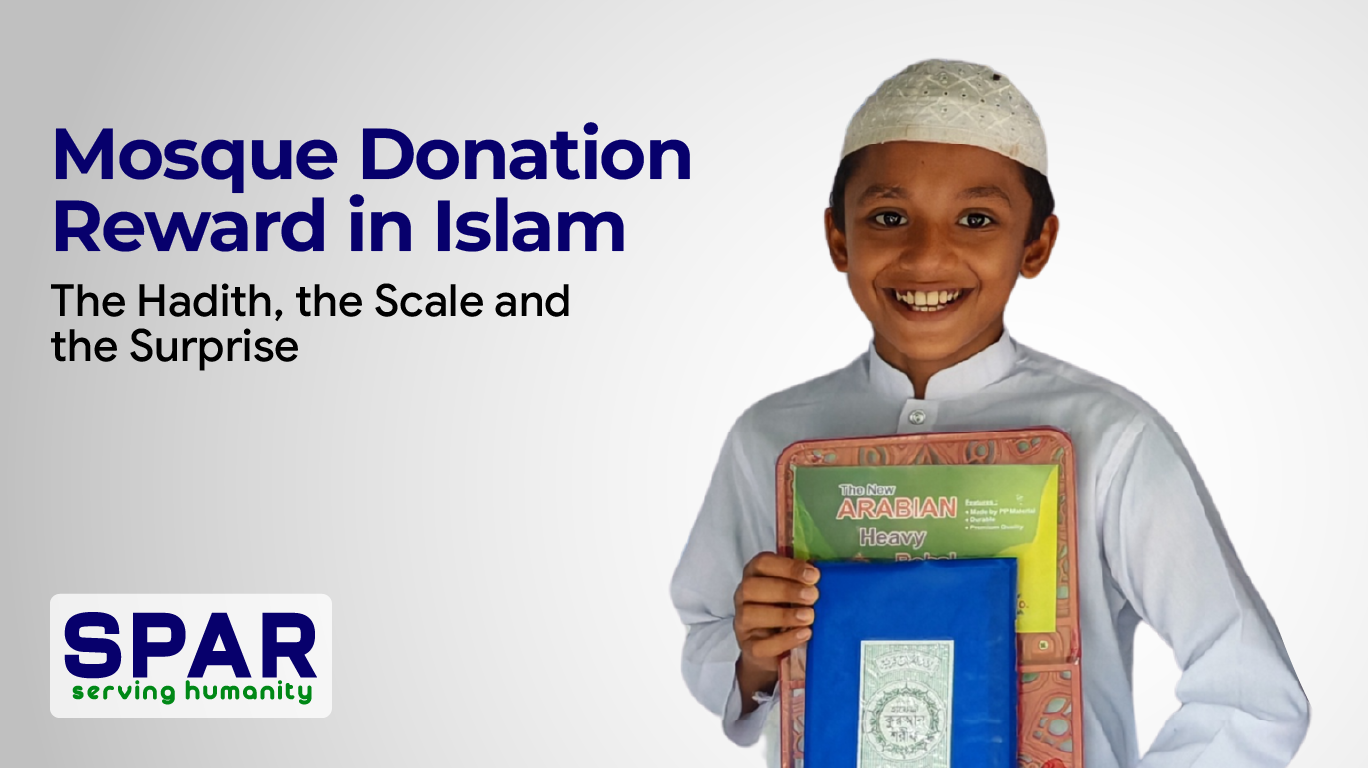
Mosque donation reward refers to the spiritual return a Muslim earns by contributing to the building, upkeep, or running of a masjid. It sits within the category of sadaqah jariyah, meaning ongoing charity. The reward doesn’t stop when the mosque opens. Every prayer performed inside, every Quran lesson taught, every person guided to Islam within those walls continues to earn the donor reward, even after death. That’s what makes it unlike almost any other act of giving.
Why Mosque Donation Reward Matters Right Now
The Prophet Muhammad (peace be upon him) said: “Whoever builds a mosque for Allah, Allah will build for him a house in Paradise.” This hadith, recorded in Sahih al-Bukhari and Sahih Muslim, sits at the heart of why Muslims across the ummah have funded mosques for over 1,400 years. Scholars like Imam al-Nawawi noted that this reward extends beyond new construction. Maintenance, lighting, clean water for wudu, teaching materials, and anything that keeps a mosque running all fall under the same spirit. For donors thinking about lasting impact, it’s hard to find a more direct connection between one act and an unbroken chain of ongoing reward. If you want to understand how long-term charitable giving works in practice, SPAR’s work in community welfare shows the same principle applied across multiple programs.
Key Facts About Mosque Donation Reward Most Donors Don’t Know
Not every form of mosque giving carries the same reward in Islamic scholarship. Classical scholars, including Ibn Qayyim al-Jawziyyah, drew a clear line between donating to build a new mosque and giving to a mosque that already serves a community in need. Both carry reward, but the weight differs based on need and intention. According to Pew Research, there are roughly 1.8 billion Muslims in the world today. That’s a global community that relies on functional, funded mosques for education, worship, and social support. Scholars in the Hanbali and Shafi’i schools both confirm that the reward for mosque donation doesn’t require the donor to be present. Distance, disability, or limited funds don’t reduce the return. Even a small, consistent gift qualifies as sadaqah jariyah if given with sincere intention.
Does the Reward Change Based on What You Fund?
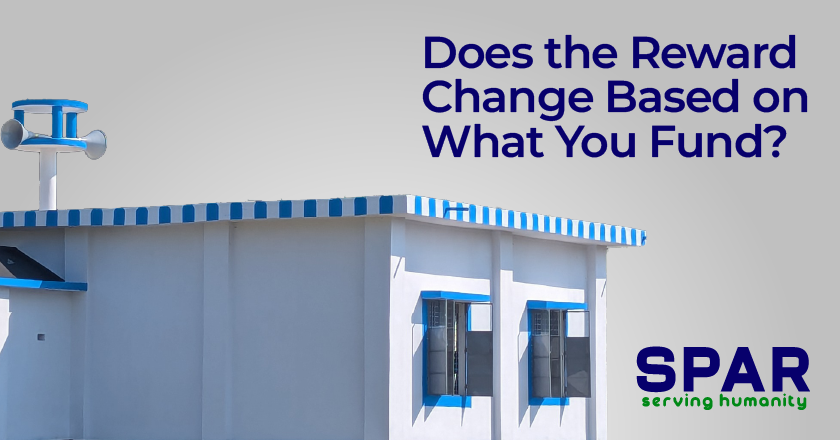
Not all mosque giving carries equal weight in classical scholarship. Scholars in the Hanbali and Shafi’i schools agreed that funding a mosque’s core function, such as its structure, lighting, or water supply, ranks higher than decorative contributions. Ibn Qayyim al-Jawziyyah wrote clearly on this: intention and need together determine the scale of reward. A gift toward a mosque serving a poor, underserved community carries more weight than the same amount given to a mosque that already has plenty. The gap between the two isn’t arbitrary. It reflects a principle Islam repeats throughout fiqh: need amplifies reward.
Does Decorating a Mosque Count as Sadaqah Jariyah?
Scholars differ on this point. Most classical authorities, including Imam al-Nawawi, held that decoration alone does not qualify as sadaqah jariyah unless it serves a functional purpose. A beautiful chandelier that helps worshippers see clearly may qualify. Ornamental tilework, by itself, likely doesn’t. The test is simple: does the contribution help people worship or learn? If yes, the reward continues. If it serves only appearance, the reward is one-time. This distinction shapes how thoughtful donors approach mosque giving.
What About Funding Mosque Staff or Education Programs?
Paying an imam’s salary or funding a Quran class inside a mosque can qualify as sadaqah jariyah too. The key is continuity. According to a hadith in Sahih Muslim, the Prophet listed teaching knowledge that others benefit from as one of the three deeds that survive death. If a donor funds an education program and students go on to teach others, that chain extends the original reward. Scholars including Ibn Baz confirmed this interpretation. It means mosque giving reaches far beyond brick and mortar.
Common Misconceptions About Mosque Donation Reward
Many Muslims assume mosque donation reward only applies to building a mosque from the ground up. This is one of the most repeated misunderstandings in Islamic charity circles. The hadith in Sahih al-Bukhari and Sahih Muslim uses the word “build,” but scholars have consistently extended this to include renovation, maintenance, and functional support. Imam al-Nawawi, in his commentary on Sahih Muslim, noted that any act that keeps a mosque functional for worshippers falls within the spirit of the original reward. Partial giving counts. Repair work counts. Even replacing a broken door counts.
Does Reward Require You to See the Mosque?
It doesn’t. Distance has no effect on mosque donation reward. A donor in Dhaka who funds a mosque in a Rohingya refugee settlement in Cox’s Bazar receives the same reward as someone who hands money directly to the imam. What matters is intention and the ongoing benefit to worshippers. This is consistent with the broader Islamic principle that reward follows action, not proximity. Pew Research estimates there are 1.8 billion Muslims worldwide, and the vast majority give to mosques they’ll never personally visit. That’s always been part of the tradition.
Who Benefits Most From Mosque Giving in Underserved Communities?
The communities that gain most from mosque donations are those with no other community infrastructure. In areas where Bangladeshi, Somali, Rohingya, and Sudarian families rebuild after displacement, the mosque is often the first shared space. It becomes a school on weekday mornings, a food distribution point during crises, and a grief support centre after loss. UNICEF has documented that community gathering spaces reduce child dropout rates and improve mental health outcomes in displaced populations. A functioning mosque in these settings isn’t a luxury. It’s a lifeline. Real change here doesn’t come from one large donation. It comes from quiet, sustained attention, season after season.
What Mosque Donation Reward Really Means for You
The mosque donation reward isn’t a concept. It’s a living principle. Every act of giving toward a house of worship starts a chain that scholars across centuries have recognised as ongoing. Ibn al-Qayyim wrote that charity given to benefit a community continues to earn reward as long as the benefit continues. Pew Research estimates 1.8 billion Muslims worldwide. Most give to mosques they’ll never see. That’s not distance. That’s trust. And that trust, directed toward underserved communities, shapes lives long after the moment of giving.
Does the Reward Change Based on How Much You Give?
Amount matters less than scholars might have once assumed. The hadith recorded in Sahih al-Bukhari notes that even half a date given in charity carries reward. What scales with generosity isn’t the reward itself but its reach. A small, regular amount given to a mosque serving Rohingya families rebuilds community life over time. A large single gift does the same work differently. Both earn. Consistency, many scholars note, is what keeps the reward flowing.
What Happens to the Reward After You Give?
The reward doesn’t stop at the moment of giving. Scholars classify mosque support as sadaqah jariyah, continuing charity. As long as people pray there, learn there, or find shelter there, the reward continues. This is why Imam al-Nawawi, in his commentary on Sahih Muslim, gave special weight to charitable acts that outlast their giver. The mosque stays. The prayer continues. And so does the account.
The ummah has always built what it needs most. Mosques in displaced Rohingya communities, Somali neighbourhoods, and Sudarian villages didn’t appear through government plans. They appeared because ordinary people chose to keep giving. At SPAR, we’ve seen this quiet force at work across the communities we serve. The families who benefit aren’t waiting for one large act. They’re sustained by many small, faithful ones. See how this work continues.