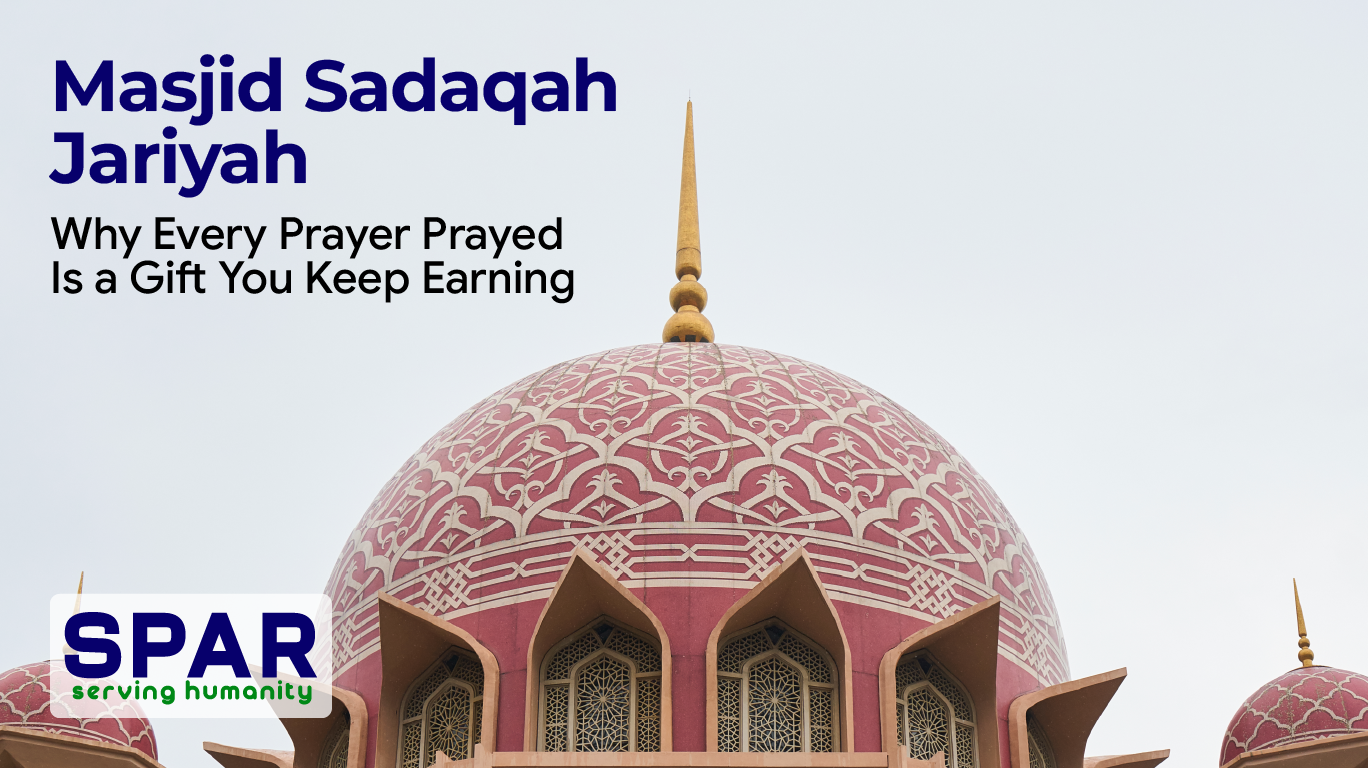
Masjid sadaqah jariyah is the act of giving toward a mosque’s construction, renovation, or upkeep as a form of continuous charity. Unlike a one-time gift, its reward flows back to the giver with every prayer, lesson, and act of worship that takes place inside. The Prophet Muhammad (ﷺ) named building a masjid among the deeds whose reward continues after death. It applies to any Muslim, anywhere, at any level of giving.
Why Masjid Sadaqah Jariyah Matters Right Now
Across the world, Muslim communities lack spaces to pray together. According to the Pew Research Center, the global Muslim population will reach about 2.2 billion by 2030. Many of these communities, from Bangladeshi villages to Rohingya settlements in Cox’s Bazar, have no permanent place of worship. A masjid isn’t just a building. It anchors a community, preserves faith across generations, and creates a daily stream of worship that scholars like Imam al-Nawawi described as among the highest forms of service. You can see how this kind of long-term giving takes shape through our sadaqah jariyah work at SPAR. That connection between donor and community doesn’t end at the handover. It deepens every time the doors open.
Key Facts About Masjid Sadaqah Jariyah Most People Miss
The hadith most often cited comes from Sahih al-Bukhari and Sahih Muslim: the Prophet (ﷺ) said that when a person dies, all their deeds end except three, one of which is sadaqah jariyah. Classical scholars, including Ibn al-Qayyim, confirmed that building a masjid falls directly under this category. But the point many donors miss is this: you don’t need to fund an entire mosque. Even a partial contribution, a door, a roof section, a set of prayer mats, counts as sadaqah jariyah according to Ibn Uthaymeen’s rulings on shared charitable projects. A gift of $200 USD toward an underserved community’s prayer space can carry continuous reward for decades. The ummah has practiced this principle since the Prophet (ﷺ) himself helped build the first masjid in Madinah in 622 CE.
What Forms Can Masjid Sadaqah Jariyah Take?
Masjid sadaqah jariyah doesn’t require funding an entire building. It covers any lasting contribution to a prayer space, including land, construction materials, water facilities, lighting, or furnishings. Scholars such as Ibn Uthaymeen confirmed that partial contributions to a shared project carry the same continuous reward. A donor might fund a single wall section or a set of prayer mats. Both count. The key condition is that the contribution must serve the community’s worship in an ongoing way. So the scope is wide, and most Muslims can find a form that fits their means.
Building and Construction Gifts
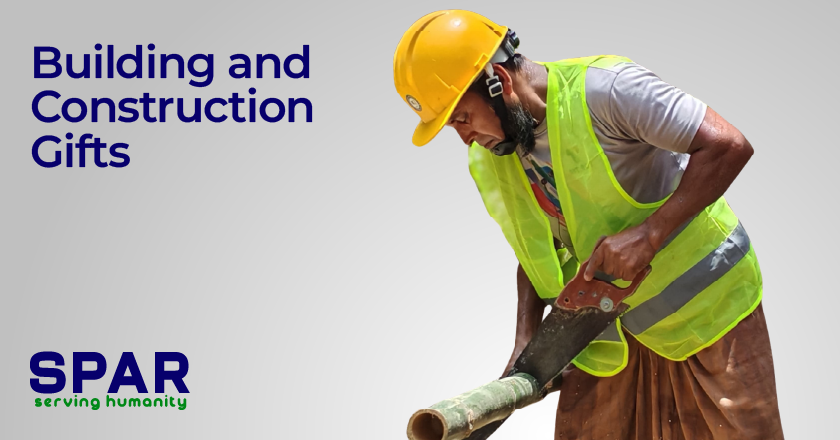
Some donors contribute to the structure itself. This includes bricks, roofing, flooring, doors, and windows. In underserved communities, even basic shelter for worship can be missing entirely. A partial contribution to construction, as little as $50 toward materials, qualifies under the rulings of classical fiqh. According to Pew Research, more than 1.8 billion Muslims live worldwide. In many low-income regions, basic prayer infrastructure remains scarce. A structural gift, however small, serves every person who enters for decades.
Functional Gifts That Keep Giving
Functional contributions include wudu (ablution) facilities, water tanks, electricity connections, and sound systems for the adhan. These elements are used multiple times daily. A water tank, for example, serves hundreds of worshippers every week. Ibn al-Qayyim wrote about the spiritual multiplier that comes from benefits spread across a community over time. Each use by each worshipper adds to the reward of the original donor. This is why functional gifts often carry as much weight, spiritually, as bricks and mortar.
Common Misconceptions About Masjid Sadaqah Jariyah
The most common misconception is that only wealthy donors can contribute to mosque projects. This is not supported by classical scholarship. A second misconception is that the reward stops when the donor dies. In fact, the opposite is true. The hadith recorded in Sahih Muslim makes clear that sadaqah jariyah continues to benefit the deceased after death. A third mistake is assuming the masjid must be grand or famous. A small prayer room in a rural community carries the same spiritual value as a large urban mosque, because the reward follows the worship, not the building’s size.
Who Benefits Most From Masjid Sadaqah Jariyah?
Low-income Muslim communities in regions without existing religious infrastructure benefit most. These are often rural areas where the nearest mosque may be several kilometers away. Elderly worshippers and women with young children are among those most affected by distance. When a nearby prayer space is built, it changes daily life in ways that go beyond worship. Community gatherings, Quran classes, and Eid prayers all become possible. The families we support across the regions where SPAR works often describe a local masjid as the first stable institution their community has ever had.
How Consistent Support Makes the Difference
A single donation builds a wall. Consistent support builds and maintains a functioning masjid over years. Roofs need repairs. Water systems need servicing. Electricity costs recur. The communities relying on these spaces can rarely cover maintenance costs themselves. Real change here rarely comes from one big push. It comes from donors who return, season after season, because they understand the reward doesn’t stop either. The families we serve don’t need a grand gesture. They need reliable people. Quiet, consistent support from someone far from the problem shapes a community’s future more than any one-time gift.
What Masjid Sadaqah Jariyah Means for Your Afterlife Account
Every prayer offered in a masjid you helped build adds to your scale. That’s not a metaphor. The Prophet Muhammad (ﷺ) confirmed this in a hadith recorded in Sahih Muslim: one of three deeds that continues after death is a sadaqah jariyah. A masjid is among the clearest examples scholars cite for this. Ibn Uthaymeen noted that building places of worship ranks among the highest forms of ongoing charity. Communities across the regions where SPAR works have seen this truth lived out. A prayer space changes what a family can pass on to the next generation.
Who Receives the Reward When a Masjid Is Built Collectively?
Scholars agree the reward is shared. Each person who contributed, whether with money, labor, or land, receives a portion proportionate to their intention and effort. Imam al-Nawawi wrote that sincerity of intention multiplies the value of any act of worship. So collective funding does not dilute the reward. It multiplies what reaches each participant’s account, and none of it is reduced by what others receive.
What Happens to the Reward After You Pass Away?
It continues. The hadith in Sahih Muslim on sadaqah jariyah makes this clear. As long as the masjid stands and people pray in it, the reward flows. Scholars describe this as one of the most assured forms of ongoing benefit. Your grave does not end your account. The masjid you helped raise keeps writing into it, prayer by prayer, generation by generation.
Behind every masjid that still stands decades later is a long line of people who chose to act on what they believed. They did not always see the outcome. Many never visited the communities they served. But their reward did not depend on proximity or recognition. At SPAR, the work of building and maintaining prayer spaces in underserved communities continues quietly. It continues because some people understand that the best investments are the ones your children’s children will still benefit from. See how this work continues.