
Human appeal Bangladesh refers to the urgent call for charitable support directed at Bangladeshi communities facing poverty, displacement, and humanitarian need. It’s different from short-term disaster relief, which ends when the headlines do. According to UNICEF, about 36 million people in Bangladesh live below the national poverty line, and that number rises sharply after each monsoon season. The appeal targets the most vulnerable groups: flood-affected families, orphaned children, and food-insecure households in low-income regions. Long-term support, not one-off aid, defines whether the appeal produces lasting change. In 2026, with climate-linked flooding hitting northern Bangladesh harder than before, the case for sustained giving has never been stronger.
Human Appeal Bangladesh: Quick Answer
What it is: A call for sustained charitable giving to support vulnerable Bangladeshi families facing poverty, displacement, and hunger
Who it applies to: Global Muslim donors who want their Zakat, Sadaqah, or voluntary giving to reach communities in genuine need
How much: Even $30 USD provides meaningful food support for one family for a month in low-income Bangladeshi communities
When: Human appeal giving is year-round, but need spikes sharply during monsoon season (June to September) and in the post-flood recovery period
Where: Bangladesh, particularly in flood-prone northern and coastal districts with high rates of child poverty and displacement
Main rule: Zakat given toward human appeal programs must reach eligible recipients (the poor, the indebted, those in hardship) as defined in Surah At-Tawbah (9:60)
Most common mistake: Donors assume a one-time gift covers long-term need. Families affected by recurring floods need consistent support, not a single response.
Why Human Appeal Bangladesh Matters Right Now
Bangladesh ranks among the world’s most climate-vulnerable countries. The World Bank estimates that by 2050, up to 13% of Bangladesh’s land could be permanently submerged, displacing tens of millions of people. That threat isn’t distant. It’s already reshaping communities today. Bangladeshi families in low-lying areas lose homes, crops, and livelihoods in cycles. Children drop out of school. Orphans lose access to care. The need for structured, ongoing human appeal programs is direct and documented. SPAR’s ongoing humanitarian work in Bangladesh focuses on exactly this kind of sustained response. It’s not enough to respond once. These communities need long-term partners, not seasonal attention.
Key Facts About Human Appeal Bangladesh
Bangladesh has the eighth-largest Muslim population in the world, with over 153 million Muslims, according to Pew Research Center data. That means Islamic giving, including Zakat and Sadaqah, flows into the country from a global donor base with deep cultural and religious ties. But the scale of need is equally large. UNICEF reports that about 31% of Bangladeshi children under five experience stunting due to chronic malnutrition. Rohingya refugees in Cox’s Bazar add another layer of humanitarian pressure, with over 900,000 displaced people relying on aid in one of the world’s largest refugee settlements. Human appeal in this context isn’t abstract. It’s a response to specific, measurable suffering that global Muslim donors are uniquely positioned to address.
Who Is Most Affected by the Humanitarian Crisis in Bangladesh?
Bangladeshi children bear the heaviest weight of the country’s humanitarian gaps. According to UNICEF, about 31% of children under five suffer from stunting caused by chronic malnutrition. That number isn’t abstract. It means slower brain development, weaker immune systems, and fewer chances at school. Rohingya children in Cox’s Bazar face even sharper risks. They grow up in overcrowded camps with limited access to clean water, education, or health care. Bangladeshi women in flood-prone areas also carry a disproportionate burden. When harvests fail and income disappears, they’re often the last to eat and the first to lose access to services.
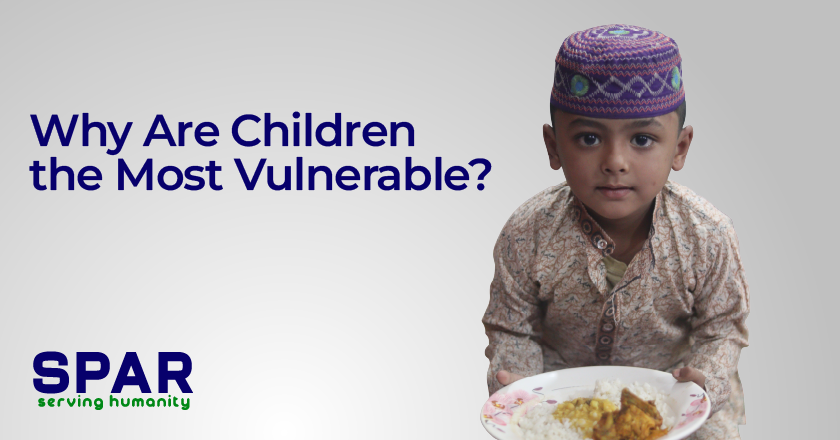
Why Are Children the Most Vulnerable?
Children in crisis zones can’t advocate for themselves. When a family loses its income, school fees stop first. When food runs short, young children and elderly relatives suffer most. UNICEF data shows that malnutrition in early childhood causes damage that can’t be fully reversed later in life. That’s what makes early intervention so urgent. The window to prevent long-term harm is short.
What Happens to Rohingya Families Over Time?
Rohingya families in Cox’s Bazar don’t move through a temporary crisis. For most, displacement has lasted years. The World Food Programme has repeatedly flagged that food ration cuts in the camps push families toward severe hunger. Children born in the camps have never known anything else. Without long-term structured support, an entire generation grows up without education or stable nutrition. Their needs don’t end when the news cycle moves on.
What Are the Root Causes Behind Bangladesh’s Humanitarian Needs?
Bangladesh’s humanitarian challenges come from a mix of geography, poverty, and population density. The country sits at the mouth of three major river systems. It floods every year. According to the World Bank, Bangladesh is one of the most climate-vulnerable nations on earth. About 40% of its land sits less than ten metres above sea level. When floods hit, they don’t just destroy crops. They wash away homes, contaminate wells, and cut off roads for weeks. Poverty then turns a natural disaster into a prolonged human crisis. Recovery takes far longer than the flood itself.
Common Misconceptions About Human Appeal Bangladesh
Many people assume that Bangladesh’s problems are too big to address through charitable giving. That’s not accurate. The scale of need is large, but individual contributions fund specific, measurable outcomes. A single water point can serve dozens of families for years. One orphan sponsorship covers food, education, and health care for a child through school. Another common misconception is that aid creates dependency. Research from the International Food Policy Research Institute shows that well-structured humanitarian programs actually build local resilience. They help families save, invest, and recover faster after the next crisis. The goal isn’t to replace local systems. It’s to protect them during the gaps.
The Role of Sustained Support vs One-Time Relief
One-time relief reaches people at the worst moment. But sustained support changes what happens after. A family that receives emergency food aid survives a flood. A family enrolled in a long-term food security program builds the means to survive the next five floods. This distinction matters for how human appeal Bangladesh is approached. Emergency response and long-term development aren’t opposites. They work best together. SPAR’s approach across the communities it serves reflects this. Emergency aid stops the immediate harm. Ongoing programs rebuild what was lost. Real change here is rarely sudden. It comes from small, sustained efforts. Season after season.
What Human Appeal in Bangladesh Shows Us About Long-Term Change
Human appeal Bangladesh is not just a phrase for disaster response. It names something larger: the ongoing commitment to protect people whose circumstances keep changing. According to UNICEF, Bangladesh faces repeated cycles of flooding, displacement, and food insecurity, leaving the same communities rebuilding year after year. Real progress comes from organisations that stay past the emergency. Sustained programs in nutrition, clean water, and education build the kind of stability that one-time relief cannot. The families that recover fastest are the ones with consistent support behind them.
Why Staying Matters More Than Arriving
Emergency response saves lives. But the months after a crisis are where recovery is won or lost. Families without ongoing support often fall back into the same cycle within a season. Research from the International Food Policy Research Institute shows that structured, long-term aid programs increase household savings and reduce vulnerability to future shocks. Arriving fast matters. Staying longer matters more.
How Sustained Programmes Build Community Strength
Long-term programs do something emergency relief cannot. They give communities time to plan. A family that receives food aid once survives the immediate crisis. A family enrolled in a food security program learns to manage across seasons. UNICEF data shows that children in sustained support programs have measurably better health and school attendance outcomes. Short bursts of help fill gaps. Sustained involvement closes them.
Behind every measurable change is a long line of people who chose to stay involved long after the headlines moved on. At SPAR, we are one of those quiet lines. The work across Bangladeshi communities, and the wider regions we serve, keeps going because consistent attention is what actually builds change. It does not arrive all at once. It builds, season by season, decision by decision.