Help for Bangladesh means aid delivered to one of South Asia’s most disaster-prone countries, where floods, cyclones, and deep poverty push millions into crisis each year. Bangladesh sits in one of the world’s most active flood zones. According to the World Bank, about 40 million Bangladeshis live in extreme poverty. Bangladeshi children, women, and displaced families bear the hardest impact. Need here is not seasonal. It’s constant.
Why Help for Bangladesh Matters Right Now
Bangladesh faces a cycle that doesn’t stop. The country loses an estimated 17% of its GDP annually to climate-related disasters, according to the United Nations Development Programme. Floods wash away crops. Cyclones flatten homes. Families that rebuild one year start over the next. Rohingya refugees in Cox’s Bazar add pressure to local communities already stretched thin. Bangladeshi children face rising rates of acute malnutrition in flood-affected districts. Long-term, consistent support is the only thing that breaks the cycle. SPAR’s ongoing relief and development work focuses on exactly that kind of sustained presence, not one-time aid drops.
Key Facts About Help for Bangladesh Most People Don’t Know
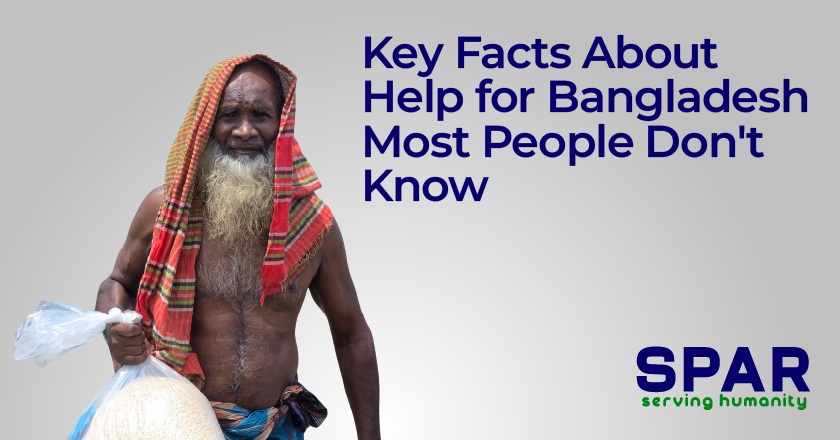
Bangladesh is one of the most climate-vulnerable countries on earth, but that’s not the only crisis. UNICEF reports that nearly 4 million Bangladeshi children face chronic food insecurity, and that number rises sharply after each monsoon season. Groundwater contamination affects millions more. Arsenic poisoning from unsafe wells is a silent emergency that receives little international attention. Bangladeshi women in rural areas often have no access to maternal health care. And while global aid tends to spike after big disasters, the quiet, between-disaster years are when the deepest damage happens. That’s where sustained humanitarian work matters most.
What Kind of Help Does Bangladesh Actually Need?
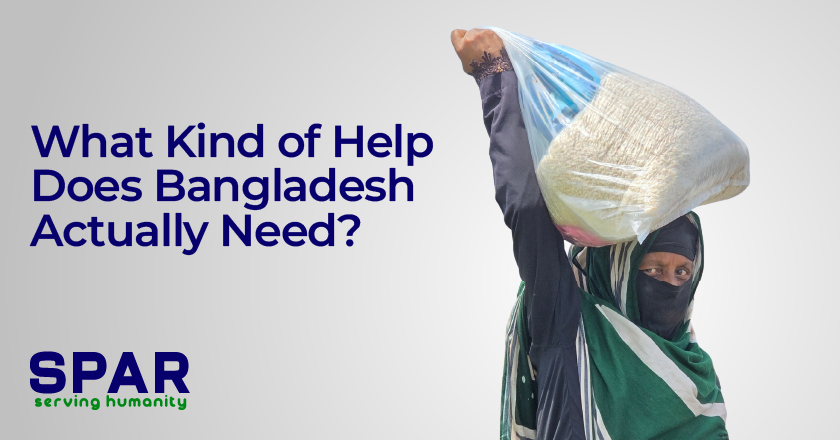
Bangladesh needs long-term, structural help more than short bursts of emergency relief. After each flood or cyclone, the instinct is to send immediate aid. That matters. But the deeper gaps are quieter. According to UNICEF, millions of Bangladeshi children face stunted growth due to chronic malnutrition, not just disaster-related hunger. Groundwater contamination from arsenic affects tens of millions, yet it rarely makes international headlines. Rural Bangladeshi women face serious gaps in maternal health access. And Rohingya refugees in Cox’s Bazar keep local resources stretched year-round. The need is wide, persistent, and often invisible to outside observers.
Emergency Relief vs. Long-Term Development
Emergency relief saves lives in the immediate aftermath of floods and cyclones. But it rarely changes the conditions that created the crisis. Long-term development work addresses the root issues. Clean water infrastructure, food security programs, and education support all reduce how badly communities suffer when the next disaster hits. Both forms of help are necessary. But sustained development work is what actually reduces vulnerability over time, not just reaction after the fact.
Why Rohingya Refugees Strain Local Communities
More than a million Rohingya refugees live in Cox’s Bazar, making it one of the most densely populated refugee settlements in the world, according to UNHCR. This puts enormous pressure on local Bangladeshi services. Schools, water supplies, and healthcare systems face demand they were never built to handle. Local Bangladeshi families also struggle to compete for resources and livelihoods. Supporting Bangladeshi communities in this region means addressing both local and displaced populations together. Separate, isolated programs often miss the interconnected nature of the crisis here.
Common Misconceptions About Help for Bangladesh
Many people assume Bangladesh only needs help after disasters. That’s one of the biggest misunderstandings about the country. Bangladesh is a lower-middle-income country with a growing economy, but structural poverty still runs deep in rural areas. UNICEF data shows that food insecurity among children spikes sharply in flood-affected districts and doesn’t recover quickly on its own. Arsenic contamination in groundwater isn’t caused by floods; it’s a slow, ongoing emergency. Gender inequality limits women’s access to health and economic opportunity year-round. The need for help for Bangladesh exists in the quiet years, not just the disaster years.
Who Is Most Affected by Bangladesh’s Ongoing Crisis?
Children under five face the highest risk. Chronic malnutrition in this age group causes damage that can’t be reversed later in life. According to the World Bank, nearly one in three Bangladeshi children under five experiences stunting. Rural women often deliver babies without skilled medical support. Older adults in flood-prone areas lose productive land repeatedly and have little to fall back on. Rohingya children in Cox’s Bazar face a compounded crisis: displacement, limited schooling, and inadequate nutrition all at once. These aren’t abstract statistics. These are the people that consistent, long-term humanitarian programs actually reach, season after season.
How Small, Consistent Support Changes Lives in Bangladesh
One-time aid provides relief. It doesn’t rebuild. Bangladeshi families in flood-prone districts often recover just enough before the next monsoon season wipes out their progress. What changes the pattern is steady, repeated support: clean water access maintained year after year, children who stay in school across multiple grades, mothers who have support through more than one pregnancy. The teams working quietly in these communities don’t make headlines. They show up, week after week. Real change here isn’t sudden. It comes from people who decide, and keep deciding, that Bangladesh is worth their continued attention.
What This Means for You
Bangladesh faces some of the most severe humanitarian pressures in the world. According to UNICEF, nearly one in three Bangladeshi children under five experiences stunting from chronic malnutrition. Monsoon flooding displaces millions of Bangladeshi families each year. Rohingya communities in Cox’s Bazar remain among the most vulnerable people on earth. Real help for Bangladesh isn’t a single act. It’s a long, steady commitment to the people who keep getting set back. Understanding that changes how we think about aid, about responsibility, and about what it means to stay involved.
Why Long-Term Aid Matters More Than Emergency Relief
Emergency aid saves lives. It doesn’t fix the conditions that keep putting those lives at risk. Bangladeshi families in flood-prone districts often rebuild just enough before the next season hits. Long-term programs, covering water access, nutrition, and schooling, are what break that cycle. According to the World Bank, sustained development investment in low-income countries produces outcomes that short-term emergency funding cannot replicate. Steady presence matters more than size.
What Consistent Involvement Actually Looks Like
Consistent help for Bangladesh looks like water points that stay maintained. It looks like children who stay in school across multiple years. It looks like mothers who get support through more than one pregnancy. These outcomes don’t come from one-time responses. They come from teams and communities that treat the work as ongoing, not occasional. The families we support don’t need witnesses. They need people who show up again next year.
Behind every measurable change is a long line of people who chose to stay involved long after the headlines moved on. Bangladeshi communities carry real burdens: floods, food gaps, displacement, and generational poverty. None of that gets fixed in a single season. At SPAR, the work continues because of steady, committed attention to the families that need it most. See how this work continues →
