Donating to a water well means funding the drilling, construction, or restoration of a freshwater source in a community that doesn’t have safe water access. It’s different from general food or emergency aid because it creates a permanent resource. According to WHO, about 2.2 billion people globally still lack safely managed drinking water. Families in rural and displaced communities benefit most. One well can serve hundreds of people for decades.
Why Donating to a Water Well Matters Right Now
Water isn’t a seasonal problem. It’s a daily crisis for families who walk hours just to collect water that still isn’t safe to drink. According to UNICEF, unsafe water kills more children under five than any vaccine-preventable disease. That fact doesn’t change between appeals or news cycles. Communities in Bangladeshi villages, Somali settlements, and Palestinian areas face this every single day. A donated well doesn’t just reduce thirst. It frees up time, cuts disease, and lets children attend school instead of walking to rivers. You can read more about our clean water work at SPAR and the communities we serve. The need is long-term, and so is the impact.
Key Facts About Water Well Donations Most People Don’t Know
Not all wells are the same, and that matters when you give. A basic hand-pump well in a rural community costs roughly $500 to $1,500 USD, according to World Bank estimates. Solar-powered or deep-bore wells can reach $3,000 to $8,000 USD, but they serve far more people and last much longer. According to WHO, every $1 USD invested in clean water access returns about $4 USD in economic benefit through reduced healthcare costs and increased productivity. Many donors don’t know that a well built in the right location can serve an entire village, not just one family. Placement, geology, and community ownership all shape whether a well actually works long-term. That’s why field expertise matters as much as the funds raised.
What Types of Wells Can You Fund?
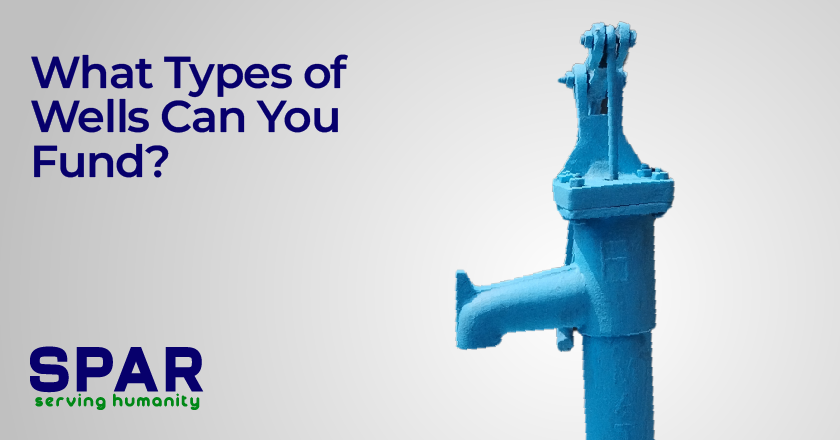
Not all wells work the same way. Hand-pump wells are the most common entry point. They cost between $500 and $1,500 USD and serve small communities directly. Solar-powered bore wells go deeper into the water table and cost between $3,000 and $8,000 USD, but they supply clean water to far more families and require less manual effort. Gravity-fed systems and rainwater harvesting setups fill gaps in areas where drilling isn’t possible. According to UNICEF, matching the well type to local geology and population size is the single biggest factor in whether a water project lasts beyond its first year.
Hand-Pump Wells vs. Deep-Bore Wells
Hand-pump wells work well in shallow water table areas. They’re low-tech, easy to repair, and cheap to maintain. Deep-bore wells reach water sources that hand pumps can’t touch. They cost more upfront but serve larger groups over a longer period. For dense communities or areas with seasonal drought, the bore well is often the smarter long-term choice. The right pick depends on soil type, population size, and who will maintain the well after installation.
Solar-Powered Water Systems
Solar pumps remove the need for manual labor entirely. They pull water from depth and store it in elevated tanks. Families collect water from a tap, not a rope and bucket. WHO data shows that solar-powered systems dramatically reduce contamination risk because water stays sealed from open exposure. These systems cost more upfront, but they reduce breakdown rates and cut long-term maintenance costs. In areas with strong sun exposure, such as Bangladeshi lowlands or Somali plains, solar pumps are among the most reliable options available.
Common Misconceptions About Donating to a Water Well
Many people assume their donation simply covers a hole in the ground. That’s not how it works. A proper well project includes site surveys, water quality testing, community training, and follow-up maintenance visits. According to the World Bank, roughly 30% of water points in low-income regions fail within two years, often because of poor community training rather than engineering faults. The build itself is only one step. What keeps a well running is local ownership, basic repair skills among residents, and regular water quality checks. Donors who understand this choose organizations with strong post-installation programs.
Who Lacks Clean Water Most?
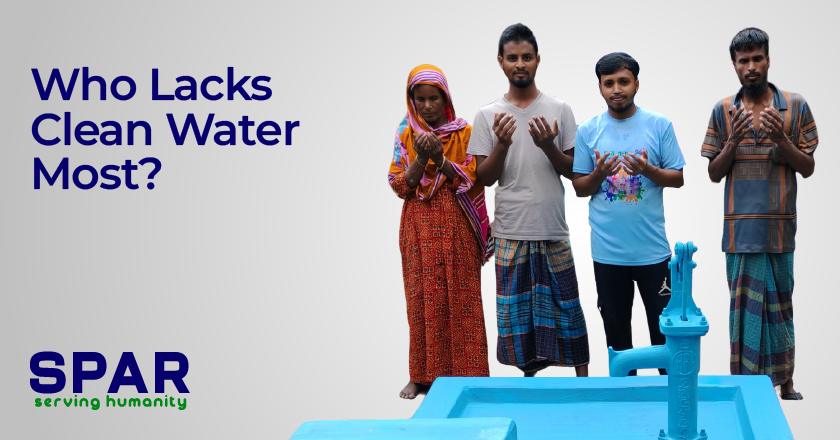
Children under five and women of childbearing age carry the heaviest burden of unsafe water. UNICEF estimates that children in water-scarce regions spend a combined 200 million hours each day collecting water globally. That time comes from school hours. Girls are disproportionately affected because water collection falls on them in most communities. In Rohingya settlements in Bangladesh and Somali villages far from rivers, young girls can walk two to three hours daily just to fill a container. When a well arrives in the right location, school attendance rises almost immediately. The link between water and education is direct and fast.
How Long Does a Well’s Impact Last?
A well built correctly can serve a community for 15 to 25 years, according to World Bank infrastructure studies. But longevity depends on three things: build quality, community ownership, and access to spare parts. Wells that fail early usually lack one of these. The teams working in the field on long-term water programs don’t make headlines. They return after installation to check pipes, test water quality, and train local repair volunteers. Real change in water access is rarely sudden. It builds season after season, through quiet, consistent effort from people committed to staying in the work.
What Choosing to Fund a Well Actually Does
Water wells change daily life fast. According to the World Bank, a well built to proper standards can serve a community for 15 to 25 years. That time span matters. One well means one family stops walking at dawn to find water. It means a girl goes to school instead. UNICEF estimates children globally spend 200 million hours each day collecting water. Most of those hours belong to girls. Funding a well is one of the most direct ways to break that pattern and keep it broken.
Does the Type of Well Matter?
It does. Hand-dug shallow wells are low-cost but carry higher contamination risk. Borehole wells reach deeper, cleaner water tables and last longer. The World Health Organization notes that water quality at the source is not enough. Proper casing, a sealed headworks, and a drainage platform all protect the water from surface runoff. A well built cheaply may fail within two or three years. One built to standard serves a community for a generation.
What Happens to a Well After It’s Built?
A well without a maintenance plan is a well with a countdown. The communities that keep wells running longest are the ones trained to fix basic faults themselves. Local repair volunteers, a small spare-parts fund, and regular water-quality checks are the difference between a well that lasts five years and one that lasts twenty. Long-term water programs include this follow-up work. The installation is only the beginning.
Behind every well is a chain of decisions that started long before the drilling rig arrived. Someone chose the site. Someone tested the soil. Someone trained the repair volunteers and came back six months later to check. That kind of work does not make the news. But it is the work that keeps water flowing season after season. At SPAR, the commitment to clean water runs the same way, quiet, consistent, and built to last. See how this work continues.
