
Donating blankets to Bangladesh means sending thermal protection to families who face near-freezing nights without insulated housing. Unlike food aid, a blanket is a one-time cost that keeps working for years. According to UNICEF, over 30 million Bangladeshi people live in poverty-level housing with no heating source. Children under five and elderly adults face the highest risk of cold-related illness each winter. A single blanket costs about $5 USD at bulk procurement rates, a figure most donors don’t know. In northern Bangladesh, temperatures can drop below 8°C, which is cold enough to be life-threatening for people without shelter.
Donate Blankets: Quick Answer
- What it is: Bulk procurement of thermal blankets sent to low-income Bangladeshi families before winter
- Who it applies to: Families in northern Bangladesh with no heating source, especially children and the elderly
- How much: About $5 USD buys one blanket at bulk rate; $25 covers a family of five
- When: Most distributions run from November through February, peak need in December and January
- Where: Northern Bangladesh districts, including areas with high Rohingya refugee populations
- Main rule or exception: Blankets purchased at bulk rates go further than retail donations; $5 bulk buys what $30 retail cannot
- Most common mistake: Donors assume one blanket per household is enough; large families need three to five to survive the coldest nights
Why Donating Blankets Matters Right Now
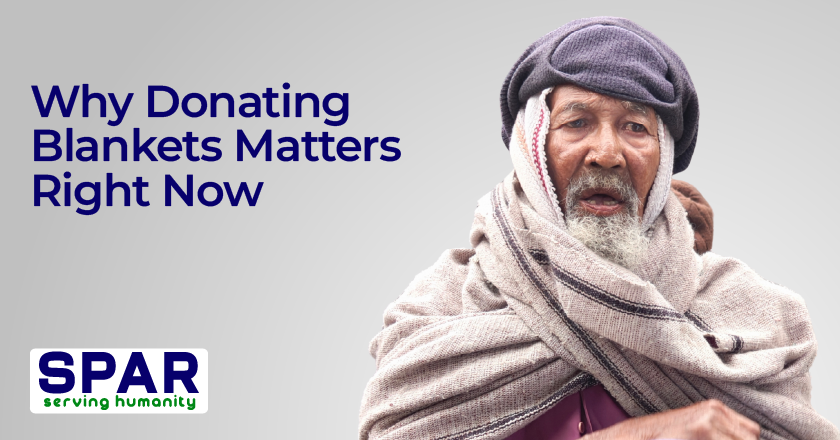
Bangladesh doesn’t get snow, but it gets cold enough to kill. Temperatures in the north regularly fall below 10°C between December and February, and most low-income homes have thin walls, no glass in the windows, and no heating at all. The World Health Organization links cold exposure directly to pneumonia, the leading killer of children under five globally. Rohingya families in Cox’s Bazar face some of the worst conditions, living in temporary shelters with no insulation. You can read about our emergency relief work to see how blanket distribution fits into a wider winter response. Winter aid is not a luxury. For these families, it’s the difference between a sick child and a healthy one.
Donating Blankets by the Numbers
The scale of need is bigger than most donors picture. According to the World Bank, about 20% of Bangladesh’s population still lives below the national poverty line, and most of those families are in rural northern districts. That’s where winter hits hardest and heating is most out of reach. UNICEF data shows cold-related respiratory illness spikes by up to 40% in low-income households during winter months in South Asia. A $5 blanket lasts three to five winters at average use, which means the cost per cold night protected drops to less than $0.01 USD. That’s one of the lowest cost-per-impact ratios in humanitarian winter aid, and it’s a fact most donors never see in campaign materials.
What Types of Blankets Make the Biggest Difference?
Not all blankets protect the same way. For winter aid in cold, damp climates, wool and fleece blankets outperform cotton. Wool holds heat even when wet, which matters in regions where families live in poorly sealed shelters. Fleece is lighter and dries fast. According to WHO guidelines on cold exposure, maintaining body temperature above 18°C at night is the minimum threshold for preventing cold stress in children. Heavy-duty woven blankets, about 1.5 to 2 kg in weight, meet that threshold in most South Asian winters. Lightweight fashion blankets do not. The type truly matters.
Wool vs Fleece vs Cotton
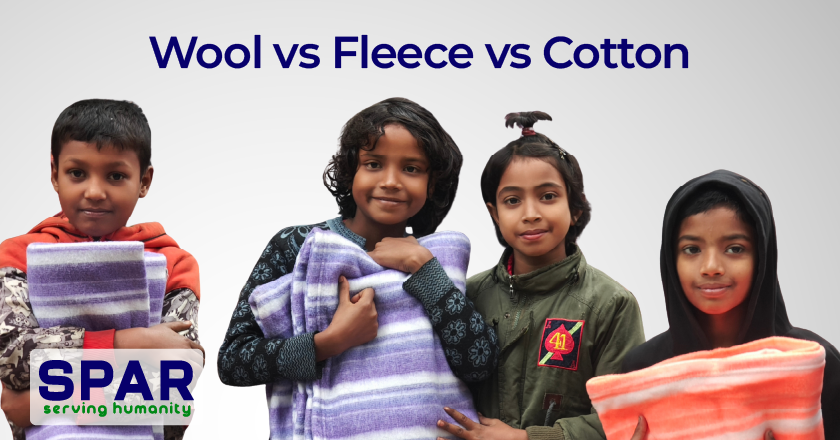
Wool lasts longer and insulates better in damp conditions. Fleece costs less and works well for children because it’s soft and easy to wash. Cotton blankets wear out fast and lose warmth when damp. For field distribution, most relief teams prioritize wool-blend or polar fleece. Both survive multiple winters without falling apart. Cotton is often donated with good intentions but ends up less useful in practice.
Single vs Family-Size Blankets
A single blanket covers one person. A family-size blanket, about 200 x 230 cm, covers two to three children sleeping together, which is common in low-income households. Family-size blankets cost more but reach more people per unit. For large families living in one room, they’re often the better choice. Relief teams weigh this during distribution planning to make sure every family gets real coverage, not just symbolic warmth.
Who Needs Blankets Most During Winter?
Children under five and adults over sixty face the highest risk from cold exposure. Their bodies regulate temperature less well than healthy adults. UNICEF data links cold stress in infants to lower immune function and higher rates of respiratory illness. In communities where families sleep on hard floors with no insulation, one blanket can be the only barrier between a child and a night of dangerous cold. Rohingya families in temporary shelters, displaced Sudarian communities, and Bangladeshi families in flood-damaged homes face this every winter. Age and shelter quality are the two biggest risk factors.
Common Mistakes People Make When They Donate Blankets
Many donors assume any warm item helps. That’s not always true. Blankets that arrive torn, too thin, or too small offer little real protection. Donating second-hand blankets without checking condition is a common mistake. Another is giving single blankets to large families, which spreads warmth too thin. Some donors also give seasonal items that work in one climate but not another. A light throw blanket designed for mild European winters won’t protect a child sleeping in an unheated shelter in northern Bangladesh. Quality, size, and climate fit all matter.
How Small, Consistent Efforts Create Real Change
One blanket lasts three to five winters. That means a single act of giving, done once, protects the same child across multiple cold seasons. But blanket need grows every year as families are displaced, as old blankets wear out, and as new children are born into poverty. The communities that benefit most are rarely the ones making noise. They’re quiet, rural, and far from news cycles. Change here doesn’t come from one big push. It comes from steady, season-after-season commitment from people who stay the course long after the urgency fades.
What You Know Now Can Protect a Life This Winter
Cold kills. UNICEF estimates that millions of children in low-income regions face serious health risks each winter from exposure alone. A donated blanket costs as little as $10 to $15. That single item can prevent hypothermia, keep a child in school, and help a family sleep through the night safely. Thermal blankets rated for cold climates last three to five seasons. Blanket drives work best when they run year-round, not just in peak winter months. Communities that plan ahead protect more people than those that respond only when temperatures drop.
Why Blanket Quality Changes Everything
Not all blankets offer the same protection. A thin cotton blanket gives almost no warmth in temperatures below 10°C. WHO cold-weather health guidance links inadequate bedding to higher rates of respiratory illness in children under five. A quality blanket, rated for low temperatures and large enough to cover an adult fully, makes the real difference. Families receiving poor-quality items often go without real warmth even after aid arrives.
Who Benefits Most From Blanket Drives
Children under five and adults over sixty face the greatest risk from cold exposure. UNICEF’s child survival data links cold stress in infants to increased risk of pneumonia and other respiratory infections. Displaced families, those living in temporary shelters, and communities recovering from floods or conflict face the harshest conditions. In regions where SPAR works, Rohingya families, Bangladeshi communities after seasonal flooding, and Palestinian families in besieged areas rely on consistent blanket programs each year.
Behind every warm night is a quiet decision someone made weeks or months before the cold arrived. The families who benefit most rarely have a voice in where aid goes. They wait, and they hope someone planned ahead. At SPAR, the work of keeping families warm runs across the regions and communities we serve, season after season. It doesn’t stop when the news cycle moves on. See how this work continues.