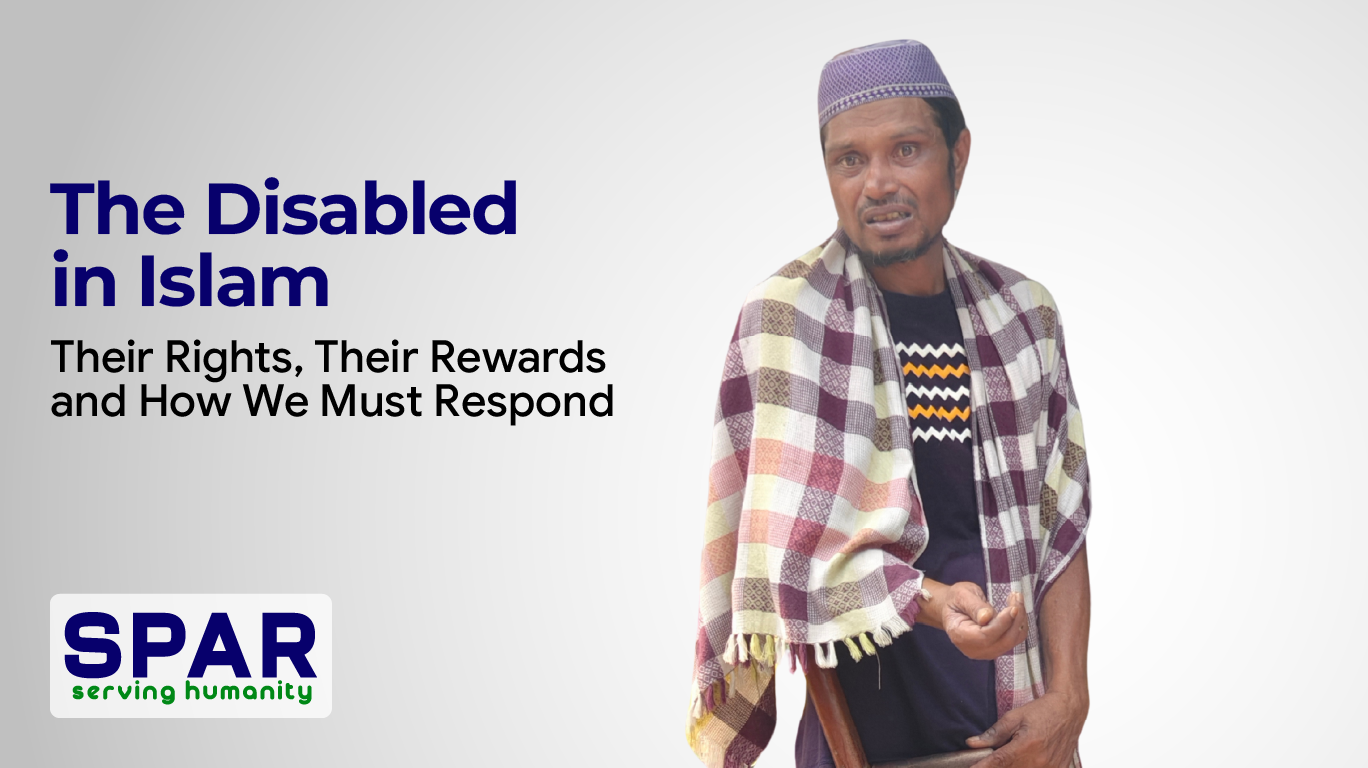
Islam views disability not as a curse or a sign of sin, but as a test from Allah, carrying deep spiritual weight. The Quran explicitly rebukes those who mock or look down on others because of physical difference. According to WHO, about 1.3 billion people live with some form of disability worldwide. Muslim scholars teach that a person’s worth before Allah depends on their faith and conduct, not their physical state.
Why Disability in Islam Matters Right Now
Disabled Muslims make up a significant portion of the global ummah, yet their rights and dignity are too often overlooked. The Quran states in Surah Al-Hujurat (49:13) that the most honoured in Allah’s sight is the most righteous, with no mention of ability or health. Scholars like Imam al-Nawawi stressed that hardship borne with patience earns great reward. Communities that forget this miss a core teaching of the faith. SPAR’s work with vulnerable communities reflects this principle in practice. You can read more about our support for vulnerable communities across the regions where we operate. Disability theology isn’t a modern add-on to Islam. It’s woven into the earliest texts and the lives of the Prophet’s companions.
Disability in Islam: What Most People Don’t Know
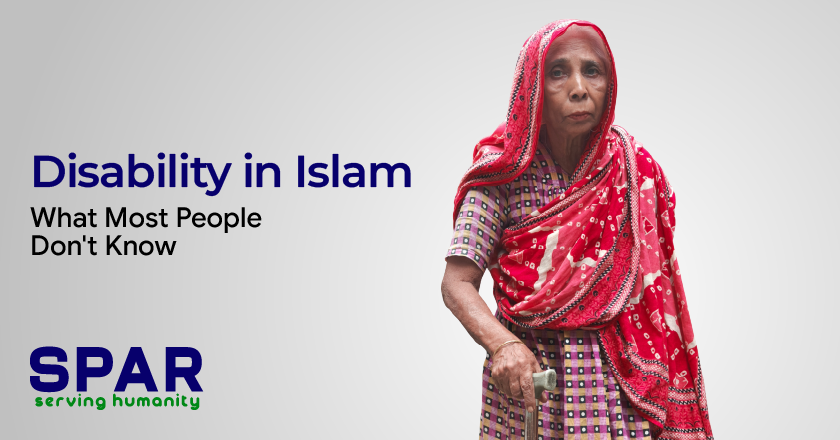
Many Muslims don’t realise that some of the Prophet Muhammad’s (peace be upon him) closest companions lived with disabilities. Abdullah ibn Umm Maktum (may Allah be pleased with him) was blind, yet the Prophet (peace be upon him) appointed him to lead Madinah in his absence. The Quran even addresses this directly: Surah Abasa (80:1-10) contains a rebuke of the Prophet (peace be upon him) himself for momentarily turning away from Ibn Umm Maktum. Pew Research estimates there are about 1.8 billion Muslims globally, meaning hundreds of millions of Muslim families live alongside disability every day. Islamic jurisprudence also makes clear accommodations: disabled individuals may pray seated, skip fasting if it harms them, and adjust ritual obligations based on their condition.
Does Islam Consider Disability a Punishment?
No. Islam does not treat disability as divine punishment. This idea conflicts directly with core Islamic teaching. The Prophet Muhammad (peace be upon him) said that any hardship a Muslim faces, even a thorn that pricks the skin, carries spiritual reward. Disability is not a sign of Allah’s anger. It can be a test, a mercy, or a path to closeness with Allah. Scholars like Imam an-Nawawi wrote clearly on this: hardship and illness elevate the believer’s rank before Allah. According to WHO, about 1.3 billion people worldwide live with some form of disability. Many of them are Muslim. The faith they carry treats their condition with dignity, not shame.
What Does the Quran Say About Hardship?
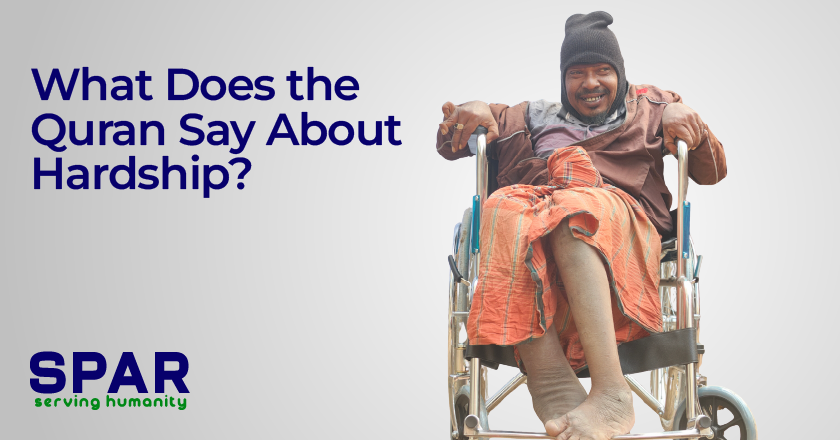
The Quran states, in Surah Al-Baqarah (2:286), that Allah does not burden a soul beyond what it can bear. This applies directly to those living with disability. Islamic scholars read this verse as a promise, not just a comfort. Allah places difficulty only where the person has the strength to carry it. Hardship in Islam always comes with purpose. The scholar Ibn al-Qayyim wrote that trials strip away arrogance and build reliance on Allah. That process makes the soul stronger, not lesser.
How Do Classical Scholars Frame Disability?
Classical scholars treated disability as a category of life that deserves specific legal consideration, not exclusion. Imam al-Nawawi, writing in the 13th century, documented clear rulings for disabled Muslims in his major legal works. A person who cannot stand may pray seated. A person who cannot fast without harm may pay fidya instead. The shariah bends toward ease, not hardship. The Arabic term “rukhsa” describes these legal accommodations. Rukhsa means a permitted concession. It reflects how carefully Islamic jurisprudence protects those with limited physical ability from unnecessary burden.
Common Misconceptions About Disability in Islam
Three misconceptions appear again and again in Muslim communities. First, some people believe disability results from the sins of the person or their parents. Islamic texts reject this view. The Prophet (peace be upon him) himself was corrected by Allah in Surah Abasa for showing any hesitation toward a blind companion. Second, some assume disabled people cannot fulfil religious duties at all. But fiqh provides full accommodation. Third, some treat disability as a reason for pity rather than respect. The Quran uses the word “karama”, meaning human dignity, and it applies without exception. UNICEF estimates that 240 million children worldwide live with disability. Most of them belong to communities where how they’re treated depends on how their faith teaches others to see them.
How Does the Islamic Community Respond to Disability Today?
Muslim communities are making quiet, slow progress in how they include disabled members. Mosques across the world are beginning to install ramps, hearing loops, and sensory-friendly spaces. But access gaps remain wide. Many disabled Muslims cannot attend Friday prayers because physical barriers block the entrance. Others face social stigma that keeps them at home. The response that matters most does not come from policy. It comes from ordinary Muslims choosing to see disability the way their faith asks them to. Teams working on inclusion across Bangladeshi and Gazarian communities see this shift happening gradually. But it depends on consistent effort, not one-time gestures. Change here is rarely sudden. It comes from communities deciding, again and again, that every member deserves a full place.
What Obligations Do Muslims Have Toward Disabled People?
Islam places direct responsibility on the Muslim community to care for its most vulnerable members. The Prophet (peace be upon him) said, in a hadith reported in Sahih al-Bukhari, that none of you truly believes until he loves for his brother what he loves for himself. This hadith applies with full force to disabled siblings in faith. Zakat, the obligatory annual charity, is designed partly to reach those who cannot provide for themselves. Sadaqah adds to this. The disabled person is not a charity case in Islam. They are a rights-holder. The community owes them support as a matter of worship, not generosity.
What This Means for Every Muslim Community Today
Islam does not treat disability as a side issue. It places the disabled person at the center of the ummah’s moral responsibility. The World Health Organization estimates that over 1.3 billion people live with some form of disability globally. Many of them are Muslim. Many live in communities where faith shapes daily life more than any policy does. That means the ummah holds real power here. How mosques welcome people, how families speak about disability, and how communities allocate their zakat all shape whether disabled Muslims live with dignity or without it.
How Islamic Teaching Changes Daily Practice
The change starts small. A family stops using words that shame. A mosque installs a ramp. A community leader invites a disabled member to speak. These are not grand gestures. They are the basic expressions of what Islam already teaches. The Prophet (peace be upon him) rebuked those who looked down on others based on appearance or ability. That teaching is not abstract. It applies to every gathering, every meal shared, and every Friday prayer.
Why Sustained Effort Matters More Than One-Time Actions
Inclusion built on seasonal attention does not last. Real change happens when communities commit year after year. This means reviewing mosque access each time renovations occur. It means training religious leaders to speak about disability with care. It means ensuring zakat distribution reaches disabled households. The communities where SPAR works show that sustained effort produces real shifts in attitude and access. Not overnight. But steadily, across years of quiet, consistent work.
Every tradition in Islam points toward the same conclusion. The disabled person is not a burden. They are a full member of the ummah, with rights, dignity, and a role to play. Scholars across centuries have affirmed this. The Quran does so with clarity. What remains is the work of putting belief into practice, in mosques, homes, and communities across the world. That work does not end. It continues in the places where SPAR’s programs operate, where families are learning that faith and inclusion are not separate things. See how this work continues.