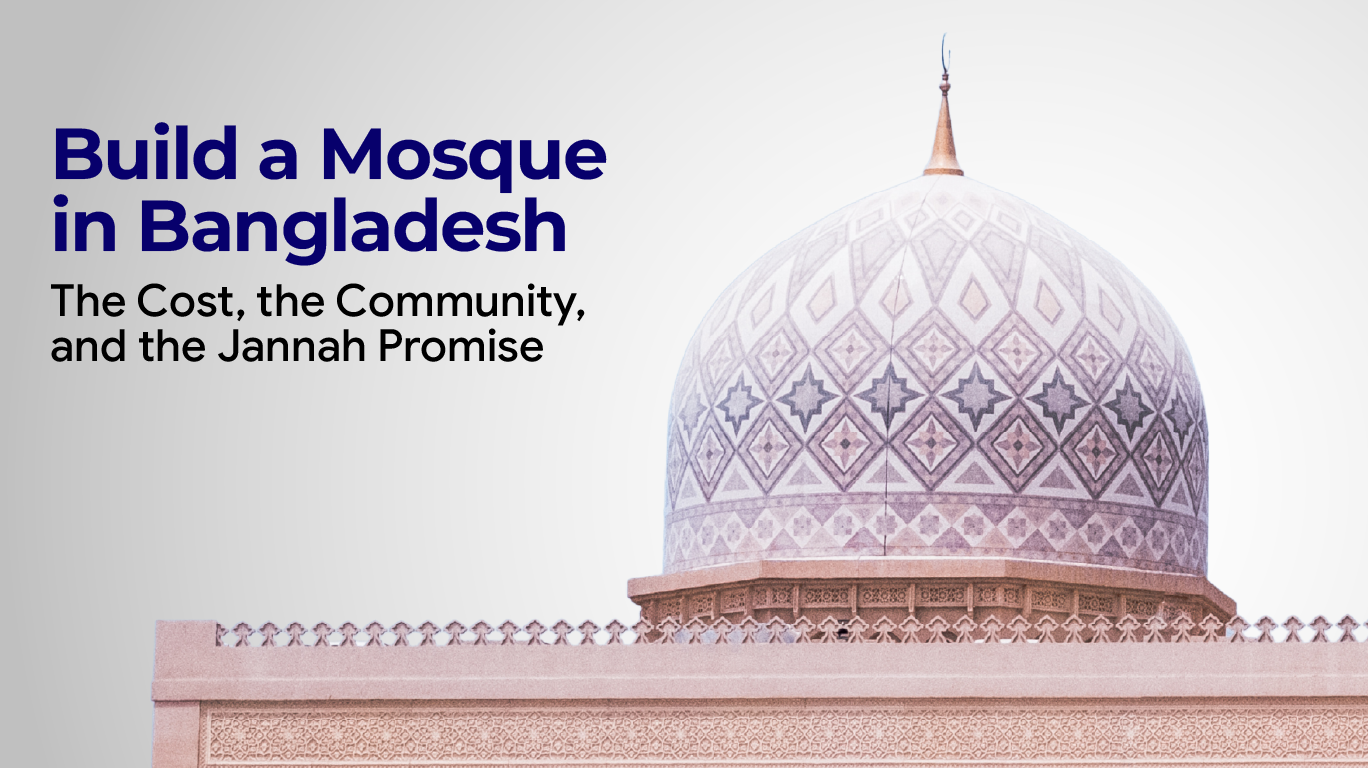
Building a mosque in Bangladesh is one of the most rewarding forms of sadaqah jariyah a Muslim can give. Every prayer offered inside that mosque earns the donor ongoing reward, even after death. Bangladesh has over 300,000 mosques already, yet many rural communities still lack a proper place of worship. Donors worldwide fund mosque construction projects through trusted Islamic nonprofits. The need is real, and the reward is permanent.
Why Building a Mosque in Bangladesh Matters Right Now
Bangladesh is home to roughly 150 million Muslims, making it one of the largest Muslim-majority countries in the world, according to Pew Research Center data. But population growth and rural migration mean many newer communities have no local masjid. Families pray in open fields or cramped homes. Children grow up without a dedicated space to learn the Quran or practice salah. A mosque isn’t just a building. It anchors a community’s faith, education, and social life for generations. SPAR’s work supporting mosque construction reflects this broader need across Bangladeshi communities. You can learn more about our mosque and community programs. Without action now, growing communities risk losing that anchor entirely.
Key Facts About Mosque Construction in Bangladesh
Mosque construction costs in Bangladesh vary widely. A basic single-room structure can cost around $3,000 to $5,000 USD. A full masjid with proper facilities often runs between $15,000 and $50,000 USD, depending on size and location. According to the Bangladesh Bureau of Statistics, rural districts remain underserved despite strong demand for community worship spaces. Land availability, local materials, and skilled labor all affect the final cost. Many donors choose to fund a mosque in stages, contributing $500 or $1,000 USD at a time. This phased giving makes the project accessible to more Muslims worldwide, not just the wealthy.
What Does It Cost to Build a Mosque in Bangladesh?
Mosque construction costs in Bangladesh depend on size, location, and materials used. A simple single-room structure in a rural area can cost around $3,000 to $5,000. A full masjid with a dedicated ablution area, storage, and space for women can run between $15,000 and $50,000. According to the Bangladesh Bureau of Statistics, rural communities face the biggest gap between need and available infrastructure. Land donated by a local family often reduces costs. But the build itself still needs skilled labor, quality materials, and ongoing oversight. These aren’t small asks for most Bangladeshi communities.
Can Donors Fund a Mosque in Stages?
Phased giving makes mosque construction realistic for more people. A donor can contribute $500 toward foundation work, then return months later to fund walls or roofing. Many projects split the build into clear stages: land and groundwork, structure and walls, roof and finishing, and final fittings like mihrab and minbar. Each stage has a defined cost and a visible outcome. This approach lets families, friends, or workplace groups pool contributions without waiting for a single large sum. It also lets the charity maintain transparency at every step.
What Affects the Final Cost?
The cost of mosques depends mainly on three factors: the cost of materials, transportation to remote areas and the availability of skilled labor. Bricks, cement and steel are locally priced, but in flood-prone or remote districts transport adds to the cost. Good masons who understand the requirements of Islamic architecture are not always available locally. Some projects will combine local and specialist labor to reduce costs but retain quality. And weather matters too. Construction in the monsoon season means slower work and higher costs. Projects planned for the dry season, from November to March, are generally more efficient and on budget.
Who Benefits Most From a New Mosque in Bangladesh?
Rural Bangladeshi communities gain the most from mosque construction. In dense urban areas, mosques already exist within walking distance for most residents. But in char lands (river islands), haor wetlands, and remote northern districts, the nearest masjid can be several kilometers away. Children, elderly residents, and women with caregiving duties struggle most with that distance. According to UNICEF, about 36% of Bangladesh’s population still lives in areas with limited access to community infrastructure. A mosque fills more than a spiritual need. It becomes the fixed point around which community life organizes itself.
Common Misconceptions About Building Mosques in Bangladesh
Many people assume a mosque build is a single, fast project. In practice, most builds take between six and eighteen months from planning to completion. Another common mistake is thinking the structure alone is enough. A mosque without a wudu area, clean water access, or proper drainage creates problems from day one. Some donors also assume costs are fixed. But prices shift with material availability, transport conditions, and labor rates. The wisest approach treats mosque construction as a phased, managed process, not a one-time transaction. That mindset leads to better buildings and stronger community outcomes.
How Mosque Construction Connects to Wider Community Development
A new mosque rarely stands alone as a project. In Bangladeshi communities, the masjid often anchors a cluster of related needs. A clean prayer space draws families together weekly. Those gatherings become the setting for resolving local disputes, organizing emergency responses, and distributing aid during flood recovery. Schools and Quran circles form naturally around an established mosque. Health awareness sessions find a trusted venue. Real change here is rarely sudden. It comes from small, sustained efforts, season after season. The teams who make this possible don’t make headlines. They show up, and the community builds around what they leave behind.
What to Know Before You Build a Mosque in Bangladesh
Mosque construction in Bangladesh works best when communities plan in phases. The World Bank notes that rural infrastructure projects succeed at higher rates when local needs guide the design from the start. A basic prayer hall can begin at around $3,000 to $5,000. A full masjid with wudu facilities, drainage, and storage runs from $15,000 to $40,000 or more. Material costs shift with the season. Flood-prone land needs raised foundations. SPAR’s work across Bangladeshi communities reflects this reality. The strongest buildings come from teams who understand local soil, local water tables, and local use patterns.
Why the Final Stage of Construction Matters Most
Most structural failures happen in the last phase. Drainage gets rushed. Wudu area tiling gets skipped. Roof sealing gets delayed until after the first monsoon. These aren’t small details. They define whether a mosque stays dry and usable for decades. A well-built prayer space costs more upfront. But it costs far less over time than repairs, mold treatment, and restoring damaged flooring.
Connecting Mosque Work to Long-Term Community Impact
A mosque rarely functions as a single building. It becomes a center. Aid reaches families through it. Quranic education starts around it. Dispute resolution happens inside it. UNICEF data shows that community gathering infrastructure directly supports child welfare outcomes in rural areas. In Bangladeshi villages, the masjid is often the first permanent public structure a community builds. Getting it right means generations of families benefit.
Behind every standing mosque is a long chain of decisions made carefully. Materials sourced from trusted suppliers. Foundations checked before walls go up. Drainage planned before the first prayers begin. At SPAR, this careful approach shapes how we support mosque construction work across the regions we serve. The building matters. So does everything that makes it last. See how this work continues at sparproject.org/our-work.