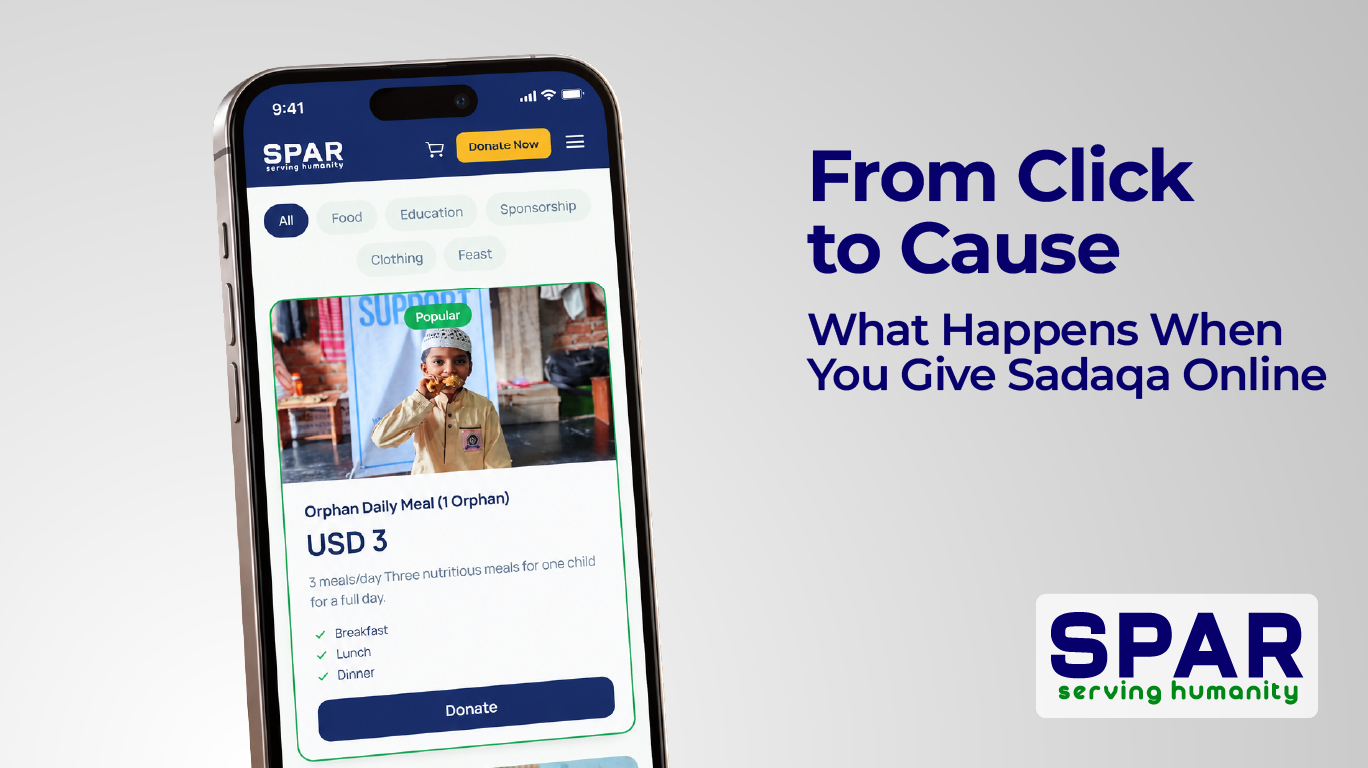
Online sadaqa is voluntary charity given by a Muslim at any time, with no fixed amount, through a digital payment. Unlike Zakat, it carries no minimum threshold and no annual deadline. According to the World Bank, digital giving in Muslim-majority countries grew by over 30% between 2020 and 2024, making online sadaqa one of the fastest-growing forms of Islamic charity worldwide. Any Muslim can give it, regardless of wealth level, age, or location. The key rule is sincerity: the intention must be for Allah’s sake alone, not recognition. In 2026, most verified platforms transfer funds within 24 hours, meaning impact reaches families far faster than traditional methods once allowed.
Online Sadaqa: Quick Answer
What it is: Voluntary Islamic charity given digitally, with no fixed amount and no set deadline, purely for Allah’s pleasure
Who it applies to: Any Muslim, regardless of wealth, age, or location, at any time of year
How much: No minimum in Islam. Even $1 USD counts. Many donors start at $10 or $30 per month
When: Any time. Online sadaqa has no required season, though Ramadan and Fridays carry extra spiritual reward
Main rule: Intention must be sincere. Giving for praise or social recognition removes the spiritual reward entirely
Most common mistake: Confusing sadaqa with Zakat. Sadaqa is optional and unlimited. Zakat is obligatory and calculated at 2.5% of eligible wealth
Why Online Sadaqa Matters Right Now
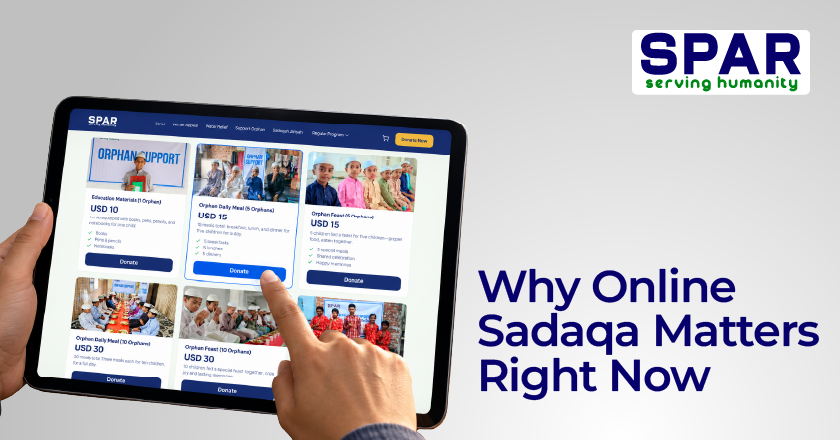
Digital giving has changed who gets help and how fast. UNICEF estimates that over 700 million people currently live in extreme poverty, many of them in regions where cash delivery is slow and unreliable. Online sadaqa reaches Bangladeshi families, Rohingya communities, Somali villages, and Palestinian households within days, not weeks. Traditional giving often depended on physical proximity to a mosque or collection point. That barrier is gone now. You can learn more about SPAR’s ongoing charitable work and how donations reach the people who need them most. The speed of digital transfer also means aid arrives during a crisis, not after it.
Online Sadaqa: What Most People Don’t Know
Sadaqa covers far more than cash. Scholars including Imam al-Nawawi noted that even a smile, removing harm from a path, or sharing knowledge counts as sadaqa in Islamic law. But for online giving specifically, the type of charity matters. Sadaqa jariyah, a form of ongoing charity, generates reward long after the gift is made. According to Pew Research, Muslims give more per capita than any other religious group globally. Yet many donors don’t know that giving through a verified, registered charity protects both their spiritual intention and the recipient’s dignity. Choosing the wrong platform can mean funds never arrive. The structure behind your gift matters as much as the gift itself.
Does Online Sadaqa Count If You Can’t Verify How It’s Spent?
Many Muslims ask this question. It’s honest, and it matters. Islamic scholars widely agree that sincere intention protects the giver’s reward, even when an intermediary handles the funds. But intention alone doesn’t replace due diligence. Choosing a registered, transparent charity means your sadaqa reaches the right hands through a traceable process. According to Pew Research, global Muslim charitable giving runs into billions of dollars annually. Yet a significant portion flows through unverified channels. The answer isn’t fear. It’s selecting platforms that publish their processes openly and stand behind their work.
What Makes a Platform Trustworthy?
Look for clear reporting on how funds move from donor to recipient. A trustworthy organization shows you what it does, not just what it says. Financial reports, project updates, and receipts on request are basic standards. SPAR maintains this transparency across the communities it serves, from Bangladeshi families to Rohingya households in Cox’s Bazar. The ummah deserves to know its generosity isn’t wasted. Quiet, consistent trust between donor and charity is what keeps long-term programs alive. That trust is built through visible accountability.
Does the Reward Change If You Give Anonymously?
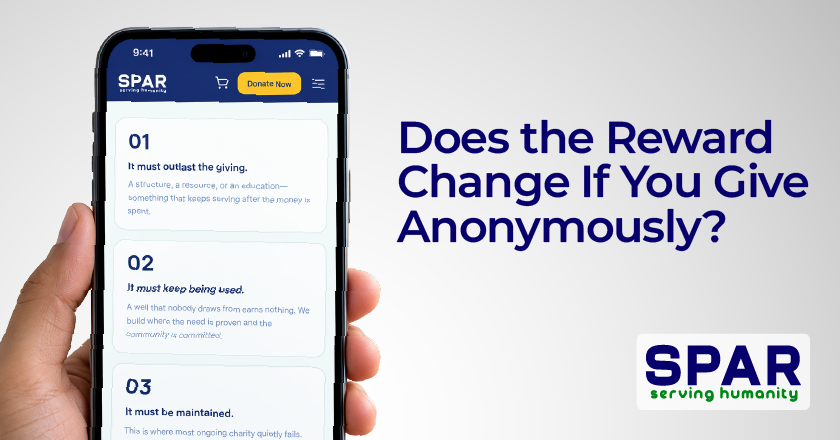
Anonymous giving carries its own spiritual weight in Islam. The Prophet Muhammad (peace be upon him) described seven groups shaded on the Day of Judgment, including the person who gives charity so secretly that the left hand doesn’t know what the right hand spends. That hadith appears in Sahih al-Bukhari. Online platforms often allow anonymous giving, which aligns well with this teaching. Your record with Allah is not tied to your name appearing on a donor list. The reward is between you and Him.
How Sadaqa Jariyah Works Online
Sadaqa jariyah is ongoing charity. Its reward continues after the giver passes. A water well, a school, a Quran distribution program: these are classic examples. Online platforms now let donors fund sadaqa jariyah projects with the same ease as a one-time gift. According to UNICEF, about 2 billion people worldwide lack access to safe drinking water at home. Funding a water source for a displaced Somali family or a Rohingya community in Cox’s Bazar is a direct, real-world form of sadaqa jariyah. The digital transfer takes seconds. The reward, scholars say, flows for as long as the benefit continues.
Why Small, Recurring Gifts Matter Most
A single large gift is valuable. But recurring small gifts change how programs operate. Field teams can plan long-term when funding is steady. A donor giving $10 each month does something a one-time $50 donor can’t: they create predictability. Consistent, quiet support from people far from the problem is what keeps a well maintained or a child in school through the next monsoon. Real change here rarely comes in a single moment. It comes from people who show up, month after month, without fanfare.
Common Mistakes Muslims Make With Online Sadaqa
The biggest mistake is waiting for a “big moment” to give. Many Muslims hold back, hoping to give a large sum once their finances improve. But the Prophet Muhammad (peace be upon him) said even half a date given in charity saves a person from the Fire, as recorded in Sahih al-Bukhari. Starting small is better than not starting. A second common mistake is giving through social media fundraisers without checking if the organizer is a registered charity. A third is confusing zakat with sadaqa. Zakat is obligatory and has strict rules. Sadaqa is voluntary and flexible. Both matter. But they’re not interchangeable.
What Online Sadaqa Looks Like in Practice
Online sadaqa has changed how Muslims give. It’s faster, more consistent, and more traceable than cash ever was. UNICEF estimates over 700 million people still lack clean water. Many live in communities where SPAR’s long-term programs are active. A $10 monthly commitment, set up in minutes, funds more over a year than most one-time gifts. The key is choosing a registered charity, checking their work, and starting. Small, steady giving is what sustains real programs between the big fundraising moments.