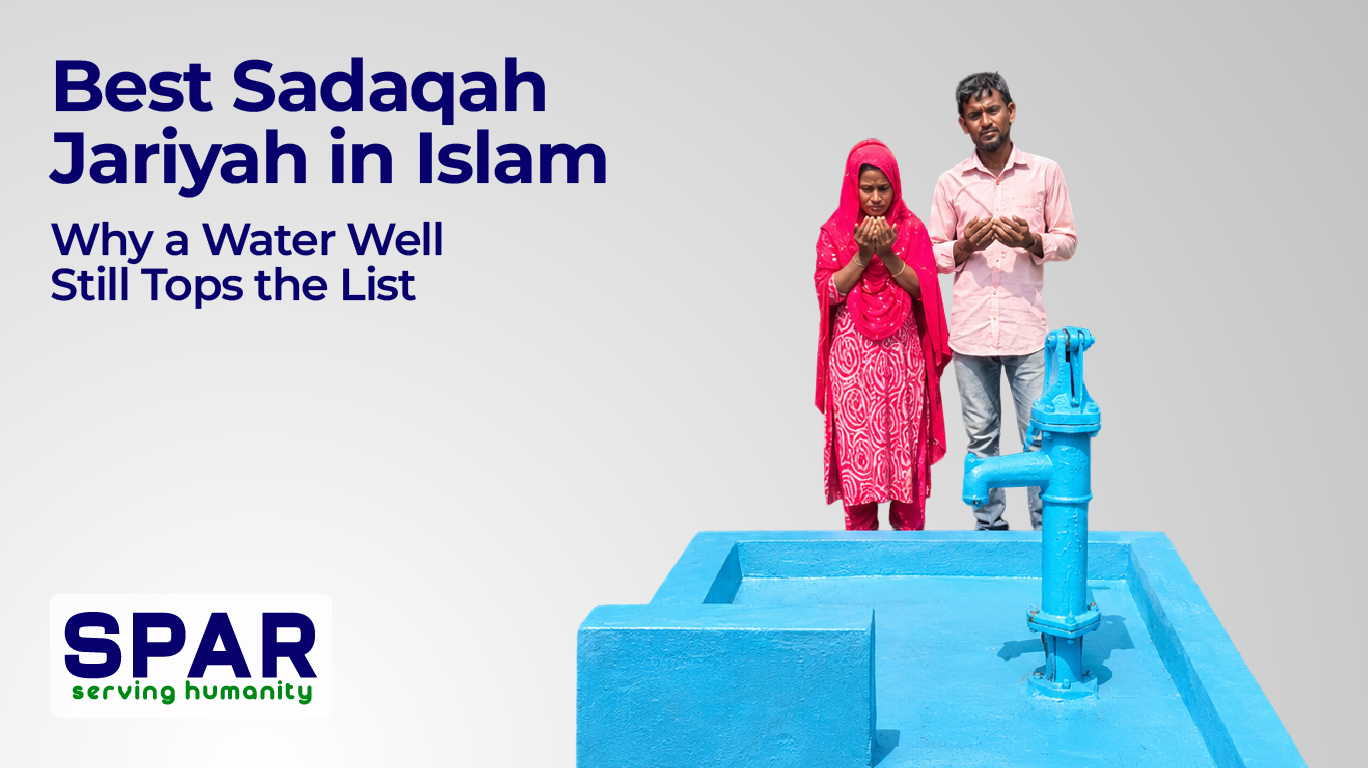
Sadaqah jariyah is a gift that keeps earning reward long after you give it. Unlike regular sadaqah, which ends when the act ends, sadaqah jariyah flows continuously. The Prophet Muhammad (ﷺ) named three deeds that survive death: ongoing charity, useful knowledge, and a righteous child who prays for you (Sahih Muslim, 1631). A water well fits the first category perfectly. It serves hundreds of people daily. Each sip a person takes adds to your scale of good deeds, even decades after you’re gone.
Best Sadaqah Jariyah: Quick Answer
- What it is: A gift where reward continues after death, as long as people benefit from what was given.
- Who it benefits: Any Muslim can give sadaqah jariyah. It also earns reward on behalf of a deceased loved one.
- How much it costs: A clean-water well for a rural community costs about $300 to $500 USD on average.
- When to give: Any time. There’s no deadline. The reward starts the moment people begin to benefit.
- Where it’s needed most: Rural Bangladeshi villages, Rohingya displaced communities, Sudarian families, and Palestinian families in besieged areas.
- Main rule: The benefit must be ongoing and reach real people. A one-time meal is sadaqah, not sadaqah jariyah.
- Most common mistake: Donors fund a well but skip maintenance costs, so the well breaks within two years and the reward stops.
Why Sadaqah Jariyah Matters More Than Ever in 2026
Clean water is still out of reach for hundreds of millions of people. According to WHO and UNICEF, about 2.2 billion people lack safe drinking water at home. That gap doesn’t shrink on its own. It grows when funding stops. Sadaqah jariyah fixes that problem in a unique way. It ties a donor’s reward to a living benefit. The longer the well runs, the longer the reward runs. That’s why our clean water work focuses on lasting projects, not one-time fixes. When you build something that works for decades, the scale of reward is unlike any other gift in Islam.
Sadaqah Jariyah by the Numbers: What Most People Don’t Know
Many donors assume sadaqah jariyah has to be expensive. It doesn’t. According to World Bank data, basic hand-pump wells in South Asia cost between $200 and $600 USD to install, depending on depth and location. One well can serve 200 to 300 people daily. Over a 20-year lifespan, that’s millions of individual acts of benefit tied to one donor’s account. Scholars like Imam al-Nawawi noted that the reward scales with how many people benefit and for how long, not just what the donor spent. That ratio makes a water well the strongest single gift a Muslim can give.
Which Types of Sadaqah Jariyah Give the Most Reward?
The best sadaqah jariyah projects share one quality: they keep giving after the donor is gone. Scholars group them into a few clear types. Wells and water sources top the list, based on direct hadith evidence. Mosques and Islamic schools follow, since they produce ongoing worship and learning. Caring for orphans long-term ranks among the highest, because it shapes a child’s whole life. The Prophet (ﷺ) pointed to teaching beneficial knowledge as its own category. Each type works by the same rule: the benefit must outlive the gift.
Water Projects
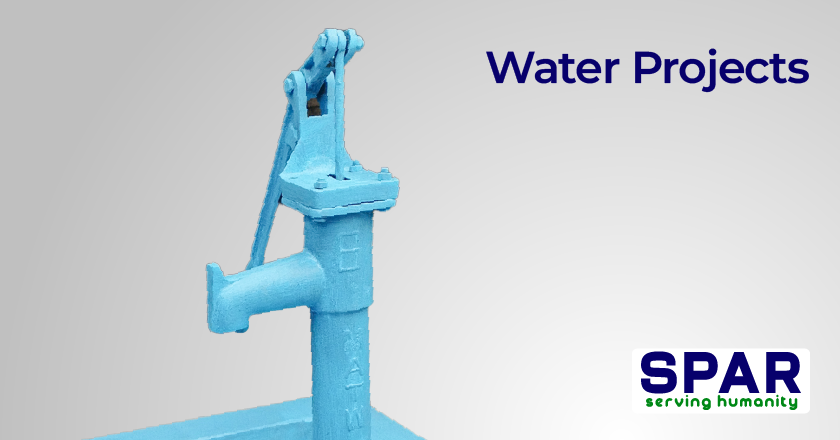
A well or water pump gives a direct, daily benefit. Families drink. Crops grow. Children stop walking miles to find water. UNICEF data shows that water-related illness kills about 485,000 people a year. A single hand pump can serve a village for 20 or more years. That’s decades of reward tied to one act.
Education and Islamic Knowledge
When a donor funds a school or a Quran teacher, the reward chains forward. Students learn. Those students teach others. Ibn Qayyim al-Jawziyyah wrote that spreading knowledge is among the longest-lasting forms of good. A child who learns to read the Quran may teach their own children one day. The original gift is still working, long after the donor has passed.
Orphan Care
Long-term support for orphans is not just charity. It’s a life changed from the root. The Prophet (ﷺ) said, as recorded in Sahih al-Bukhari, that the one who cares for an orphan will be close to him in paradise. Short-term help feeds a child for a day. Long-term care puts them on a different path. Orphan sponsorship programs, like those SPAR runs across its regions, treat the child as a person with a future, not just a number on a list.
Common Mistakes Muslims Make When Choosing Sadaqah Jariyah
Many donors pick the wrong project without knowing it. The most common mistake is choosing a one-time event over a lasting structure. Buying food for a single meal is a good deed, but it’s not sadaqah jariyah. The benefit ends when the meal ends. Another common error is giving to a project with no long-term plan for upkeep. A well that breaks after two years and gets no repair stops earning reward. Scholars stress that the project must keep working to keep rewarding. Durability isn’t a bonus. It’s the whole point.
Picking Projects With No Upkeep Plan
A water pump costs about $300 to $600 to install, according to World Bank data. But a pump with no maintenance plan can fail within three years. When it fails, the reward stops. Wise donors ask one key question: who keeps this running? Projects tied to trained local teams and clear repair plans last far longer. The reward lasts with them.
Treating Sadaqah Jariyah as a One-Off Gift
Real change here is rarely sudden. It comes from small, steady efforts, season after season. Many donors give once and move on. But the families who benefit most are the ones supported by donors who return, year after year. Consistent care builds wells, trains teachers, and keeps orphan sponsorship programs alive. One gift is a start. A habit of giving is what builds a legacy.
Who Benefits Most From Sadaqah Jariyah Projects?
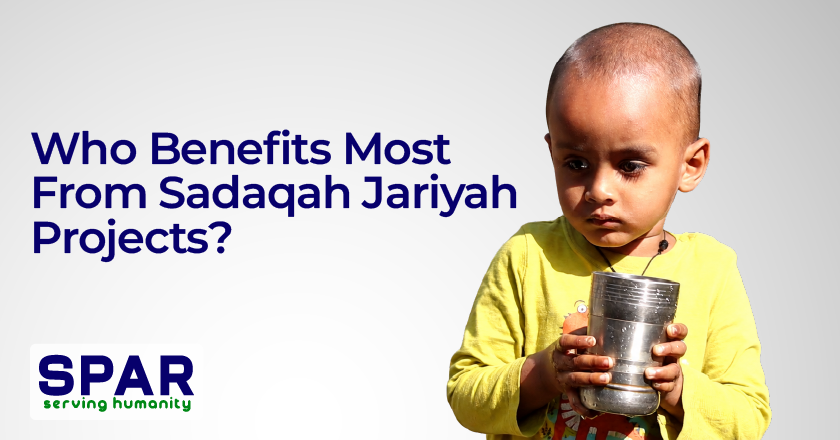
The people who gain the most are those cut off from basic needs for long stretches of time. Displaced families, orphaned children, and rural villages with no clean water or schools all sit in that group. According to WHO, about 703 million people worldwide have no safe drinking water close to home. Across the regions where SPAR works, Bangladeshi, Rohingya, Somali, and Palestinian families face this gap every day. Children under five and elderly adults are hit hardest by unsafe water. A single lasting project shifts the whole picture for these groups.
What Sadaqah Jariyah Really Asks of You
The best sadaqah jariyah is not the biggest gift. It is the most lasting one. UNICEF estimates that 2.2 billion people lack safe water at home. Many live in the same regions where long-term charity work makes the clearest difference. Clean water wells, school programs, and orphan care all share one trait: they keep working long after the gift is made. Choosing a project with trained local teams, clear upkeep plans, and honest reporting is how a single act of faith becomes a gift that outlasts you.
How to Choose a Project That Lasts
Look for three things: local ownership, repair plans, and open records. A well run by the village it serves lasts far longer than one managed from abroad. The best sadaqah jariyah projects hand over control to the people who need them most. Ask any charity you consider: who fixes it if it breaks? Who trains the next teacher? If the answers are clear, the project will likely stand.
The Role of Consistent Care
One gift plants a seed. Consistent care grows it. Orphan sponsorship programs, school funds, and water projects all need steady support across seasons, not just a single push. The families who gain the most are those backed by donors who return. Small, regular attention is what keeps these projects alive. This is the quiet work behind every lasting change.
Behind every real change is a long line of people who chose to stay involved. The reward in sadaqah jariyah is not felt in the moment of giving. It grows quietly, year after year, as the project serves the people it was built for. At SPAR, this is the kind of work we focus on: long-term, locally rooted, and built to last well beyond any single season. See how this work continues.