Sponsoring an orphan carries one of the most specific rewards named in any hadith. The Prophet Muhammad (ﷺ) said that the one who cares for an orphan will stand beside him in Jannah, as close as two adjacent fingers. This isn’t a general promise of good deeds. It’s a named rank, tied to a named act. According to UNICEF, about 140 million children globally have lost at least one parent. That number makes this hadith one of the most actionable in the entire sunnah. The reward doesn’t require wealth. It requires consistency.
Orphan Sponsorship Reward: Quick Answer
- What it is: A specific Jannah-proximity reward promised by the Prophet (ﷺ) for those who care for orphans, named in Sahih al-Bukhari.
- Who it applies to: Any Muslim who sponsors, feeds, or raises an orphan, whether related or unrelated to the child.
- The hadith: Reported by Sahl ibn Sa’d (RA) in Sahih al-Bukhari (Book 78, Hadith 5304); graded sahih.
- The image: The Prophet (ﷺ) raised his index and middle fingers together to show how close the sponsor stands to him in Jannah.
- Key distinction: This reward is for ongoing care, not a one-time gift. Sustained sponsorship, not a single donation, is what the hadith describes.
- Most common mistake: Many Muslims assume this reward applies only to those who physically raise the child. Scholars including Imam al-Nawawi confirm it extends to those who provide financial support from a distance.
- Amount context: Many orphan sponsorship programs start at around $30 USD per month, covering food, clothing, and schooling.
Why Orphan Sponsorship Reward Matters Right Now
The orphan sponsorship reward sits at the intersection of personal salvation and collective duty. UNICEF estimates that about 140 million children worldwide have lost one or both parents, and a large share live in communities with no state safety net. That gap falls on the ummah to fill. It’s not a symbolic ask. It’s a real and measurable one. You can read about our orphan sponsorship program to see how sustained monthly giving translates into schooling, meals, and stability for children in some of the world’s most under-resourced communities. The hadith names a reward, but the scale of need makes it urgent today, not someday.
Key Facts About Orphan Sponsorship Reward Most People Don’t Know
The hadith recorded in Sahih al-Bukhari isn’t the only text on this subject. Imam al-Nawawi, in his commentary on Sahih Muslim, drew a clear line: the reward covers anyone who supports the orphan’s welfare, including those who sponsor from afar. A second hadith, reported in Tirmidhi, promises that the one who strokes the head of an orphan out of mercy earns a good deed for every hair his hand passes over. Together, these texts build a picture. The orphan sponsorship reward isn’t one moment. It’s a sustained relationship, and every act within it carries its own weight. That’s a theological detail most sponsorship content skips entirely.
Does the Orphan Sponsorship Reward Apply to Distant Sponsors?
Classical scholars answered this question clearly. Distance doesn’t break the bond. Imam al-Nawawi wrote that the reward in the hadith covers anyone who takes responsibility for an orphan’s welfare, whether they live nearby or sponsor from another country. The key condition is sincere care, not physical closeness. A person who commits to monthly support, who ensures an orphan eats and studies and has what they need, meets that standard. Geography is a modern concern. The reward was never limited by it.
Does the Reward Require Direct Contact?
No. The Tirmidhi hadith mentions stroking an orphan’s head as one act among many, not as a requirement for the reward. Ibn Uthaymeen clarified that the act of the hand was cited as an example of mercy, not as a condition. What matters is that the sponsor’s support reaches the child and changes their condition. A monthly transfer that funds school fees and meals is an act of mercy. It counts.
What About Sponsoring Through an Organisation?
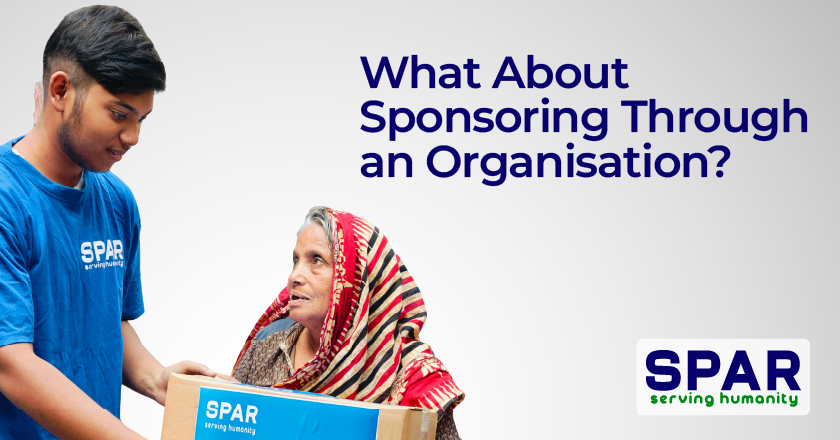
Scholars who addressed modern charitable structures confirmed that sponsoring through a trustworthy organisation still earns the orphan sponsorship reward. The intermediary doesn’t dilute it. What matters is the intention and the outcome. If a sponsor gives, and an orphan receives what they need, the link between giver and reward is intact. Families across the regions where SPAR works have been supported this way for years, through consistent remote sponsorship from Muslims around the world.
Common Misconceptions About Orphan Sponsorship Reward
Several wrong ideas circulate in Muslim communities, and they stop people from acting. The first is that only kafil, meaning a legal guardian, earns the full reward. This is a misreading. The hadith uses a broad term for one who “takes care of” the orphan, which scholars like Ibn al-Qayyim read as covering sponsors who provide material support without formal guardianship. The second misconception is that the reward only applies to orphans who have lost both parents. But in Islamic legal tradition, a child who has lost their father is considered an orphan, even if the mother is living. UNICEF data supports how common this is: most of the world’s orphaned children are paternal orphans.
Who Are the Orphans Most in Need of Sponsorship Today?
According to UNICEF, about 140 million children globally have lost at least one parent. Most live in low-income countries across sub-Saharan Africa, South Asia, and conflict-affected regions. Bangladeshi children in rural and flood-prone areas face compounded risks. Paternal orphans in these communities lose not just a parent but their household’s main income. Without support, they leave school early. Some never return. The gap between what a family can provide and what a child needs is often small in dollar terms. According to field data cited by the World Bank, $30 to $50 per month can cover basic schooling and nutrition for a child in many of these communities. But that small gap, left unfilled, shapes the rest of a child’s life.
How Sustained Support Differs From One-Time Giving
A single donation helps in a moment. Sustained sponsorship changes a trajectory. This is the difference Islamic scholars point to when they describe the kafil relationship: it’s ongoing, not occasional. A child who receives consistent support for three to five years is more likely to finish school, stay healthier, and break the cycle their family is trapped in. Real change here is rarely sudden. It comes from small, consistent efforts, season after season. The orphan sponsorship reward in the hadith reflects this. The Prophet (peace be upon him) described a lasting closeness, not a one-time gesture. That framing points toward commitment, not convenience.
What the Orphan Sponsorship Reward Means for You Today
The orphan sponsorship reward is not a distant promise. It is a living principle, grounded in hadith and confirmed by centuries of Islamic practice. UNICEF estimates over 140 million children worldwide have lost at least one parent. Many live in communities where a gap of $30 to $50 per month separates a child’s future from a closed door. The kafil relationship the Prophet (peace be upon him) described asks for consistency, not scale. Understanding this reward is the first step. Acting on it, month after month, is where its meaning lives.
What Makes the Kafil Relationship Different From General Charity
General charity covers a need in a moment. The kafil relationship covers a child across a season of life. Classical scholars like Imam al-Nawawi noted that kafala implies responsibility, not just generosity. A kafil commits to the child’s welfare as an ongoing duty. That distinction matters. It changes how a donor approaches their intention, their budget, and their understanding of what they are building with Allah.
How Small, Consistent Support Changes a Child’s Path
A child who receives steady support for three or more years is more likely to complete school and stay in good health. According to World Bank data, consistent funding at modest levels, around $30 to $50 per month, meaningfully shifts educational and nutritional outcomes in low-income households. The orphan sponsorship reward reflects this same logic. The Prophet (peace be upon him) did not describe a one-time act. He described a sustained closeness that endures.
Behind every child who stays in school is someone who chose not to stop. The orphan sponsorship reward points toward that kind of commitment. SPAR works across regions where paternal orphans face real, daily gaps, from Bangladeshi communities to Rohingya families in displacement. The work is quiet, steady, and ongoing. It does not depend on headlines. See how this work continues.