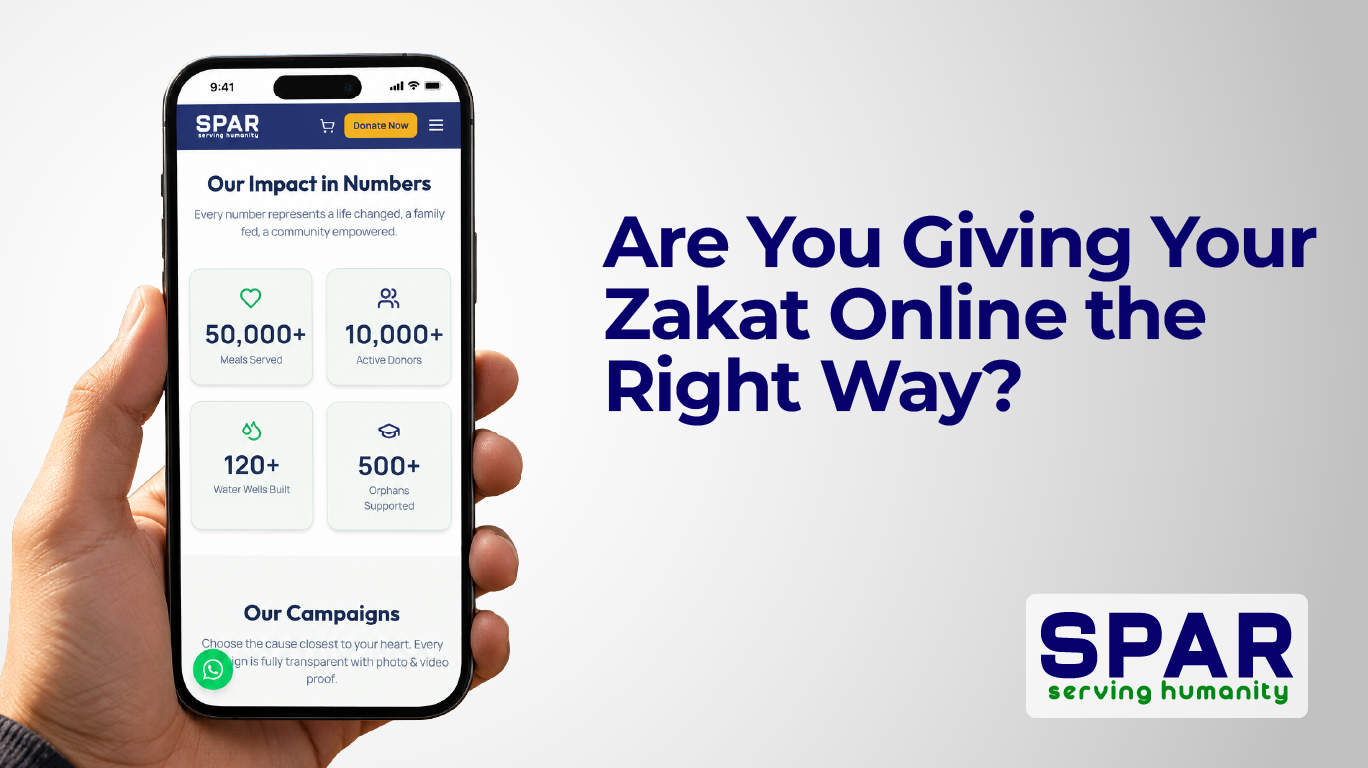
Giving zakat online means fulfilling the Islamic obligation of annual wealth purification through a digital payment to a qualified charitable recipient or organization. It carries the same religious validity as in-person giving, provided the receiving body distributes funds to one of the eight eligible categories named in the Quran (Surah At-Tawbah 9:60). The nisab threshold in 2026 sits at about $450 USD, based on 85 grams of gold, as tracked by the World Gold Council. Any adult Muslim whose net wealth holds above this amount for a full lunar year must pay 2.5% of that total. Zakat paid online is only valid when the platform passes funds to genuine asnaf (eligible recipients), not general operational costs. With over 1.8 billion Muslims worldwide, according to Pew Research, digital giving has become the primary route for the global ummah to fulfill this pillar reliably and on time.
Give Zakat Online: Quick Answer
- What it is: Zakat paid digitally to a qualified organization that distributes to Quran-approved recipients.
- Who it applies to: Adult Muslims whose net wealth exceeds the nisab threshold for one full lunar year.
- How much: 2.5% of total eligible wealth above the nisab (about $450 USD in 2026, gold-based).
- When: Once per lunar year, calculated on the same date each Islamic calendar year.
- Main rule: The platform or organization must pass funds to one of the eight asnaf categories, not general admin.
- Most common mistake: Counting gross income rather than net savings held for a full lunar year — this leads to overpaying or underpaying.
- Validity condition: A clear intention (niyyah) is required at the time of payment for the zakat to count.
Why Giving Zakat Online Matters Right Now
Digital giving has made zakat reach faster and further than at any point in Islamic history. Pew Research data shows the global Muslim population is growing rapidly, and most now live in countries where cash-based giving to local scholars or collectors isn’t easy or accessible. Online platforms let a donor in one country fulfill an obligation that directly feeds a Rohingya family, a Bangladeshi widow, or a Somali child within days. But speed comes with responsibility. Not every platform routes funds correctly, and a payment to an ineligible recipient doesn’t fulfill the obligation. At SPAR, our zakat programs channel every dollar to verified asnaf categories, with full records available. Getting the platform right matters as much as getting the amount right.
Key Facts About Giving Zakat Online
Zakat is one of Islam’s five pillars, and its rules haven’t changed. But the way Muslims pay has shifted sharply toward digital. The nisab, set at 85 grams of gold or 595 grams of silver, is checked against current market rates each year. In 2026, the gold nisab sits near $450 USD and the silver nisab near $130 USD, per World Gold Council and silver market data. Scholars at Al-Azhar and the Islamic Fiqh Academy have both confirmed that online zakat payments are valid when niyyah is present and the recipient organization meets eligibility criteria. A 2023 report by the UK-based National Audit Office on digital charitable giving found that donor confidence in online transfers has risen sharply year on year. The biggest risk isn’t the platform itself. It’s donors not knowing which of the eight asnaf categories their money actually reaches.
How Do You Know If Your Zakat Reaches the Right People?
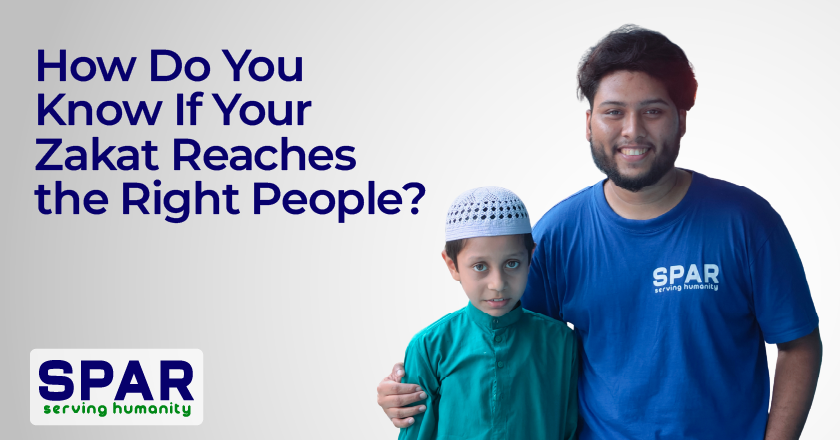
Zakat only counts when it reaches one of the eight categories named in Surah At-Tawbah (9:60). Many donors give through a platform without knowing which asnaf their funds actually reach. This is the most overlooked risk in online giving. A reputable organization will name the categories it serves, show how funds are split, and provide records on request. Before you give zakat online, ask one simple question: which of the eight categories does this organization fund? If the answer is vague, look elsewhere.
What Are the Eight Valid Zakat Categories?
The eight asnaf are the poor (fuqara), the needy (masakin), zakat administrators, those whose hearts need strengthening (mu’allafatul qulub), those in bondage, the debt-burdened (gharimun), those striving in the way of Allah (fi sabilillah), and the stranded traveler (ibn as-sabil). Most reputable zakat programs focus on the first two. But organizations should state clearly which categories they serve. Receipts are available on request from verified organizations, confirming which asnaf received the funds.
What Proof Should You Ask For?
A trustworthy organization gives you a clear breakdown. That means category-level reporting, not just a general “humanitarian aid” label. Ask whether the program is audited, whether asnaf categories are tracked, and whether field records exist. SPAR’s approach keeps full records across all programs. Transparency here isn’t a bonus. It’s part of fulfilling the obligation correctly.
Common Mistakes Muslims Make When Giving Zakat Online
Most mistakes happen before the payment is made. The most common is calculating zakat on the wrong asset base. According to Zakat scholars at the International Islamic Fiqh Academy, zakat applies to net wealth held above the nisab for a full lunar year, not gross income or total savings. A second common mistake is paying through a platform that pools donations without separating zakat from sadaqah. When funds mix, the asnaf guarantee disappears. A third mistake is delaying payment past the hawl without a valid reason, which can invalidate the obligation entirely.
Does Zakat Count If You Pay It Early?
Paying zakat before the hawl ends is allowed under the Hanafi and Shafi’i schools, with conditions. The nisab must already be met, and the early payment must be made with clear niyyah that it counts toward the upcoming year’s obligation. Ibn Qudamah, in Al-Mughni, outlines this position carefully. Early payment is especially useful for donors who want to give during Ramadan for the extra reward, even if their hawl hasn’t yet completed.
Who Needs Zakat the Most Right Now?
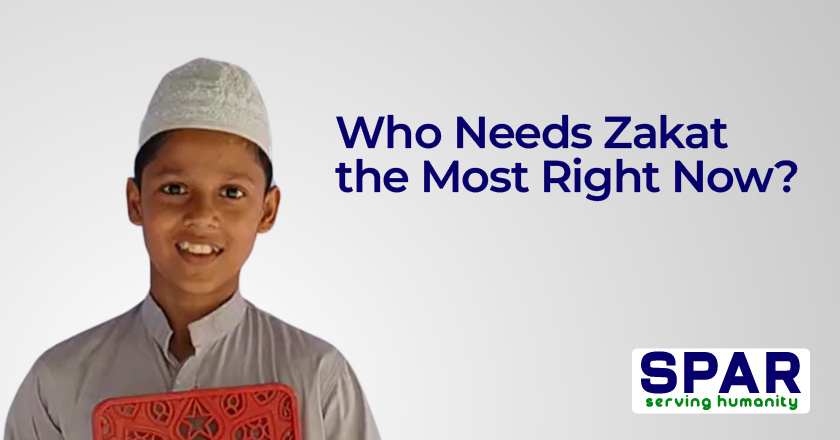
UNICEF estimates that about 333 million children globally live in extreme poverty. Many of them live in regions where SPAR maintains long-term programs: Bangladeshi villages facing seasonal displacement, Rohingya families in Cox’s Bazar, and Palestinian families under ongoing hardship. These are households that meet the fuqara and masakin criteria directly. They don’t need a one-time transfer. They need consistent, structured support across multiple seasons. The families SPAR serves aren’t statistics on a report. They’re known by name to field teams who show up, week after week, because that’s what sustained change actually looks like.
How Zakat Online Connects to Broader Poverty Relief
Zakat, when organized well, functions as a structured wealth-transfer system. The World Bank estimates that annual global zakat flows could reach $600 billion, based on the Muslim global population and average income data. That figure dwarfs most national aid budgets. But most of that potential sits uncollected or badly distributed. When Muslims give zakat online through verified channels, they activate a system built into Islamic law for exactly this purpose. Small, consistent payments from many donors create the kind of reliable funding that lets field teams plan long-term work instead of responding to crises one at a time.
What You Need to Know Before You Give Zakat Online
Muslims give zakat online more than ever before. But the method only matters if the destination is right. Zakat must reach the eight categories named in Surah At-Tawbah (9:60), and fuqara and masakin sit at the top of that list. The World Bank estimates annual global zakat flows could reach $600 billion based on Muslim population and income data. That potential only helps people when verified organizations channel it to lasting programs, not one-time distributions.
Why Consistent Giving Matters More Than Timing
One payment changes a day. Consistent giving changes a household. When zakat moves through structured programs, field teams can plan ahead. They can commit to multi-season support. Rohingya families, Palestinian families, and Bangladeshi communities facing displacement all need that kind of planned presence. A single transfer rarely breaks a cycle of poverty. Scheduled, sustained zakat distribution does.
What Separates a Reliable Organization From a Weak One
Structure separates them. A reliable organization shows clear nisab calculation tools, named categories of beneficiaries, and transparent distribution records. Receipts should be available on request. Field teams should be present long-term, not just during peaks. SPAR’s work runs across multiple regions, and the families in those programs are known by name to staff who return season after season.
Behind every lasting change is a long line of people who stayed involved after the headlines moved on. Zakat is built for exactly this, a structured transfer from those with surplus to those without, running every year, across every generation. SPAR’s field teams stay in communities long after a first intervention, because the work is designed that way. See how this work continues.