
Zakat al fitr is a mandatory charity paid by every Muslim before Eid al-Fitr prayer. It differs from annual Zakat, which is calculated on wealth and savings. Zakat al fitr is a flat per-person payment, owed on behalf of every household member, including infants. The Fiqh Council of North America puts the standard amount at around $15 USD per person. Every Muslim who has food beyond their own basic needs on the eve of Eid must pay it. In 2026, late payment after the Eid prayer is considered valid sadaqah but no longer fulfils the obligation.
Zakat al Fitr Donation: Quick Answer
- What it is: A mandatory end-of-Ramadan charity, separate from annual Zakat, paid as a fixed per-person amount.
- Who it applies to: Every Muslim who has surplus food on Eid eve, including on behalf of dependants and newborns.
- How much: About $15 USD per person is the widely cited 2026 standard, based on the cost of one sa’ of staple food.
- When: Paid before the Eid al-Fitr prayer. It’s valid from the start of Ramadan but the last night is most common.
- Who receives it: The eight eligible Zakat categories apply, but the poor and hungry are the primary recipients.
- Main rule: Payment after the Eid prayer is still accepted as voluntary sadaqah, but it does not count as Zakat al fitr.
- Most common mistake: Many people pay the correct amount but miss the deadline. Paying after Eid prayer voids the obligation entirely.
Why Zakat al Fitr Donation Matters Today
Zakat al fitr doesn’t just fulfil a personal duty. It’s designed to reach the hungry before Eid morning so they can celebrate with dignity. According to UNICEF, over 330 million children live in extreme poverty globally, and a significant share of them are Muslim. Missing the pre-Eid window means families in need don’t receive funds in time to prepare a meal. SPAR’s Zakat distribution program ensures payments reach verified recipients ahead of the prayer deadline, not after. That timing gap, small as it sounds, is the difference between a family eating on Eid or not. Getting your Zakat al fitr donation to the right hands at the right time is the whole point.
Key Facts About Zakat al Fitr Donation Most People Don’t Know
The obligation comes directly from the Prophet Muhammad (ﷺ). Ibn Abbas (may Allah be pleased with him) reported that the Prophet made Zakat al fitr an obligation for every Muslim, as a purification for the fasting person and as food for the poor (recorded in Abu Dawud and Ibn Majah). Scholars like Imam al-Nawawi confirmed the deadline is before the Eid prayer, not after. The original payment was one sa’ of dates, barley, or raisins, which today equals about 2.5 to 3 kilograms of staple food. Based on current food prices tracked by the UN Food and Agriculture Organization, that converts to roughly $12 to $20 USD depending on region. Paying in cash is accepted by the Hanafi school and most contemporary scholars, which is why monetary Zakat al fitr donation is now standard practice worldwide.
Does Zakat al Fitr Donation Have to Be Food, or Can You Pay Cash?
Cash is accepted. This is the position of the Hanafi school and the view of many contemporary scholars, including Ibn Baz and Ibn Uthaymeen. The original ruling specified one sa’ of staple food, which is about 2.5 kilograms. But classical jurists noted that food served the poor because cash was scarce. Today, cash reaches recipients faster, buys more flexibly, and suits modern distribution. According to the UN Food and Agriculture Organization, food prices vary widely by region. A cash Zakat al fitr donation lets local teams buy what’s actually affordable and available near the recipient.
Who Is Most Affected When Zakat al Fitr Donation Doesn’t Reach Them in Time?
The people who feel it most are the working poor. They earn just enough to disqualify them from year-round aid. But before Eid, even that thin margin disappears. UNICEF reports that food insecurity spikes sharply around major holidays in low-income communities across South and Southeast Asia, sub-Saharan Africa, and displaced populations globally. Rohingya families in temporary settlements, Somali communities recovering from drought, and Pakistani families in flood-affected zones sit in this gap. They have nothing extra to prepare. Zakat al fitr is the mechanism Islam built specifically for them.
Why Displaced Communities Are Especially Vulnerable
Displaced families can’t plan. They don’t know where they’ll be, what prices will be, or whether aid will reach them. A missed Zakat al fitr deadline doesn’t just mean a smaller Eid. It means a family watched the holiday pass without a proper meal. The communities SPAR supports across multiple regions include many families in this situation. They depend on structured, pre-Eid distribution. Real change here is rarely sudden. It comes from small, sustained efforts, season after season.
Why Children Bear the Biggest Burden
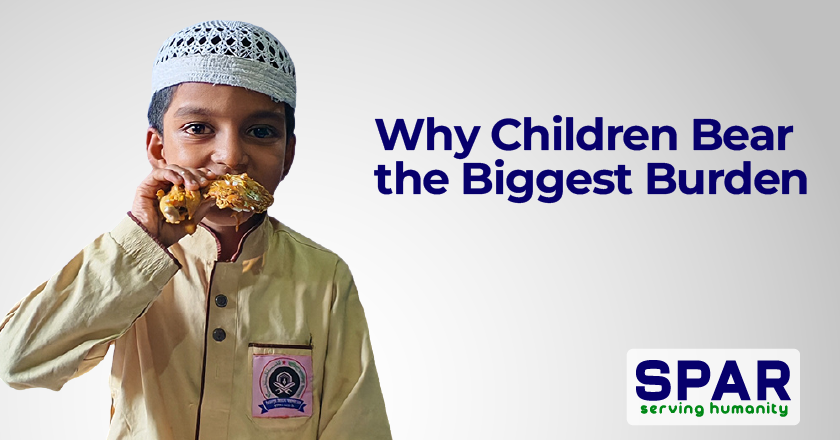
For a child, Eid is the one day the year looks different. New clothes if possible, a meal that’s better than usual, and the sense that something good happened. When Zakat al fitr doesn’t arrive on time, that day looks exactly like every other day. UNICEF estimates roughly 333 million children lived in extreme poverty as of 2023. Many of those children are Muslim. The Zakat al fitr obligation, paid on behalf of every family member, including children, was designed with them in mind.
Common Mistakes People Make With Their Zakat al Fitr Donation
Many Muslims pay too late or calculate the amount incorrectly. Paying after the Eid prayer still carries reward, scholars say, but it becomes regular charity rather than Zakat al fitr. The obligation itself has been missed. Another common mistake is underpaying. Some calculate based on the cheapest local grain, not the staple food of their region. The Hanafi school explicitly says the calculation should reflect what people actually eat. A third mistake is delegating without confirming distribution. Giving money to a friend to “sort it out” often means it arrives late or not at all.
How Zakat al Fitr Donation Connects to the Broader Meaning of Ramadan
Ramadan trains Muslims to feel hunger. Zakat al fitr translates that feeling into action. The two are directly linked. The Prophet Muhammad (ﷺ) made the obligation a purification for the fasting person, but also, explicitly, food for the poor. Ibn Abbas reported this clearly, as preserved in Abu Dawud. One act serves two purposes at once. It cleans the fasting person’s record of any lapses in speech or behavior during the month. And it ensures the poor enter Eid with dignity. That dual function makes Zakat al fitr donation unique. No other pillar of Islam holds that exact combination.
What Zakat al Fitr Donation Means for You Right Now
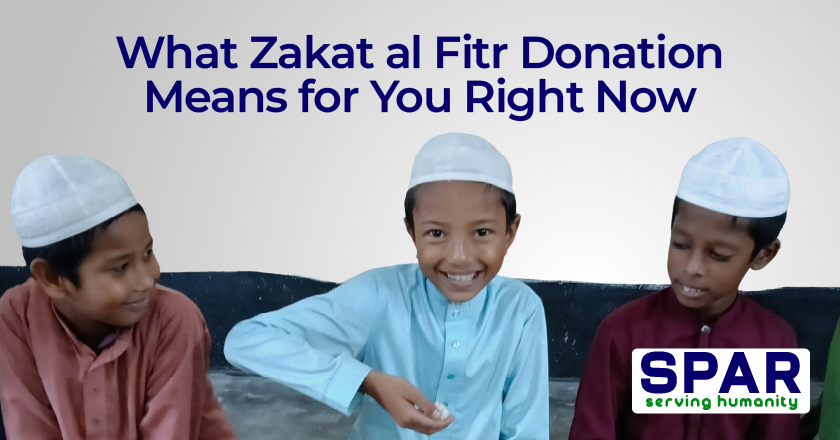
Zakat al fitr is not optional charity. It is an obligation tied to Ramadan itself, and the window to fulfil it correctly closes before the Eid prayer. The Prophet Muhammad (ﷺ) set the amount at one sa’a of staple food per person. Scholars today calculate this at roughly $7 to $15 per person in most regions, though local conditions vary. Pay it on behalf of every person in your household. Confirm the recipient qualifies under the eight categories named in Surah At-Tawbah (9:60). And make sure it reaches someone before Eid morning begins.
Does Paying Early Make a Difference?
It does. Ibn Abbas reported that the Prophet (ﷺ) described Zakat al fitr paid before the prayer as accepted zakat, and anything paid after as ordinary sadaqah. Early payment also gives distribution organisations time to reach the poorest households. Families in displaced communities, whether Rohingya, Somali, or Palestinian, often need several days of logistics before food or cash arrives. Paying at the last moment can mean your obligation is fulfilled on paper, but the family you intended to help misses Eid entirely.
How SPAR Approaches Zakat al Fitr Work
SPAR focuses on reaching the families most likely to be missed. That means communities far from urban centres, families with no access to formal banking, and households where the head earns too little to afford Eid provisions alone. The goal is not just to distribute funds. It is to make sure the recipient wakes up on Eid morning with enough. SPAR’s approach to this work is described at sparproject.org/our-work.
Zakat al fitr is one of the clearest examples of Islam tying personal worship to communal care. You fast. You purify that fast. And in doing so, you feed someone who would otherwise go without. The obligation is old, but the need it addresses is present every single year. SPAR’s ongoing work across Bangladeshi, Rohingya, Gazarian, and Sudarian communities continues quietly between appeals and headlines. See how this work continues.