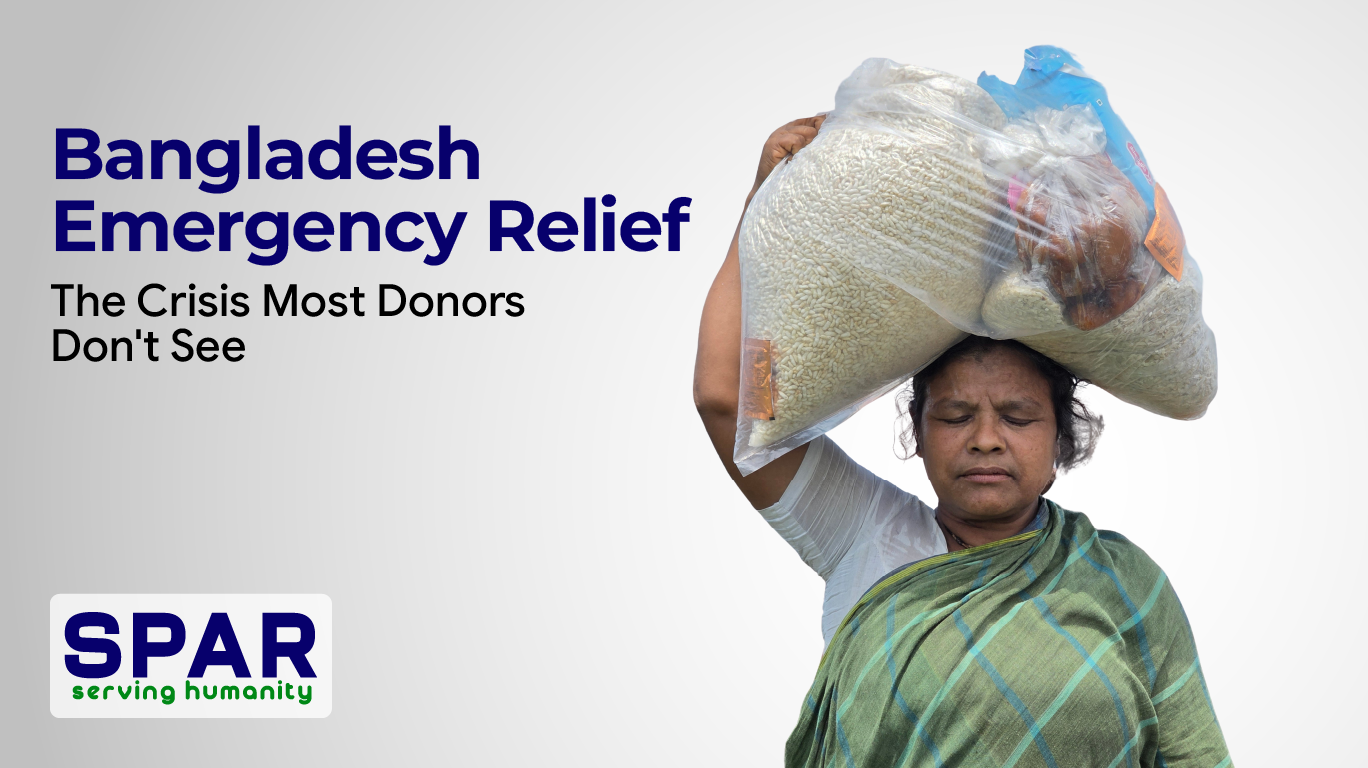
Bangladesh emergency relief is the coordinated effort to deliver food, clean water, shelter, and medical care to Bangladeshi communities hit by floods, cyclones, and displacement crises. What sets it apart from other humanitarian contexts is scale and frequency. The country faces serious climate-related disasters nearly every year, and millions of people lose homes, livelihoods, and access to basic needs within days. Rohingya refugees in Cox’s Bazar face their own separate, ongoing emergency. Both crises run at the same time.
Why Bangladesh Emergency Relief Matters Right Now
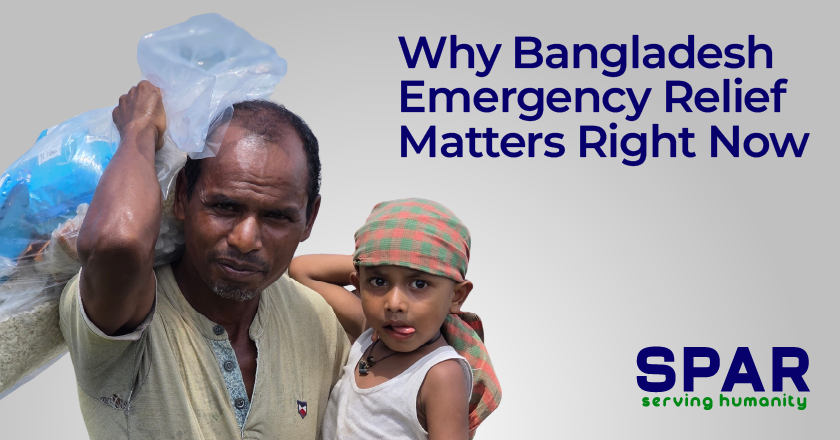
Bangladesh ranks among the world’s most climate-vulnerable countries. According to the UN Office for the Coordination of Humanitarian Affairs (OCHA), about 7 million Bangladeshi people need some form of humanitarian assistance in any given year. Floods alone can displace entire villages in under 48 hours. Children and women bear the sharpest impact. Access to safe drinking water collapses fast during disasters, and waterborne illness spreads quickly after floodwaters recede. SPAR’s emergency relief work focuses on reaching Bangladeshi families in the first, hardest days of a crisis, when needs are highest and response windows are short. That early window is where lives are saved or lost.
Key Facts About Bangladesh Emergency Relief
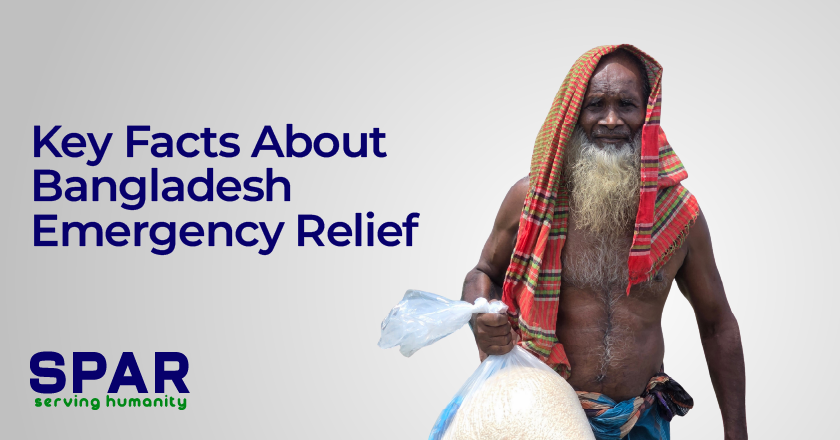
Bangladesh sits in the delta of three major river systems, making seasonal flooding a near-constant reality. The World Bank estimates that by 2050, climate change could push an additional 13 million Bangladeshi people into internal displacement. Right now, Cox’s Bazar hosts the world’s largest refugee settlement, with over 900,000 Rohingya people living in conditions that stretch emergency services every day, according to UNHCR data. Cyclone seasons bring storm surges that wipe out crops and contaminate freshwater sources across coastal districts. Most affected are Bangladeshi children under five, elderly residents, and families without land title or savings to fall back on.
Who Is Most Affected by Bangladesh Emergency Relief Needs?
Bangladeshi children under five face the highest risk during disasters. UNICEF data shows that young children suffer the worst from waterborne illness after floods contaminate drinking sources. Elderly residents and pregnant women also face serious danger. Many live in low-lying chars (river islands) with no road access when water rises. Landless families have no high ground to retreat to. Day laborers lose their income the moment floodwaters arrive. For these groups, the gap between surviving a disaster and being destroyed by one comes down to how fast relief reaches them.
Women and Girls in Crisis
Women and girls carry a hidden burden during emergencies. They manage water collection, child care, and food preparation under the worst conditions. During flood seasons, sanitation collapses fast. Open defecation areas flood over. Girls drop out of school when families move to temporary shelters. The added pressure falls hardest on mothers. Proper relief that includes hygiene kits and safe spaces for women isn’t a luxury. It’s the difference between a bad situation and a dangerous one.
Rohingya Families in Cox’s Bazar
Rohingya families in Cox’s Bazar face overlapping crises. According to UNHCR, over 900,000 Rohingya people live in one of the world’s most densely packed settlements. The land is prone to landslides and seasonal flooding. When a cyclone or monsoon hits, these communities have almost no buffer. Many shelters are made of bamboo and tarpaulin. Relief infrastructure is stretched before a disaster even begins. Bangladesh emergency relief efforts in this region require sustained, coordinated work far beyond a one-time response.
What Are the Root Causes Behind Repeated Disasters?
Bangladesh emergency relief is needed so often because multiple root causes stack on top of each other. The country sits at the mouth of three major river systems, including the Ganges and the Brahmaputra. This geography makes flooding nearly inevitable each year. But poverty, weak housing, and land insecurity make the human cost far worse. Climate change is shifting rainfall patterns and pushing sea levels higher along coastal belts. According to the World Bank, Bangladesh ranks among the countries most exposed to climate-related loss, with coastal districts losing land to the sea year after year.
Common Mistakes in Emergency Relief Responses
Many emergency responses fail not because of lack of funding, but because of poor timing and poor targeting. Arriving in an affected area two weeks after a disaster means missing the critical window. Food aid sent to the wrong district sits unused while the right district goes without. Generic supply kits often ignore what families actually need, such as oral rehydration salts, clean cloth, or baby formula. Coordination gaps between agencies mean some communities get triple coverage while others get none. Effective Bangladesh emergency relief depends on local knowledge, fast deployment, and listening to what affected families say they need.
How Small, Sustained Efforts Change the Outcome
One-time emergency drops help. But they rarely change the arc of a community’s recovery. Families who receive support for three to six months after a flood show far better recovery than those who receive a single aid package. This is true across disaster-affected regions worldwide. Sustained programs allow for follow-up, which catches secondary crises like illness outbreaks or acute malnutrition that emerge weeks after floodwaters recede. Our field teams have seen this pattern repeat across the communities we serve: the families who rebuild fastest are almost never the ones who got the most help once. They’re the ones someone kept coming back to check on. Real change here doesn’t arrive all at once. It builds slowly, season after season, because someone decided the work was worth continuing.
What Bangladesh Emergency Relief Looks Like When It Works
Bangladesh emergency relief works when it reaches people fast and stays long enough to matter. UNICEF estimates that children become acutely malnourished within weeks of a major flood if food support doesn’t arrive. Floodwaters recede, but the crisis doesn’t. Illness, crop loss, and debt follow. The communities that recover are the ones with sustained help: clean water access, food for months, and someone checking back in. SPAR’s field teams have seen this pattern across Bangladeshi villages. Short bursts of aid open a door. Consistent presence is what walks families through it.
Why the First 72 Hours Still Matter Most
Speed in the first three days saves lives. The World Health Organization notes that diarrheal disease spreads fast after floods, killing children who were healthy days before. Getting oral rehydration salts, clean water, and basic food to affected families in that window reduces preventable deaths. Bangladesh emergency relief done well means pre-positioned supplies and local teams who know the routes before disaster hits. Reactive aid that arrives on day ten is better than nothing. But it costs more lives than aid that was already close.
Why Recovery Takes Longer Than the Flood Itself
Flood recovery in Bangladesh can take six to twelve months. Families lose seeds, tools, livestock, and stored food in a single event. The World Bank links repeated flood exposure in Bangladesh to long-term poverty traps, where each disaster pushes families further behind. Children miss school. Parents take high-interest loans. Illness drains what savings remain. Relief that ends after two weeks leaves families managing a long recovery alone. Programs that stay for three to six months give Bangladeshi communities a real chance to rebuild rather than just survive.
Behind every headline about a Bangladeshi flood is a longer, quieter story. It’s the story of families who needed help not once but for many months. It’s the story of field teams who kept returning after the cameras left. SPAR’s work in Bangladesh is part of that longer story. The relief matters. So does what comes after. See how this work continues.