Donating to build a water well means funding the construction of a clean water source in a community that has none. It’s one of the most direct forms of charity a person can give. A single well can serve hundreds of people for years. The need is real: according to WHO, about 2 billion people still lack safe drinking water at home. For many Muslim donors, it also carries the weight of sadaqah jariyah, a gift that keeps giving.
Why Donating to Build a Water Well Matters Right Now
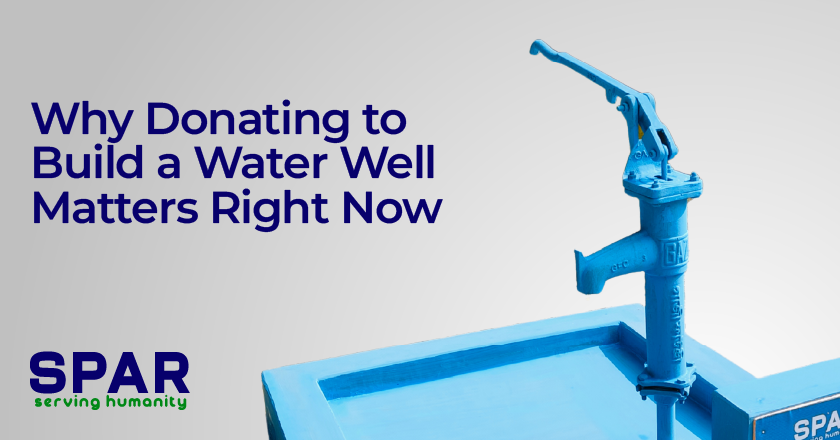
Clean water isn’t just a comfort. It’s the line between sickness and health, between a child in school and a child fetching water for miles. UNICEF links unsafe water to nearly half of all child deaths from preventable disease worldwide. Communities without a well spend hours each day collecting water, which falls hardest on women and girls. Families break the cycle when a well arrives. You can see the kind of work this supports through SPAR’s ongoing water projects. The gap between need and access is still wide, and every well built closes it a little more.
Donate to Build a Water Well: What Most People Don’t Know
Most donors assume building a well costs thousands of dollars. But in many parts of the world, a hand-pump well serving an entire village costs around $700 to $1,500 USD, depending on depth, soil type, and location. According to World Bank data, water infrastructure in low-income regions is often far cheaper than donors expect. That price covers drilling, lining, pump installation, and basic training for locals to maintain it. One donor. One well. Hundreds of lives changed. The real barrier isn’t money. It’s awareness.
How a Water Well Actually Gets Built
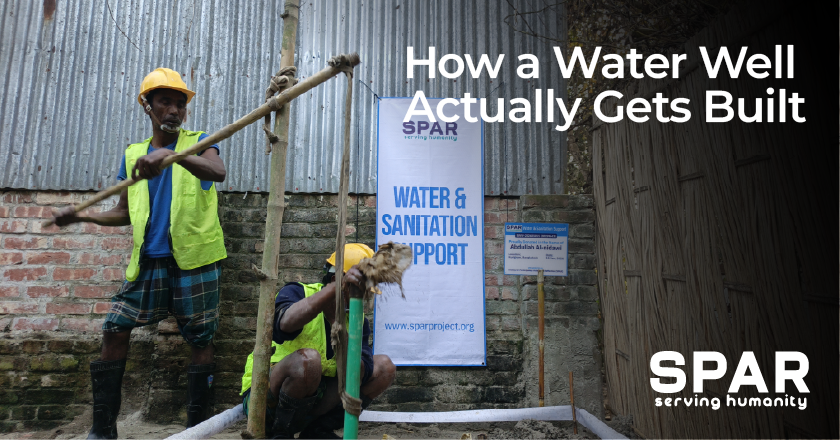
Drilling a well in a water-scarce community follows a clear process. A field team first surveys the land to find the right water table depth. Then drillers bore down, case the shaft with lining, and install a hand pump. Local community members learn basic maintenance from day one. The whole process, from site survey to first clean water, takes roughly two to four weeks. According to the World Bank, community-managed water points last far longer than those managed by outside agencies. Training local people isn’t optional. It’s what makes a well work ten years later.
What Happens After the Well Is Installed?
A well’s life depends on what happens next. Communities form small committees to manage the pump, track repairs, and collect small contributions for spare parts. When this is done well, a hand pump can serve a village for fifteen years or more. UNICEF notes that water projects without community ownership fail at far higher rates. The work doesn’t end at installation. It shifts to the people who use the water every day. That shift is what separates a well that lasts from one that sits broken in the ground.
Who Is Most Affected by the Water Crisis?
Women and girls carry the heaviest load when clean water is far away. WHO and UNICEF estimate that women and girls spend about 200 million hours each day collecting water globally. Girls miss school. Women skip income-earning work. Their health suffers too, because water sources far from home are often polluted. Children under five face the highest risk of waterborne disease. A well placed near a home changes all of this. Girls return to school. Women redirect hours to their families and livelihoods. The people who gain the most from a nearby well are the same people with the least power to build one.
Common Misconceptions About Building a Water Well
Many people think donating to build a water well means funding a big infrastructure project. It doesn’t. Most hand-pump wells in rural communities cost far less than people expect, often between $700 and $1,500 according to World Bank field data. Another common belief is that one well serves only a few families. In practice, a single well can serve 200 to 300 people when built in the right location. Some also assume a well is a one-time fix. But with proper community training, a well becomes a permanent, self-sustaining resource. The real cost of inaction is measured in sick children and lost school days, not in infrastructure budgets.
Who Needs Clean Water Most Urgently Right Now
The communities facing the worst water access gaps share common conditions. Remoteness, poverty, and displacement cut people off from safe sources. Rohingya families in Cox’s Bazar, Somali communities displaced by drought, and Bangladeshi villages in flood-prone chars all face the same gap: water nearby is often unsafe, and safe water is far. UNICEF data shows that sub-Saharan Africa holds the largest share of people without basic water access, with rural areas hit hardest. Children in these communities drink from the same ponds as livestock. Real change here is rarely sudden. It comes from small, sustained efforts, season after season, from people far from the problem who decide it still matters.
The Islamic Case for Clean Water as Charity
Islam treats water as a gift from Allah (SWT) and its provision as an act of deep worship. The Prophet Muhammad (peace be upon him) identified giving water as one of the best forms of sadaqah. A widely narrated hadith in Ibn Majah records that a companion asked what charity was best, and the Prophet replied: “Water.” Scholars like Imam al-Nawawi drew on this to explain that water sadaqah carries ongoing reward. Every person who drinks from a well you helped build generates continuous hasanat for you. This is the heart of sadaqah jariyah, a charity that doesn’t stop giving when you do.
What You Now Know About Building a Water Well
Clean water access is one of the most urgent gaps in global development. According to WHO, around 2 billion people still lack safe drinking water at home. A hand-dug well can serve an entire community for years. The cost is low relative to the impact. Sadaqah jariyah through water work is among the most sustained forms of giving in Islamic tradition. SPAR’s ongoing water programs reach communities where this gap is most severe. The work is quiet, consistent, and built for the long term.
How Long Does a Well Last?
A properly constructed borehole well lasts between 15 and 25 years with basic maintenance. The first few years are the most critical. Communities need training to manage pumps and report faults early. SPAR’s field teams build this capacity alongside the physical structure. A well without local stewardship fails fast. A well with it serves grandchildren.
What Happens After the Well Is Built?
Construction is the beginning, not the end. Communities need hygiene education, pump maintenance training, and occasional repairs. UNICEF data shows that roughly 30% of rural water points in low-income countries are non-functional at any given time, mostly from neglect, not damage. SPAR pairs every water project with community follow-up. That follow-up is what separates a well that lasts from one that sits broken in a field.
Behind every clean water source is a chain of decisions made by people who never saw the result. Someone chose to act. Someone else chose to keep acting, year after year, long after the moment of giving passed. That is the spirit of sadaqah jariyah. At SPAR, we carry that spirit into our ongoing water work across the communities we serve. The results build slowly. But they build. See how this work continues.
