A Bangladesh water well donation funds the construction of a hand-pump or tube well in a community with no safe water access. Unlike a one-time food parcel, a single well serves hundreds of families for years. According to UNICEF, about 40 million people in Bangladesh still lack access to clean, safe drinking water. Rural Bangladeshi families, displaced Rohingya communities, and children bear the hardest costs. A well changes that math permanently.
Why Bangladesh Water Well Donation Matters Right Now
Water-borne disease kills children faster than hunger does. The WHO links unsafe water to diseases like cholera, typhoid, and diarrhoea, which hit Bangladeshi children under five hardest. Unsafe sources include open ponds, rivers shared with livestock, and arsenic-laced shallow wells. Many families walk over an hour daily just to reach water that still isn’t safe. That’s time stolen from school, work, and rest. You can see our ongoing water work at SPAR to understand how field teams assess sites and bring clean sources to the communities that need them most. Wells don’t just deliver water. They restore time, health, and dignity.
Key Facts About Bangladesh Water Well Donation
Bangladesh sits on one of the world’s largest river deltas, yet safe water remains out of reach for tens of millions of its people. The World Bank estimates that waterborne illness costs Bangladesh billions in lost productivity each year. Arsenic contamination, one of the country’s most documented water crises, affects an estimated 20 million people through naturally occurring groundwater pollution, according to WHO data. A hand-pump tube well in rural Bangladesh typically costs between $200 and $500 USD to install, making it one of the most affordable forms of long-term humanitarian aid available. In the most water-stressed areas, a single well can serve 200 to 300 people daily.
What Types of Wells Work Best in Bangladesh?
Not every well fits every site. In Bangladesh, the most common choice is the hand-pump tube well. It reaches deep groundwater below the arsenic-contaminated shallow layer. Installation is fast, maintenance is low, and a single unit can serve a wide surrounding area. In areas with higher population density, submersible electric pumps paired with overhead tanks allow multiple taps across a cluster of homes. According to UNICEF, tube wells remain the most practical solution for rural Bangladeshi communities because local mechanics can repair them without outside help. Choosing the right type from the start saves time, money, and lives.
Hand-Pump Tube Wells
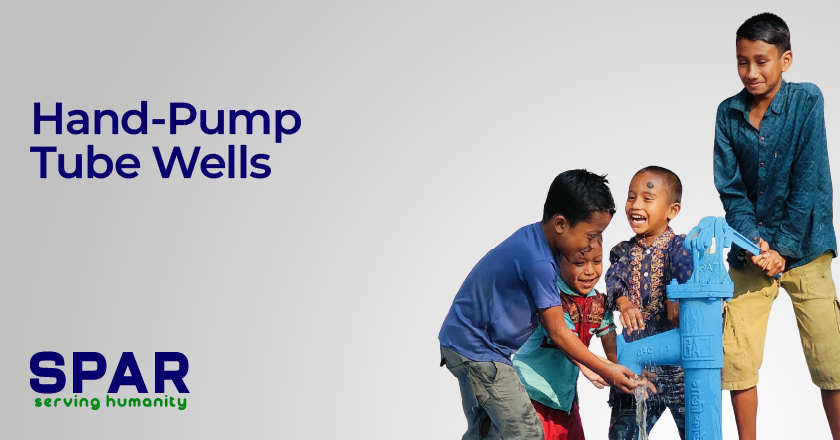
Hand-pump tube wells work without electricity. That matters in remote Bangladeshi villages where power cuts are common. The pumps draw from aquifers 150 to 300 feet below the surface, safely below the arsenic zone. WHO technical guidance confirms that properly installed deep tube wells consistently test below the international arsenic limit of 10 micrograms per liter. A single unit costs about $200 to $500 to install, including the platform, hand pump, and drainage channel. Families living within a half-mile radius can share one well and still meet their daily water needs.
Gravity-Fed and Solar-Powered Systems
Some regions in Bangladesh sit near elevated ground or receive strong sunlight year-round. In those areas, solar-powered pumps push water into raised storage tanks. Gravity then carries it to several tap points around a village. This design removes the need for daily hand-pumping. It suits schools, health clinics, and larger settlements. The upfront cost is higher, closer to $1,500 to $3,000 per system, but the long-term output is greater. According to World Bank data, solar water systems in South Asia show lower per-liter costs over a 10-year period than fuel-powered alternatives.
Who Is Most Affected by the Water Crisis in Bangladesh?
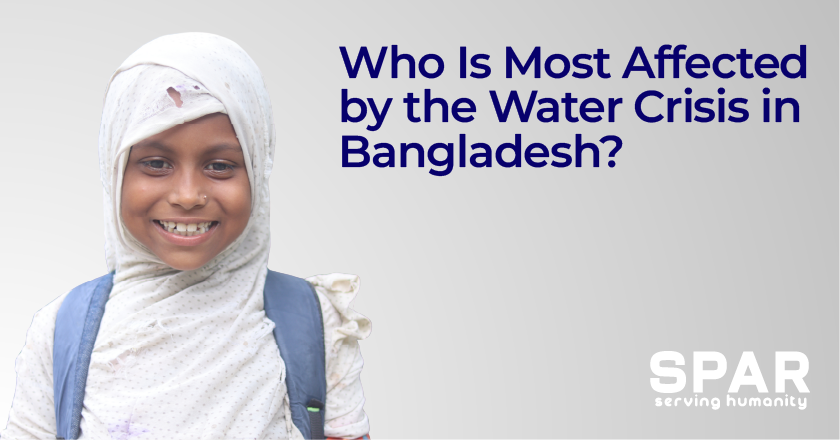
Children under five and women bear the heaviest burden. UNICEF estimates that waterborne diseases kill hundreds of thousands of children under five globally each year, and Bangladeshi children are among the most exposed in South Asia. Women and girls walk the furthest for water in rural households. That daily labor pulls girls out of school and keeps women from paid work. Arsenic poisoning hits farming families hardest, since many rural wells were drilled during development programs in past decades without full testing. The crisis isn’t spread evenly. It concentrates in the south and northwest, in flood-prone districts and char lands along river channels.
Common Misconceptions About Bangladesh Water Well Donation
Many donors assume any well drilled anywhere solves the problem. That’s not quite right. Shallow wells in many Bangladeshi districts pull from arsenic-contaminated layers. Without proper depth testing and site selection, a new well can expose a community to slow arsenic poisoning rather than protect them from it. Another common assumption is that one well per village is enough. Population density in rural Bangladesh is among the highest in the world, according to World Bank figures. A single well may only reach families within walking distance. Real coverage needs careful mapping, not just drilling. Done right, a Bangladesh water well donation funds not just hardware but also soil testing, depth assessment, and community training on safe use.
How Long Does a Donated Well Last?
A properly built tube well in Bangladesh lasts 15 to 20 years with basic maintenance. The hand pump is the part most likely to need repair, usually within 3 to 5 years of first installation. Most communities can handle minor repairs locally. Spare parts are sold in district markets, and local mechanics learn pump repair quickly. What cuts a well’s life short isn’t the hardware. It’s the lack of a care plan. Field teams at SPAR build a maintenance routine into every water project from day one. Real change here is rarely sudden. It comes from small, sustained effort, season after season.
What a Bangladesh Water Well Donation Actually Changes
Clean water changes everything downstream. According to WHO, unsafe water causes more than 1.4 million deaths each year. A Bangladesh water well donation breaks that chain at the source. Tube wells, when built with proper depth testing and arsenic screening, deliver safe water for 15 to 20 years. That’s one decision with decades of impact. SPAR’s water work pairs each well with community training and a long-term care plan. The goal isn’t a single structure. It’s a lasting shift in how a family lives each day.
Why Site Selection Matters More Than the Well Itself
Not every drill site is equal. Bangladeshi groundwater varies sharply by depth and geology. Arsenic contamination sits in specific layers of sediment, and hitting the wrong layer poisons a community slowly. SPAR’s field teams run soil tests and depth assessments before a single piece of equipment arrives. This step takes time. But it’s the difference between a well that protects and one that harms.
What Communities Do After the Well Is Built
A well without a care plan fails early. Hand pumps need minor repairs within three to five years. Parts are available in district markets. Local mechanics learn the repairs fast. SPAR builds a maintenance routine into every water project from the start. Community members learn what to check and when. That local ownership is what keeps a well running long after the team has left.
Behind every working well is a chain of quiet decisions. Someone chose the right site. Someone tested the soil. Someone trained a local mechanic. At SPAR, that chain doesn’t end at installation. The work in Bangladeshi communities keeps going because sustained effort, not a single act, is what makes clean water last. See how this work continues.
