An Islamic donation water well is a charitable water project funded by Muslims as an act of ongoing worship. It differs from one-time giving because the reward continues after death, as long as people draw water from it. According to UNICEF, about 2.2 billion people worldwide still lack safe drinking water. Any Muslim can fund a well on behalf of themselves or a loved one. It’s one of the most accessible forms of sadaqah jariyah in practice today.
Why Islamic Donation Water Wells Matter Right Now
Clean water isn’t a comfort. It’s survival. According to the World Health Organization, contaminated water kills more people each year than all forms of violence combined. Children carry the heaviest load. Girls in particular lose hours of schooling just walking to fetch water from unsafe sources. Communities that gain a clean water source see immediate changes in health, school attendance, and daily dignity. Muslim donors around the world fund these wells as sadaqah jariyah, a gift that earns reward with every sip. You can learn more about our ongoing water projects and the communities they reach. The need is real, and the opportunity to meet it has never been clearer.
Key Facts About Islamic Donation Water Wells
Not all water projects are equal, and donors deserve to know the difference. A hand-pump well in a rural area typically costs between $500 and $1,500 USD, depending on depth and location. According to the World Bank, every $1 USD invested in clean water access returns about $4 USD in economic productivity. The relief is felt fastest by women and children, who historically spend the most time collecting water. In communities served by long-term water programs, waterborne illness rates drop sharply within the first year. Islamic water well projects often come with maintenance plans too, so the well keeps working for years. That’s what turns a single donation into a lasting chain of reward.
Does an Islamic Donation Water Well Count as Sadaqah Jariyah?
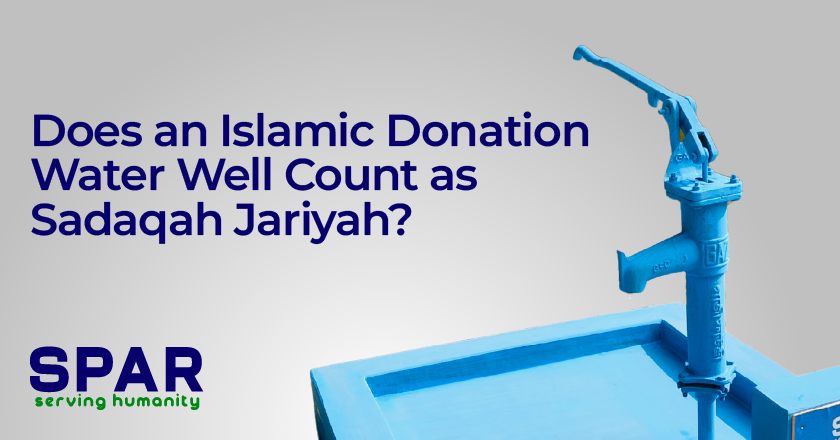
Yes. An Islamic donation water well is one of the clearest examples of sadaqah jariyah in classical scholarship. The Prophet Muhammad (peace be upon him) listed “a flowing spring” as one of the deeds that continues to reward a believer after death (Sahih Muslim, Book 13, Hadith 1631). Scholars like Imam an-Nawawi confirmed that water given for public benefit fits this category. The reward isn’t tied to the donor being alive. Every person who drinks, every child who survives illness, every family that cooks a clean meal, all of it keeps the scale moving.
What Makes a Well “Jariyah” and Not Just Charity?
Sadaqah jariyah requires the benefit to be ongoing. A one-time meal feeds someone today. A water well feeds a community for years. Imam Ibn al-Qayyim noted that continuous benefit is what separates jariyah from ordinary sadaqah. A well with proper maintenance can serve a village for a decade or more. That longevity is the religious point. The deed outlives the donor, and so does the reward.
Do Scholars Agree on Water Wells Specifically?
Classical scholars across all four major madhabs agreed that water provision ranks among the highest acts of voluntary charity. Ibn Baz wrote that building a well in a water-scarce community is among the best uses of discretionary wealth. The Hanbali, Shafi’i, Maliki, and Hanafi schools all treat public water access as a communal religious obligation when communities lack it. An individual who funds it steps in where the community has a gap. That’s not just charity. That’s fard kifayah fulfilled.
Who Suffers Most When Clean Water Is Missing?
Children under five bear the heaviest burden of waterborne disease. According to WHO, unsafe water causes about 485,000 diarrhoeal deaths each year, and most victims are young children. Women and girls come second. In many low-income regions, they walk two to six hours daily to collect water. That time cost keeps girls out of school and keeps mothers from earning income. The elderly and people with disabilities also struggle, because collecting water from distant sources demands physical strength they may not have. Water scarcity is never equally shared.
What Happens to Girls Without Nearby Water Access?
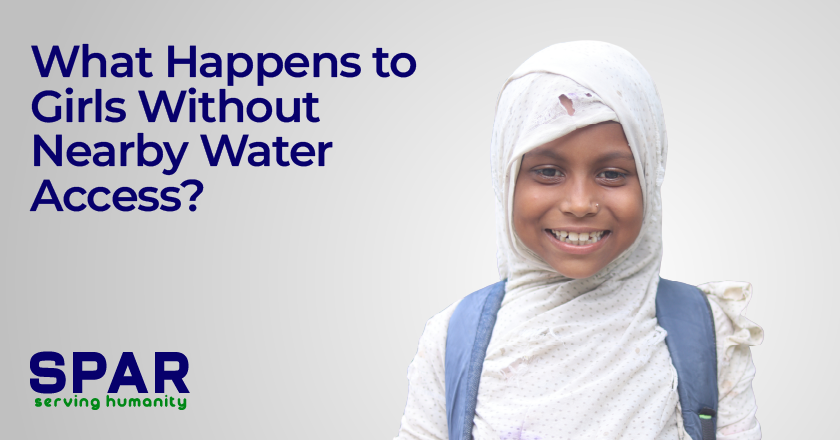
Girls’ school attendance drops sharply in communities without nearby water. UNESCO data shows that girls in sub-Saharan Africa alone lose about 40 billion hours each year to water collection. When a well arrives close to a home or school, girls return to class. Dropout rates fall. The change isn’t slow. Families report it within weeks of a new water source opening. A water well isn’t just a health project. It’s an education project too.
Common Misconceptions About Islamic Donation Water Wells
Many donors assume one well serves only a handful of families. But a properly sited hand-pump well can serve 250 to 300 people when placed near a cluster of homes. Another misconception is that wells are one-off projects. Good water programs include maintenance training and spare parts so communities keep the well running without outside help. Some donors also worry that the well will be misused or broken. Field experience across Rohingya, Bangladeshi, and Somali communities shows that when a community is involved in the installation process, they protect the asset fiercely.
What Does the Build Process Actually Look Like?
A water well project moves through clear stages: site assessment, community consultation, drilling or digging, lining, pump installation, and water quality testing. The whole process takes between two and eight weeks depending on soil type and water depth. Teams test the water before any community use begins. WHO sets the benchmark at fewer than 0 *E. coli* colonies per 100ml for safe drinking water. If a site fails, the team redrills or treats the source. The communities we serve are part of every step, not just the end result. Real change here is rarely sudden. It comes from small, sustained efforts, season after season.
What You Should Know Before Choosing an Islamic Donation Water Well
A water well is one of the most enduring forms of sadaqah jariyah a Muslim can give. According to WHO, around 2 billion people still lack safe drinking water at home. Many of them live in the same regions where Islamic charities focus their work. A single hand-pump well, properly sited and maintained, gives a whole community clean water for years. SPAR’s ongoing water programs work to make that possible. The goal is not one well. It is a network of wells, maintained and protected by the communities themselves.
How Community Ownership Changes Everything
When families take part in the build, they take ownership. They know how the pump works. They know who to call when a part fails. SPAR’s approach to Islamic donation water well projects centers on this transfer of knowledge. A well without community ownership breaks and stays broken. A well with it runs for a decade or more. That difference is what separates a relief project from a lasting change.
Why Water and Worship Connect So Deeply in Islam
Cleanliness is core to Islamic practice. Wudu, ghusl, and the tahara of prayer spaces all depend on water access. Without a clean source nearby, worship itself becomes harder. Scholars such as Imam al-Nawawi wrote at length about the religious duty to remove harm from others. Providing water removes one of the heaviest daily burdens a family can carry. The spiritual return on a water well is not symbolic. It is real and ongoing.
Behind every working well is a chain of quiet decisions. Someone chose to learn about sadaqah jariyah. Someone chose to act on it. At SPAR, our water programs exist because people made that choice and stayed committed long after the announcement passed. The communities we serve are not footnotes. They are the reason the work continues, season after season. See how this work continues.
