Donating towards a water well means funding the construction of a freshwater source in a community that lacks safe, reliable water access. Unlike one-time aid, a well serves families for years. According to WHO, about 2.2 billion people worldwide still lack access to safe drinking water. It benefits entire communities at once, not just single households. And it’s one of the most measurable ways to reduce disease, poverty, and preventable death.
Why Donating Towards a Water Well Matters Right Now
Clean water isn’t just a comfort. It’s the base of everything else: health, education, and economic stability. WHO data shows that waterborne diseases kill over 1.4 million people each year, most of them children under five. In displaced and rural communities, women and girls often walk hours each day just to collect water. That time can’t go towards school or work. It also exposes them to real physical danger. SPAR’s ongoing clean water work focuses on reaching communities where this burden is heaviest. A single functioning well can break that cycle in ways that short-term relief simply can’t.
Key Facts About Donating Towards a Water Well
Most people don’t know how far a well’s impact actually reaches. UNICEF estimates that one clean water point can serve hundreds of people daily, often for a decade or more with basic upkeep. The cost of reaching one person with clean water varies by region, but it’s often as low as $20 to $30 USD per person per year. That figure comes from World Bank infrastructure assessments. Communities with clean water see school attendance rise, especially among girls. They also report fewer clinic visits and lower rates of cholera and typhoid. The scale of return, measured in lives and in time, is hard to match with any other single investment.
What Makes a Water Well Last?
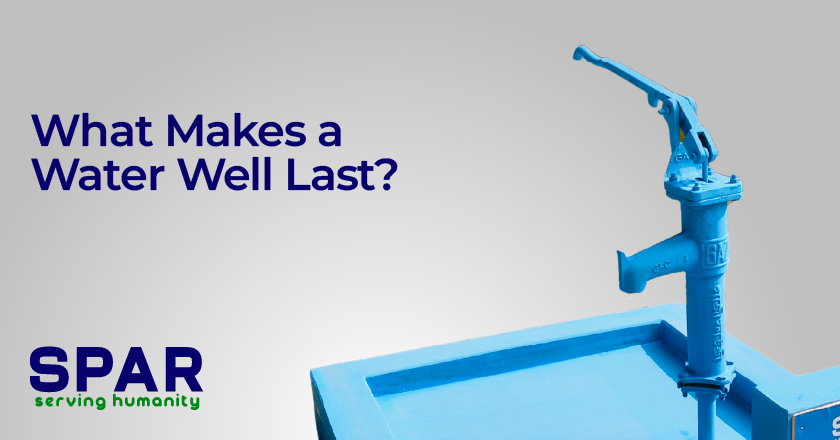
A well that breaks down in year two helps no one. The difference between a functioning well and an abandoned one often comes down to three things: materials, depth, and community training. According to the World Bank, hand-pumped wells that include local maintenance training last twice as long as those installed without it. Steel casings resist corrosion in high-mineral soil. Concrete aprons keep surface runoff from contaminating the water table. Getting these details right at the start matters far more than moving fast. A well built properly can serve a community for fifteen to twenty years with minimal outside help.
Who Maintains the Well After It’s Built?
Local ownership is the key. When a community selects its own maintenance committee before the well goes in, they protect it. They charge small fees to cover spare parts. They track pump wear before it fails. WHO notes that community-managed water points have significantly higher functionality rates than government-managed ones in rural settings. The well becomes theirs, not a charity gift dropped and forgotten. That shift in ownership is what separates a working pump from a rusted one.
What Soil and Depth Conditions Matter Most?
Depth determines safety. Shallow wells, anything under twenty feet, sit inside the zone where surface bacteria and farm runoff collect. UNICEF recommends a minimum depth of thirty feet in most rural contexts to reach water that’s naturally filtered through soil layers. In flood-prone or low-lying areas, that number rises. Getting the hydrogeology right before drilling is not optional. It’s the work that nobody photographs, but it’s what keeps the water clean for years.
Who Benefits Most When You Donate Towards a Water Well?
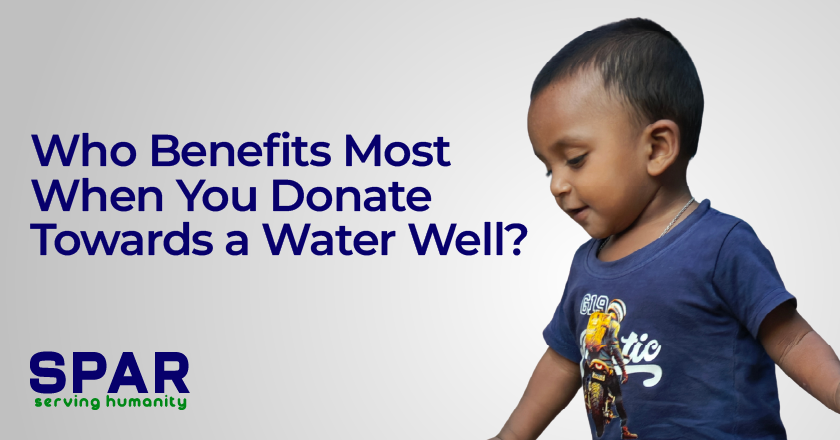
Children and women feel the change first. A clean water point within walking distance gives girls back hours they spent hauling water. Those hours go toward school. Women who no longer carry twenty-litre loads daily report fewer back injuries and more time for income work. According to UNICEF, access to clean water near the home increases girls’ school attendance by as much as 15 percent in some regions. The elderly and disabled, who often can’t make long water trips at all, also gain direct access. Clean water reaches everyone, but it lifts those with the least capacity to cope first.
Common Misconceptions About Donating Towards a Water Well
Many donors assume one well means one family. That’s rarely true. A properly sited community well can serve two hundred to five hundred people daily, depending on pump capacity and population density. Another common belief is that wells are a one-time fix. In reality, they need periodic maintenance, usually every two to three years. Some donors also think that donating towards a water well only helps in emergencies. But the need is ongoing and structural. In Rohingya refugee settlements in Cox’s Bazar, Bangladeshi border communities, and Somali villages far from urban water networks, the shortage isn’t seasonal. It’s built into the landscape. Change here is rarely sudden. It comes from small, sustained efforts, season after season, from people far from the problem who choose to stay invested.
How Water Access Connects to Every Other Crisis
Water isn’t just about thirst. It sits underneath education, health, and economic stability at once. The World Bank estimates that unsafe water and poor sanitation cost low-income countries up to 5 percent of their GDP annually through lost productivity and healthcare spending. When a community gets clean water, clinic visits fall. Mothers spend fewer days nursing sick children. Fathers don’t miss work because of waterborne illness. Palestinian families rebuilding in conflict-affected areas report that access to clean water is the first thing they name when asked what stability feels like. It’s not glamorous. But it’s foundational. Nothing else holds without it.
What Donating Towards a Water Well Actually Changes
Clean water changes everything around it. UNICEF estimates that for every $1 spent on clean water access, communities gain roughly $4 back in reduced healthcare costs and recovered productivity. Children stay in school. Mothers work. Illness drops. When people choose to donate towards a water well, they aren’t funding one moment. They’re funding a chain of smaller changes that build over years. The work that SPAR carries out across Bangladeshi villages, Somali communities, and Palestinian families reflects that same logic. Water first. Everything else follows.
Why the Long-Term Framing Matters
Most crises get coverage for a few weeks. Then attention shifts. But water need doesn’t follow a news cycle. Rohingya families in Cox’s Bazar face water scarcity year-round. Sudarian communities in displaced settlements need clean water between harvests, not just during floods. The World Bank links unsafe water to up to 5 percent of GDP loss in low-income countries each year. That number is structural. And the response has to be structural too. One-off giving helps. Long-term commitment helps more.
What Makes a Water Well Worth Funding
Not all wells serve the same purpose. A well in a dense Bangladeshi community might reach hundreds of families. A well near a Somali village school protects children who’d otherwise walk miles for water that makes them sick. The cost to install a basic hand-pump well ranges from roughly $500 to $2,000, depending on depth and location. According to WHO data, access to clean water cuts child diarrhea deaths by up to 45 percent. That’s the return on one well, built once, used for decades.
Behind every measurable change is a long line of people who chose to stay involved long after the headlines moved on. At SPAR, we’re one of those quiet lines. The work across Bangladeshi villages, Somali communities, and Palestinian families keeps going because ordinary people keep asking whether their contribution still matters. It does. Water wells don’t make news. But they make mornings easier, children healthier, and communities more stable. See how this work continues.
