A water well pump donation funds the installation of a mechanical pump on a hand-dug or drilled well, turning a static water source into one families can actually use every day. Unlike a basic open well, a pump keeps water sealed from surface contamination. According to WHO, unsafe water kills about 1.4 million people each year. Rural families, women, and young children bear most of that burden. A pump changes the daily reality for an entire community.
Why Water Well Pump Donation Matters Right Now
Most people think a well alone solves the problem. It doesn’t. An open, uncovered well collects runoff, insects, and waste. A pump seals the source and lifts clean water to the surface on demand. According to UNICEF, about 703 million people still lack basic clean water access, and most of them live in rural areas across sub-Saharan Africa and South Asia. For Bangladeshi villages and Rohingya communities in displacement, that gap isn’t abstract. It’s the distance a mother walks before sunrise carrying an empty container. You can see our ongoing clean water work at SPAR to understand how pump installations fit into long-term water programs. A pump isn’t just infrastructure. It’s the difference between a child going to school or spending the morning fetching water.
Key Facts About Water Well Pump Donation
Hand pump technology has existed for centuries, but modern submersible and hand-operated pump units changed what’s possible in low-resource settings. A basic hand pump installation in a rural community costs between $500 and $1,500 USD, depending on depth and terrain, according to World Bank water sector data. Submersible electric pumps cost more but serve larger populations. The most widely deployed model in South Asia and sub-Saharan Africa is the India Mark II hand pump, which can serve up to 300 people from a single installation. According to WHO and UNICEF’s Joint Monitoring Programme, a functioning pump reduces waterborne disease rates in a community by up to 47%. That’s not a small number. It means fewer children hospitalized. It means women reclaim hours each day. It means a school can run because its students aren’t sick.
What Types of Water Well Pumps Are Used in Donation Programs?
Most water well pump donation programs deploy one of three pump types: hand pumps, submersible electric pumps, or solar-powered pumps. The right choice depends on well depth, population size, and whether the community has reliable electricity. Hand pumps cost less and need no power source. They suit small villages well. Submersible pumps push water from greater depths and serve larger populations, but they need electricity or a generator. Solar pumps are growing fast across South Asia and sub-Saharan Africa because they cut running costs to near zero after installation.
Hand Pumps vs. Submersible Pumps
Hand pumps are the most common choice in rural water well pump donation programs. The India Mark II and Afridev models are widely used across Bangladeshi villages and Nigerian communities. They require no fuel, and local mechanics can fix most breakdowns with basic tools. Submersible pumps go deeper, often 60 to 200 feet, and can supply an entire school or health clinic from one borehole. According to WHO, communities with deeper, protected boreholes show lower rates of groundwater contamination than those using shallow open wells.
Why Solar Pumps Are Growing
Solar-powered pumps are changing what’s possible in off-grid communities. UNICEF data shows solar pump installations in sub-Saharan Africa grew significantly over the past decade. A solar pump system costs more upfront, often between $1,500 and $4,000, but it removes ongoing fuel costs. That matters in places where diesel is hard to get and expensive. Rohingya communities in Cox’s Bazar have benefited from solar pump models because grid electricity isn’t reliable in camp settings. The sun, however, shows up every day.
Who Is Most Affected by Lack of Clean Water Access?
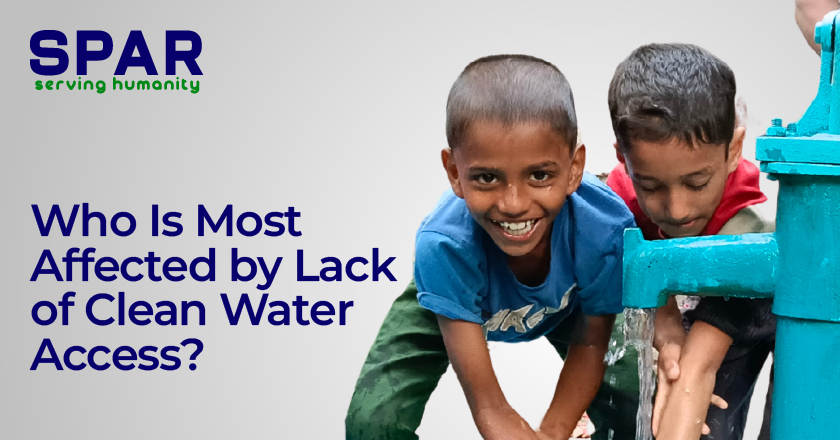
Children under five and women bear the heaviest burden of water scarcity. UNICEF estimates that women and girls spend about 200 million hours each day collecting water globally. That time comes directly out of school, work, and rest. In rural Bangladeshi and Somali communities, girls often miss school because they spend mornings at distant water sources. Children under five face the greatest health risk from waterborne illness. According to WHO, diarrheal disease kills around 1,000 children under five every single day, and most of those deaths are preventable.
Common Misconceptions About Water Well Pump Donation
Many donors assume that digging a well is the hard part. It isn’t. The harder part is keeping the pump working for ten or fifteen years. A pump that breaks down and stays broken helps no one. Studies from the Rural Water Supply Network found that up to 40 percent of hand pumps in sub-Saharan Africa are non-functional at any given time, often because no maintenance plan exists. A real water well pump donation program builds in spare parts, local training, and a repair fund. Without those, a working pump can become a broken one within two years.
One-Time Gifts vs. Long-Term Support
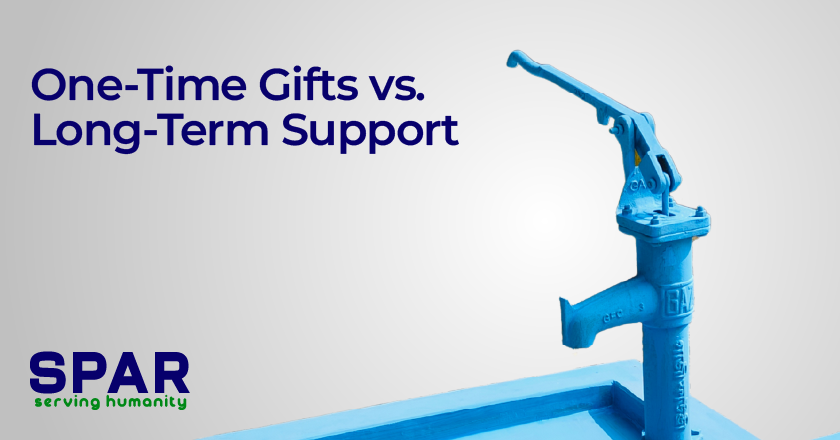
A single donation can fund the installation. But water access is not a one-time event. Pumps need annual checks. Seals wear out. Handles crack. The communities that keep clean water flowing year after year are the ones connected to programs that return. Not once. Season after season. Real change here is rarely sudden. It comes from small, sustained efforts, repeated quietly, long after the initial installation photos are taken.
How Does a Water Well Pump Connect to Broader Development?
Clean water access is a gateway to almost every other development goal. When a community gets a working pump, school attendance rises, especially for girls. Mothers spend less time walking and more time on income. Health clinics stop treating preventable infections. The World Bank links improved water access directly to economic gains, estimating that every $1 invested in water and sanitation returns about $4 in productivity. Water isn’t a single issue. It connects to health, education, gender equality, and economic growth in ways that ripple far beyond the borehole itself.
What a Water Well Pump Donation Actually Changes
Clean water access shifts everything downstream. UNICEF estimates that women and girls globally spend 200 million hours each day collecting water. A working pump returns that time. School attendance rises. Mothers work. Children stop getting sick from the same source they drink from. The World Bank links every $1 spent on water and sanitation to roughly $4 in productivity gains. A water well pump donation is not a single act. It is the start of a chain that touches health, education, and income, season after season.
Why Long-Term Commitment Matters Most
One installation is a beginning. What follows determines whether that beginning holds. Pumps need maintenance. Communities need training. The programs that last are the ones that return, check seals, replace worn handles, and train a local person to manage repairs. SPAR’s water work is built on that model. Not one visit. Repeated presence. The families we serve gain clean water access that holds past the first year, and past the second.
How Clean Water Connects to Community Rebuilding
Water infrastructure rarely stands alone. Where clean water arrives, health clinics treat fewer infections. Where girls stop walking hours for water, they return to school. Where mothers regain those hours, household income climbs. From Bangladeshi villages to Rohingya communities in Cox’s Bazar, this pattern repeats. SPAR sees it in the regions we work across. Clean water is not the end of development. It is the condition that makes the rest of development possible.
Behind every working pump is a decision someone made to stay involved. Not just to fund an installation, but to follow through on what comes after. At SPAR, that follow-through is the work. The borehole gets drilled. The pump gets fitted. Then the maintenance visits start, and the community training begins, and the clean water keeps flowing because the commitment never stopped. That is what the communities we serve rely on. See how this work continues.
