A Muslim water well donation is an act of sadaqah jariyah, meaning ongoing charity that earns reward even after death. It funds the digging or repair of a clean water well for a community that has none. According to WHO, about 2 billion people still lack safe drinking water at home. This form of giving is open to any Muslim. And it remains one of the few deeds the Prophet Muhammad (peace be upon him) pointed to as a gift that never stops.
Why Muslim Water Well Donation Matters Right Now
Clean water isn’t just a comfort. It’s the line between life and illness for millions of families across the regions where aid programs operate. UNICEF reports that unsafe water kills more children under five each year than violence does. A single well can serve hundreds of families for years. That’s why this act of sadaqah jariyah carries such weight in Islamic giving. It doesn’t stop at the moment of payment. Every cup of water drawn from that well counts as ongoing reward. You can explore our clean water work at SPAR to see how this long-term commitment takes shape in the field.
Key Facts About Muslim Water Well Donation Most People Don’t Know
Not every water well donation works the same way. The depth, location, and method of drilling all affect how long a well lasts and who it can reach. According to the World Bank, access to clean water reduces child mortality rates by up to 21% in low-income regions. A hand-pump well in a rural community can cost as little as $300 USD and serve a village for a decade or more. The hadith in Sahih al-Bukhari (Book 24, Hadith 573) records that Sa’d ibn Ubadah asked the Prophet (peace be upon him) what charity is best for his deceased mother. Water was the answer given. That exchange has guided Muslim giving for over 1,400 years.
What Types of Water Wells Can Muslims Fund?
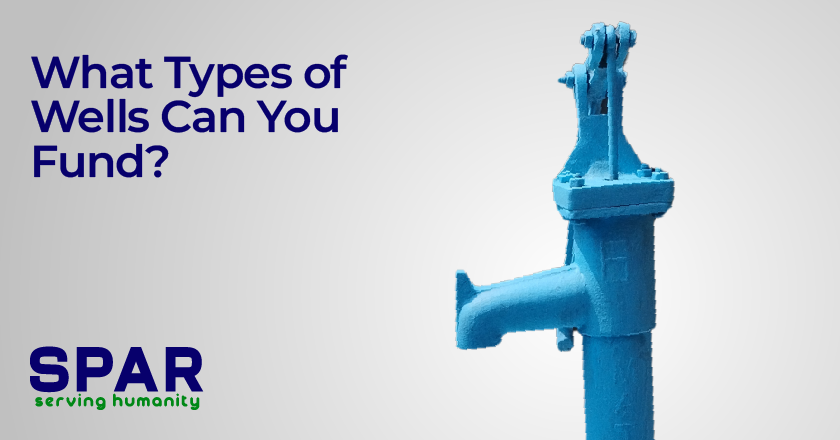
Muslim water well donation takes several forms. The most common is the hand-pump well, which draws water from 30 to 60 metres below the surface. These suit rural communities with no piped infrastructure. Rope pumps and submersible electric pumps serve larger settlements with deeper water tables. Solar-powered wells are growing fast. According to UNICEF, solar pumping systems now supply clean water to thousands of schools and health clinics across South Asia and sub-Saharan Africa. Each well type carries a different cost, lifespan, and maintenance need. The right choice depends on soil, depth, and how many families the well must serve.
Hand-Pump Wells vs Solar-Powered Wells
Hand-pump wells are cheap, simple, and easy to fix locally. A trained community member can handle most repairs with basic tools. Solar-powered wells cost more upfront, but they lift water from much deeper levels and need no manual labour. According to the World Bank, solar-powered water systems can cut household water collection time by up to 90 percent in rural low-income communities. For large families or densely settled areas, that difference changes daily life. Both types count as sadaqah jariyah when given in the name of a Muslim water well donation.
How Long Does a Well Last?
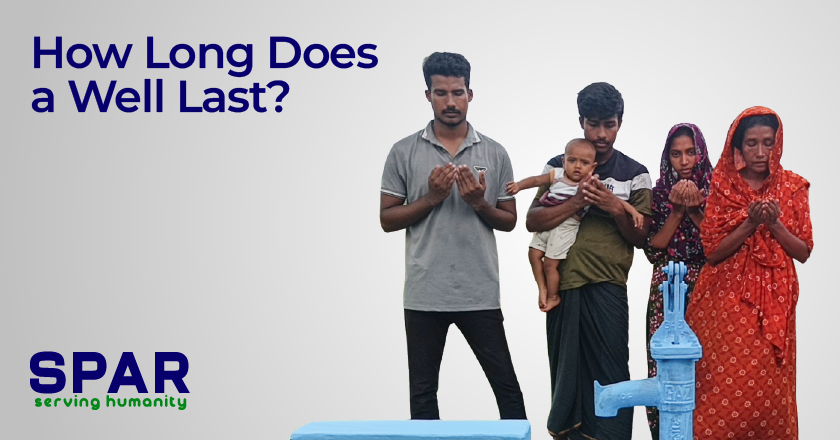
A well built to proper standards can last between 15 and 25 years with basic upkeep. The key is the casing material and the pump mechanism. Steel and PVC-lined boreholes hold up better against soil erosion and groundwater pressure. WHO guidelines recommend quarterly inspection for rural hand-pump wells. Without that, a well can fail within two or three years. Community ownership matters too. Wells managed by local water committees have a significantly higher rate of long-term function. The reward from such a well, in Islamic terms, continues as long as water flows.
Who Benefits Most From a Water Well Donation?
Children under five and women bear the heaviest burden of water scarcity. UNICEF data shows that women and girls spend an average of 200 million hours collecting water globally every single day. That time cannot go to school or work. In displaced and refugee communities, including Rohingya families in Cox’s Bazar, access to clean groundwater is especially critical. Contaminated water causes diarrhoea, cholera, and typhoid. These illnesses kill fast in communities with no health clinic nearby. A Muslim water well donation placed in the right location reaches the people who need it most: children, mothers, and the elderly.
Common Misconceptions About Water Well Donations
Many donors assume any water well donation works the same way. It doesn’t. Location matters as much as the well itself. A well drilled in an area with naturally high arsenic levels, which affects large parts of Bangladesh and Pakistan, can cause long-term poisoning rather than health. Proper site assessment must come before drilling begins. Some donors also assume that paying for a well means the work is done. But maintenance is where most wells fail. Real impact comes from programs that include training, spare parts, and follow-up visits. Wells don’t run themselves. Communities need support to keep them going, season after season.
How Muslim Water Well Donation Connects to Public Health
Clean water and disease are directly linked. The WHO estimates that 80 percent of all illnesses in developing countries trace back to unsafe water and poor sanitation. Waterborne diseases kill more children globally than almost any other single cause. When a Muslim water well donation is placed in a community, the downstream effects go beyond thirst. School attendance rises because children aren’t sick or spending hours fetching water. Women gain time for income and family care. Local crops benefit from reliable irrigation. The Rohingya communities in Cox’s Bazar and Bangladeshi villages in flood-prone regions both show this pattern clearly. Access to water shifts everything else around it.
What a Muslim Water Well Donation Means in Practice
A Muslim water well donation is one of the most direct acts of charity available. WHO data shows unsafe water drives around 80 percent of illness in developing countries. That single fact reshapes how we think about giving. A well is not just water. It is fewer sick children. It is girls staying in school. It is women reclaiming hours of their day. Sadaqah jariyah works like this. The reward flows on because the benefit flows on. Understanding what makes a well succeed helps donors give with confidence, not just intention.
What Makes a Well Last
A well built on a sound site, with trained local caretakers and a spare-parts fund, can serve a community for decades. One built without those layers often fails within two years. UNICEF field studies point to community ownership as the key factor. When families understand how the pump works and how to fix minor faults, the well survives. When outside teams do everything and then leave, the well quietly dies.
Why the Choice of Program Matters
Not every well program is equal. Some focus only on drilling. Others build in training, monitoring, and follow-up. The second type costs more. But it produces outcomes the first type rarely does. Donors asking about Muslim water well donation should ask one question above all: what happens after the drilling truck leaves? The answer tells you everything about whether their money will still be working ten years from now.
Behind every clean water source is a chain of decisions that started long before the drill arrived and continued long after. Someone assessed the land. Someone trained a local caretaker. Someone came back six months later to check the pump. That quiet, unglamorous work is what separates a well that lasts from one that sits broken in the ground. At SPAR, that sustained commitment shapes everything we do. See how this work continues.
