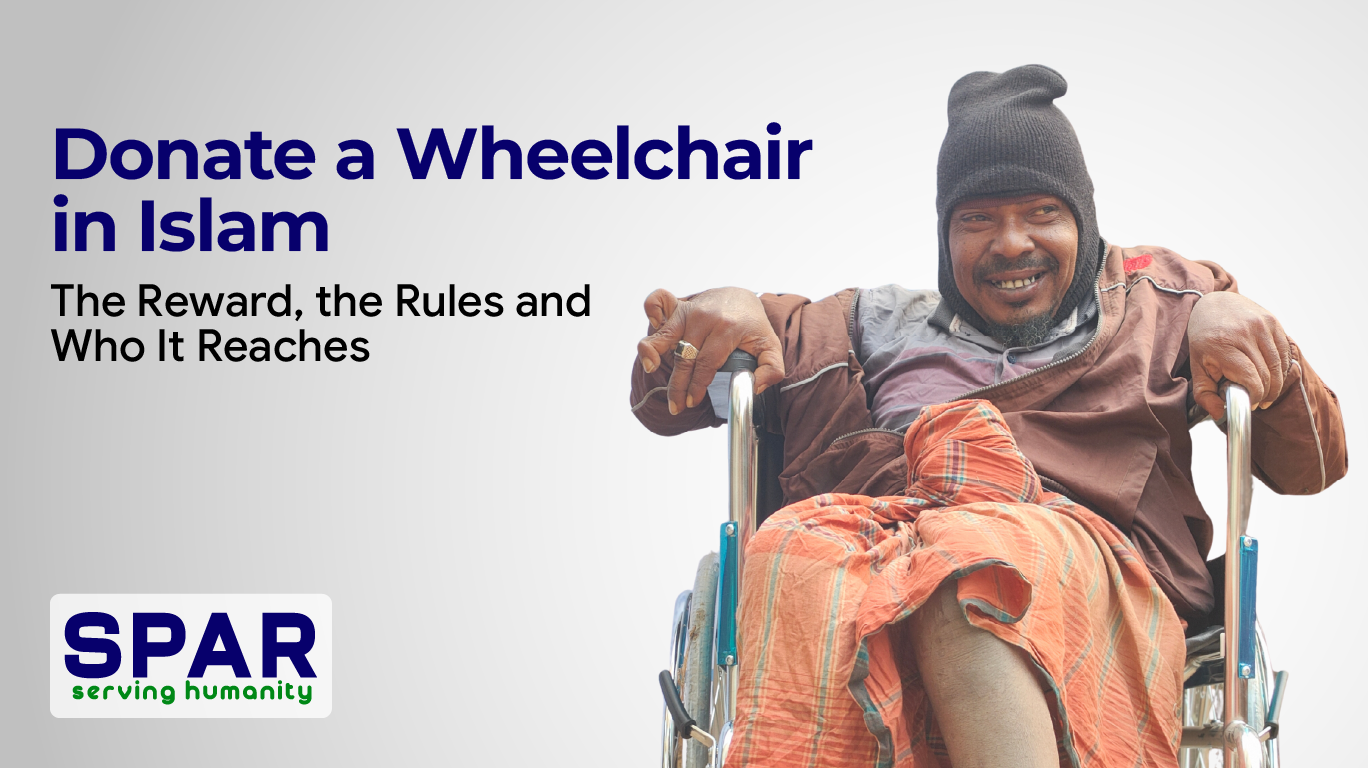
Donating a wheelchair means funding the supply and delivery of a mobility device to someone who can’t afford one. It’s not the same as buying secondhand equipment and dropping it off. A verified program sources durable, locally suitable chairs, matches them to medical need, and arranges follow-up. The WHO estimates only 1 in 10 people globally who need assistive devices can actually get one. For people with physical disabilities in low-income countries, that gap is life-altering.
Why Donating a Wheelchair Matters Right Now
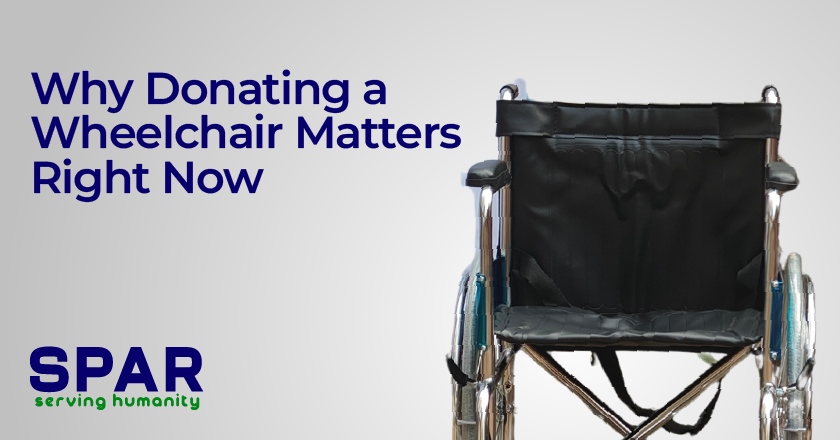
Mobility loss cuts people off from work, school, and community life. According to the World Bank, people with disabilities make up about 15% of the global population, yet they remain one of the most under-served groups in humanitarian aid. In many of the communities SPAR supports, a single wheelchair can be the difference between a child attending school and staying home for years. You can read more about our disability and mobility work to understand how programs like this are structured on the ground. The demand is steady, but funding rarely keeps pace with the scale of need.
Donate a Wheelchair by the Numbers
The cost of donating a wheelchair in a developing country varies widely, but durable, clinically appropriate chairs typically run between $150 and $250 USD per unit when sourced through established programs. That figure covers the chair, fitting, and basic delivery. UNICEF data shows that children with disabilities are significantly more likely to be out of school than their peers. In countries facing ongoing displacement, like those where Rohingya communities are rebuilding lives in Cox’s Bazar, mobility devices rarely appear in aid packages at all. That absence isn’t an oversight. It reflects how disability needs get deprioritised when emergency budgets run thin.
Who Is Most Affected by the Wheelchair Shortage?
Children and older adults bear the heaviest burden. According to WHO, about 80% of the world’s disabled population lives in low- and middle-income countries. Most of them never receive a mobility device. In communities facing poverty and displacement, wheelchair access sits at near zero. Rohingya families resettled in Cox’s Bazar face this daily. Children with mobility impairments often can’t reach the nearest school. Older adults lose the ability to pray at the masjid, visit family, or earn any income. The shortage isn’t random. It follows poverty.
Children Left Behind
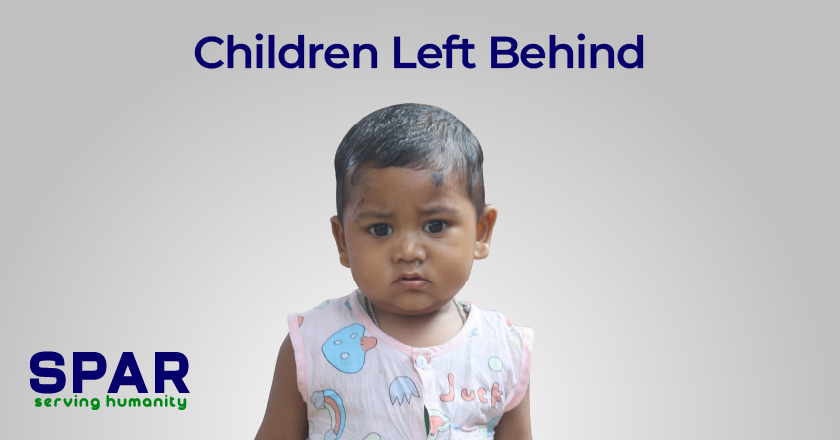
UNICEF data shows children with disabilities are up to ten times more likely to be out of school than non-disabled peers. A wheelchair doesn’t just restore movement. It restores access to education, to community, to a future. Without it, a child’s world shrinks to the size of one room. Bangladeshi families in low-income areas often wait years for any mobility support. By then, secondary health problems, like pressure sores and joint damage, have already set in. The gap between need and supply keeps growing.
Older Adults and Dignity
For older adults, losing mobility often means losing independence. Many can no longer perform wudu or attend Jumu’ah. Simple tasks like cooking or getting outside become impossible. Families without resources can’t always provide full-time care. So the person sits. Waits. Fades. Across the communities SPAR supports, this pattern repeats. An appropriate wheelchair, fitted correctly, can restore daily function within weeks. The change is not dramatic. But it is real, and it lasts.
What Types of Wheelchairs Are Used in Aid Programs?
Not all wheelchairs suit every need or every terrain. Aid programs typically work with three main types: manual standard chairs, lightweight transit chairs, and rough-terrain or all-terrain models. Standard manual chairs work well on flat, paved ground. But most communities in low-income regions don’t have paved ground. Rough-terrain chairs use wider wheels and stronger frames to handle uneven paths, mud, and unpaved village roads. WHO guidelines recommend matching the chair to both the user’s physical needs and their daily environment. A chair that doesn’t fit the terrain fails the person.
Why Fit and Assessment Matter
A wheelchair fitted without proper assessment can cause long-term harm. Poor posture leads to scoliosis, pressure injuries, and breathing problems. WHO’s wheelchair service training package, used in over 50 countries, stresses that fitting is not optional. It’s clinical. Every chair should be adjusted to the user’s body before handover. Programs that skip this step often see chairs abandoned within months. The chair becomes useless, and the person returns to the floor. Proper assessment turns a $200 chair into a life-changing tool instead of a wasted resource.
How Does Donating a Wheelchair Connect to Broader Disability Rights?
Mobility access is a rights issue, not just a charity issue. The UN Convention on the Rights of Persons with Disabilities, ratified by over 180 countries, names mobility as a core right. But ratification doesn’t fund wheelchairs. The gap between law and lived reality stays wide. When someone can’t move freely, they can’t access health care, education, or economic life. They become invisible to policymakers and aid systems alike. To donate a wheelchair is to push back against that invisibility. It’s a small act with a structural effect, one person, one chair, one step toward inclusion.
The teams delivering these chairs don’t make headlines. They show up, week after week, to the same villages, the same waiting lists. Change here is quiet. It depends on consistent support from people far from the problem, people who decided this was worth their continued attention.
What to Know Before You Donate a Wheelchair
Wheelchair need far outpasses supply in low-income regions. WHO estimates over 70 million people need a wheelchair worldwide. Fewer than 10% have access to one. That gap doesn’t close on its own. It closes when individuals choose to act on it. Manual chairs remain the most cost-effective solution, with basic mobility devices starting around $150 to $200. Durable, well-fitted chairs can serve a person for years. The decision to donate a wheelchair is not a one-time gesture. It’s an entry point into a system that, with consistent support, keeps moving.
Why Fit Matters as Much as the Chair Itself
A chair that doesn’t fit causes pressure sores, falls, and pain. The person stops using it. That’s a waste of both money and trust. Organisations that include professional fitting and follow-up care see far better outcomes. UNICEF field data notes that assistive device programs with trained technicians show significantly higher long-term usage rates. A $200 chair, fitted well and maintained, changes daily life. The same chair, handed over without assessment, often ends up unused within months.
How Long-Term Programs Differ From One-Off Distributions
One-off distributions move chairs fast. But they often skip needs assessments, follow-up, and repair support. Long-term programs cost more per chair. But they produce lasting change. They build local technician capacity. They create community repair networks. They track outcomes. Teams committed to long-term disability programs in areas like Bangladeshi communities or among Rohingya displaced families don’t just deliver. They stay. That sustained presence is what turns a single chair into a foundation for broader mobility access.
Behind every chair in use is a decision someone made far from the person sitting in it. Disability programs in places like Bangladeshi communities and among Rohingya displaced families run on that kind of quiet, consistent commitment. The work doesn’t stop at delivery. It continues through maintenance, follow-up, and care. See how this work continues at SPAR.