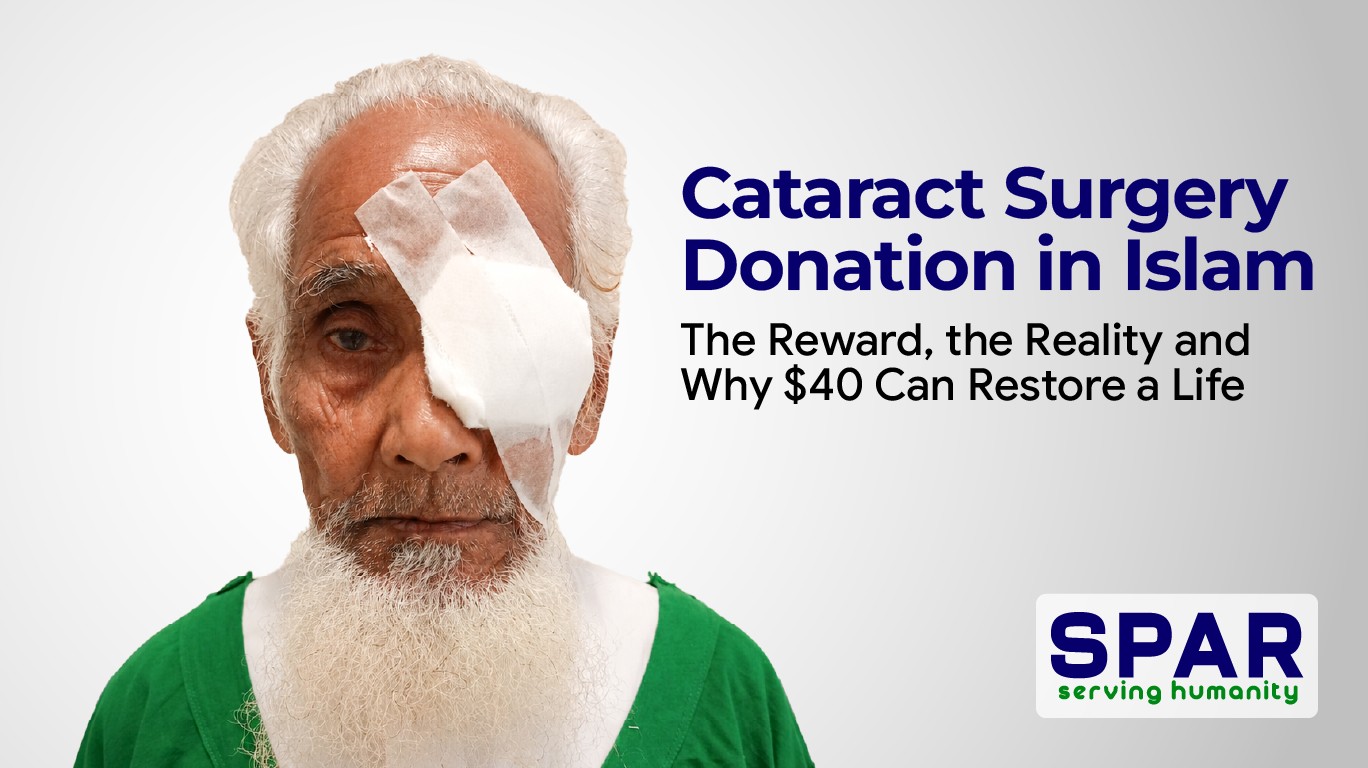
A cataract surgery donation funds an operation that removes a clouded lens from someone’s eye and replaces it with a clear one. It’s different from general medical aid because it offers a permanent cure, not just treatment. The WHO estimates that cataracts cause about 45% of all blindness worldwide. Most of those affected live in low-income countries and can’t pay for surgery themselves. One donation can give a person their sight back for life.
Why Cataract Surgery Donation Matters Right Now
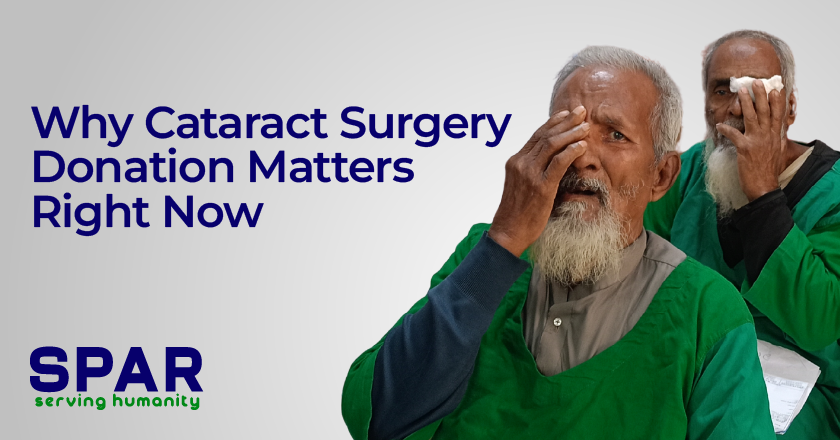
Cataracts don’t kill. But they do end livelihoods. According to the World Health Organization, over 90 million people currently live with vision loss caused by cataracts. Most of them live in South Asia and sub-Saharan Africa, where public health systems can’t meet the demand. Children can’t study. Adults can’t work. Elderly parents become a burden on families already stretched thin. The surgery itself takes about 15 minutes and costs as little as $30 to $50 USD in low-cost settings, yet most patients simply can’t reach care. SPAR’s work connects willing donors with communities where that gap is widest. You can read more about our sight restoration and medical aid programs to understand how that connection gets made. The cost-to-impact ratio here is hard to match anywhere in humanitarian health care.
Key Facts About Cataract Surgery Donation
Cataract blindness is almost entirely preventable. The International Agency for the Prevention of Blindness (IAPB) reports that 80% of all vision impairment globally is avoidable or treatable. A single cataract procedure in a low-income country costs between $25 and $100 USD, depending on the setting and the equipment used. Compare that to $3,000 to $5,000 USD for the same surgery in a high-income country. Bangladeshi and Pakistani populations carry some of the highest rates of untreated cataracts in Asia, with rural communities the worst served. Rohingya refugees in displacement camps face even sharper barriers, as mobile surgical units rarely reach those areas. A targeted donation doesn’t just buy one surgery. It often funds the transport, the post-op check, and the glasses a patient needs to actually use their restored vision.
Who Is Most Affected by Cataract Blindness?
Older adults in low-income communities carry the heaviest burden of untreated cataracts. According to WHO, people over 50 account for more than 90% of global cataract blindness cases. But age alone doesn’t explain the gap. Rural populations, women, and displaced communities face extra barriers: no transport, no clinics nearby, and no money for follow-up care. Rohingya communities in Cox’s Bazar, for example, live far from surgical facilities. Pakistani and Bangladeshi women in rural areas are twice as likely as men to go untreated, partly because they’re less often brought forward for care by their families.
Why Women Are Disproportionately Affected
Women make up about 55% of all people with cataract blindness worldwide, according to IAPB data. This isn’t biology. It’s access. In many communities, a woman’s health needs come last. A husband or son might get treatment first. Women stay home. They lose their sight slowly, and no one notices until they can’t work. Cataract surgery donation programs that target women specifically are closing this gap, but progress is slow.
Why Rural Communities Wait the Longest
Distance is the first barrier. A surgical eye camp might operate once a year in a region. Families hear about it late. Transport costs money. The patient can’t travel alone. So the appointment doesn’t happen. WHO research shows that in South Asia, over 60% of people with bilateral cataract blindness have never seen an eye specialist. The surgery exists. The knowledge exists. The gap is delivery.
Common Misconceptions About Cataract Surgery Donation
Many donors assume cataract blindness is rare or that governments already handle it. Neither is true. The World Health Organization estimates there are at least 17 million people living with cataract blindness right now, and most of them live in places where public health budgets don’t stretch to elective surgeries. Some donors also believe that a cataract surgery donation only covers the procedure itself. In practice, a well-run program wraps transport, accommodation, the lens implant, post-op medication, and a follow-up visit into one cost. That’s still often under $100 per patient.
“It’s Too Cheap to Make a Difference”
This is the most common hesitation. Donors used to bigger-ticket appeals sometimes doubt that $50 can change a life. But the math is direct here. A $50 cataract surgery donation in a program setting covers the lens, the surgeon’s time, and the equipment use. The surgery takes under 20 minutes. The result lasts a lifetime. There’s no recurring cost. There’s no overhead-heavy delivery chain. It’s one of the most efficient uses of a charitable dollar in global health.
How Cataract Surgery Donation Connects to Poverty
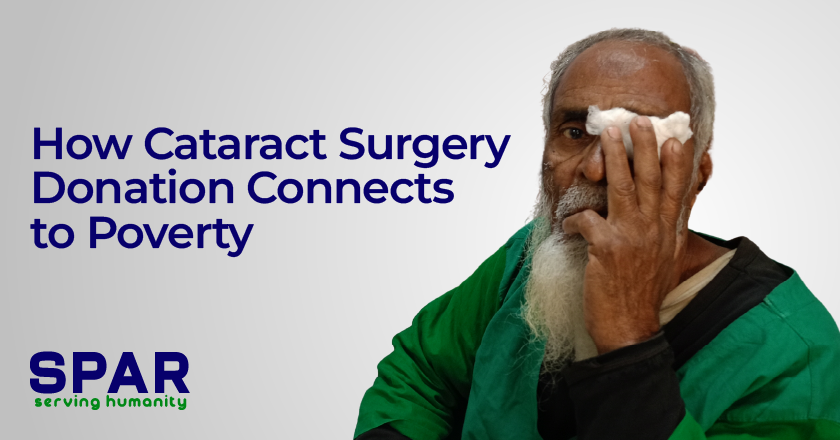
Blindness and poverty feed each other. A person who can’t see can’t farm, can’t work, and can’t care for children alone. UNICEF links visual impairment in adults directly to higher rates of child malnutrition, because a blind parent earns less and depends more on others. In the families SPAR works with across its operational regions, sight loss in one adult can pull an entire household into dependency. Restoring that adult’s vision doesn’t just help them. It stabilises the family.
Real change here is rarely sudden. It comes from small, consistent efforts, season after season. The surgical teams doing this work don’t make headlines. They show up, set up a camp, and restore sight to dozens of people before packing up and moving on to the next village.
What Makes a Cataract Surgery Donation Program Effective?
Not all eye care programs deliver the same results. The most effective ones combine surgical volume with community outreach. A camp that only waits for patients to arrive will miss most of the people who need help the most. Effective programs send scouts into communities weeks before. They identify patients, arrange transport, and follow up after surgery to confirm the outcome. According to the London School of Hygiene and Tropical Medicine, programs with active community referral networks achieve up to three times higher uptake than passive clinic-based models. That multiplier matters enormously at scale.
What This Means for You Now
Cataracts are the leading cause of preventable blindness worldwide. WHO estimates they account for roughly half of all global blindness cases. That single fact reshapes how we think about cataract surgery donation. A small, targeted act of giving restores full functional vision in under thirty minutes. The patient goes home the next day. They return to work, to farming, to reading the Quran without help. Programs built on consistent community outreach, trained local health workers, and reliable surgical camps deliver the strongest outcomes. The difference between a program that works and one that doesn’t often comes down to follow-up care.
Why Timing Matters for Patients
Most patients delay treatment by years. Fear, cost, and distance are the three main barriers. By the time many rural patients reach a surgical camp, their cataract has matured. A mature cataract is harder to remove and carries a higher risk of complications. Early identification through community scouts cuts that delay. It also cuts the cost per successful outcome. Programs that screen communities ahead of camp dates consistently report better surgical results.
What Sustained Involvement Looks Like
One camp is a starting point, not a solution. The communities that see lasting change are the ones served by programs that return. A post-operative check at one week matters. A second visit at one month confirms the outcome held. Sustained involvement from donors, field teams, and community health workers together is what turns a single restored eye into a lasting change for a family.
Behind each restored pair of eyes is a chain of quiet decisions. Someone chose to fund the camp. Someone else walked into a remote village and explained what surgery could do. A volunteer followed up three weeks later to confirm the patient could see. None of this makes the news. But the result, a grandmother who can now see her grandchildren’s faces, stays for life. At SPAR, this kind of steady, committed work shapes everything we do across the communities we serve. See how this work continues.