
Zakat al Fitr and Zakat are both obligatory acts in Islam, but they serve different purposes and follow different rules. Zakat is an annual wealth tax, set at 2.5% of savings held above the nisab threshold. Zakat al Fitr is a fixed food-based payment, valued at roughly $7 to $10 USD per person in 2026. Every Muslim pays Zakat al Fitr, including children. Only Muslims with wealth above the nisab owe Zakat. Both must reach the poor before the Eid al Fitr prayer.
Zakat al Fitr vs Zakat: Quick Answer
- What it is: Zakat al Fitr is a fixed per-person food payment. Zakat is a 2.5% annual levy on saved wealth above the nisab threshold.
- Who pays: Every Muslim pays Zakat al Fitr, including infants. Only Muslims whose savings exceed the nisab (about $450 USD in silver terms) pay Zakat.
- How much: Zakat al Fitr equals one sa’ of staple food, worth roughly $7 to $10 USD. Zakat is exactly 2.5% of eligible wealth.
- When: Zakat al Fitr is paid before the Eid al Fitr prayer. Zakat is due once wealth has been held for one full lunar year (hawl).
- Main rule: Zakat al Fitr is per head. A family of five owes five payments. Zakat is per wealth holder, not per family member.
- Most common mistake: Many donors pay Zakat al Fitr after Eid prayer. That makes it regular charity (sadaqah), not Zakat al Fitr. It must arrive before the prayer.
Why Zakat al Fitr vs. Zakat Matters in 2026
Both payments land at the same time each year, and that’s where the confusion starts. Ramadan ends, Eid arrives, and many Muslims scramble to pay both at once without knowing the rules differ. According to UNICEF, over 700 million people worldwide live on less than $2.15 USD a day. For those families, a late or misdirected payment can mean missing Eid entirely. Getting this right is about more than faith. It’s a matter of real impact for real people. You can see how SPAR puts both Zakat and Zakat al Fitr to work through our Zakat programs at sparproject.org/zakat. The two obligations work best when donors understand what each one does.
Zakat al Fitr vs Zakat: What Most People Don’t Know
Most Muslims treat both payments as interchangeable. They’re not. The Prophet Muhammad (peace be upon him) made Zakat al Fitr obligatory before Eid so that poor families could celebrate the day, not just survive it. That’s its purpose: dignity, not just sustenance. Zakat, by contrast, was revealed as a long-term wealth redistribution tool for the whole ummah, covering eight recipient categories named in Surah At-Tawbah (9:60). One key fact most donors miss: a person who is poor enough to receive Zakat may still owe Zakat al Fitr, as long as they have enough food for that day and night. The two obligations sit on separate tracks entirely.
Can a Poor Person Owe Zakat al Fitr?
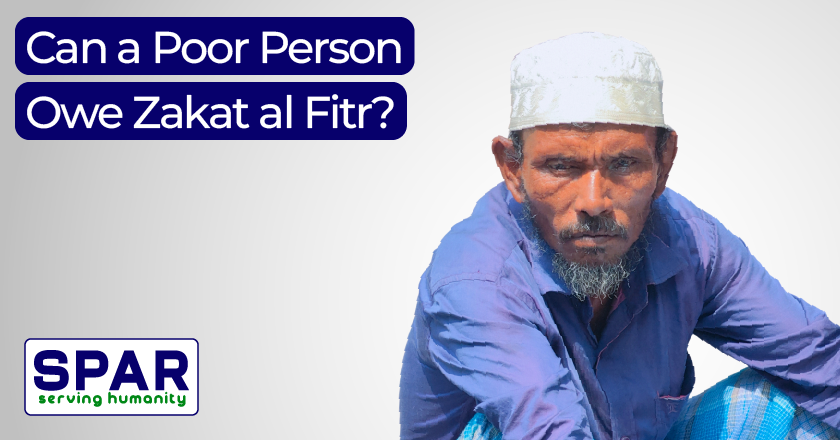
Yes. A person can be too poor to pay Zakat but still owe Zakat al Fitr. The rule is simple. If you have enough food for yourself and your family on Eid day and night, you owe Zakat al Fitr. You don’t need savings. You don’t need a full nisab. This surprises many donors. They assume the two obligations share the same threshold. They don’t. Zakat al Fitr asks only, “Do you have food today? Zakat asks: do you hold wealth above a set level for a full lunar year? Two separate tests. Two separate answers.
Who Must Pay, and Who Gets Left Out?
Both obligations cover most adult Muslims, but the edges differ. For Zakat, you pay for yourself. Zakat al Fitr covers every person in your household, including infants and dependants. According to a hadith recorded in Sahih al-Bukhari, the Prophet Muhammad (peace be upon him) made Zakat al Fitr obligatory on every free Muslim, male and female, young and old. The head of household pays on behalf of all. Zakat has no such household rule. Each person with wealth above the nisab pays their own. So a father of four pays four shares of Zakat al Fitr, but only one Zakat calculation based on his own wealth.
Common Mistakes Muslims Make With Both Payments
Paying Both to the Same Person

Many donors send both Zakat and Zakat al Fitr to the same family. That’s often fine. But Zakat al Fitr has a stricter timing rule. It must reach the recipient before Eid prayer. Sending it on Eid morning may be too late. If the funds don’t arrive in time, scholars classify it as Sadaqah, not Zakat al Fitr. The obligation stays unfulfilled. For Zakat, timing is flexible across the year. For Zakat al Fitr, it’s not. Donors who treat both as the same type of transfer often miss this.
Paying Cash When Food Is Expected
The classical position, held by scholars like Imam Malik and Imam Ahmad, is that Zakat al Fitr must be paid in staple food, not cash. The Shafi’i and Hanbali schools hold the same view. The Hanafi school permits cash. Most contemporary scholars allow cash as a practical choice, since it lets recipients buy what they actually need. But donors should know this debate exists. Giving through a trusted charity that converts cash to food locally removes the doubt. It also helps families who lack market access.
How the Two Obligations Work Together
Zakat and Zakat al Fitr are not rivals. They serve the same ummah at different times and for different needs. Zakat funds long-term relief: food programs, clean water, medical care, and orphan support. Zakat al Fitr funds one specific moment, Eid morning, so that no family starts the day with nothing. When both are fulfilled well, they stack. A family may receive Zakat-funded support for months. Then, on Eid, they also receive Zakat al Fitr so the children can eat, wear clean clothes, and feel the joy of the day. The World Food Programme notes that dignified celebration matters for well-being, not just calories. That’s the gap Zakat al Fitr fills. Change for the families we serve doesn’t come from one payment at one moment. It comes from quiet, consistent support across many seasons.
Does Zakat al Fitr Have a Fixed Amount?
The amount is set. Scholars measure it as one sa’ of staple food per person. One sa’ equals about 2.5 to 3 kilograms of rice, wheat, dates, or similar. In USD terms, that’s roughly $5 to $15 per person depending on where it’s paid. Pew Research data shows that over 1.8 billion Muslims observe Ramadan globally. If even a fraction fulfil Zakat al Fitr correctly, the total food aid is enormous. The key word is correctly paid before Eid prayer, to the right recipient, in the right form.
What You Need to Know About Zakat al Fitr vs. Zakat
Both are obligatory. Both go to the poor. But they serve different roles, and fulfilling only one leaves a gap. Zakat al Fitr covers the moment, Eid morning, when a family needs food on the table and dignity in the air. Zakat covers the long work: clean water, medical care, steady meals across months. Pew Research estimates over 1.8 billion Muslims observe Ramadan globally. When even a fraction fulfil both correctly, the scale of relief is vast. Know the rules for each. Pay both on time. That’s where real change begins.
Does Paying One Cancel the Other?
No. They are separate duties with separate rules. Zakat al Fitr is due before Eid prayer, once a year, for every Muslim who has food beyond their basic needs that day. Zakat is due on wealth held for a full lunar year above the nisab threshold. Missing one does not excuse the other. Both must be paid. And both reach different people at different moments in their need.
Who Should Receive Each?
The same eight categories of recipients apply to Zakat, as set out in Surah At-Tawbah (9:60). Scholars differ on whether Zakat al Fitr must go only to the poor and needy, the first two categories. Imam al-Nawawi held that Zakat al Fitr is best given to those who will use it for Eid food right away. For both types, the families we serve across the regions where SPAR works fall clearly within those categories.
Behind every Ramadan that ends well, there is someone who planned ahead. They set aside what was owed. They gave it on time. They did not wait for a reminder. That quiet act, repeated by millions, is how the ummah has cared for its poor for over fourteen centuries. At SPAR, our work across Bangladeshi communities and beyond runs on that same spirit. Not one payment at one moment, but steady care across every season. See how this work continues.