
Zakat can be accepted by eight specific groups named in the Quran (Surah 9:60). These groups are: the poor, the needy, zakat collectors, those whose hearts are inclined to Islam, people in debt, those freeing themselves from bondage, travelers in need, and those serving the cause of Allah. No other group has a valid claim to zakat. Unlike sadaqah, which Muslims may give freely to anyone, zakat follows fixed rules. The Quran set these eight categories over 1,400 years ago. In 2026, about 1.8 billion Muslims worldwide rely on scholars and charities to apply these rules correctly.
Who Can Accept Zakat: Quick Answer
- What it is: Zakat is the obligatory annual charity in Islam, distributed only to the eight Quranic categories in Surah 9:60.
- Who qualifies: The poor, the needy, collectors, new Muslims, those in debt, captives, stranded travelers, and those serving Allah’s cause.
- How much: Recipients may receive up to one nisab value (about $450 USD) per distribution unless a greater need is proven.
- When: Zakat must be paid once per lunar year, after holding nisab-level wealth for twelve months.
- Main rule: Recipients must be Muslim for most categories. Non-Muslims can only receive zakat under the “inclined hearts” category.
- Most common mistake: Giving zakat to a mosque or masjid building fund. Mosques are not one of the eight categories and cannot accept zakat.
Why Who Can Accept Zakat Matters in 2026
Zakat is one of the five pillars of Islam. Getting it wrong doesn’t just waste money. It can make the payment invalid. According to the World Bank, over 700 million people globally live on less than $2.15 USD a day. Many of them are Muslim. That makes correct zakat distribution one of the most direct tools for poverty relief the ummah has. But if zakat flows to ineligible recipients, the obligation isn’t met. You’d owe it again. That’s why understanding the eight categories isn’t just academic. It’s a duty. If you want to see how SPAR channels zakat to verified, eligible families, you can explore our zakat distribution work at sparproject.org/zakat. The next section breaks down what the scholars actually say about who qualifies.
Key Facts About Who Can Accept Zakat
The eight categories come directly from Surah At-Tawbah (9:60). This verse is the only Quranic source for zakat recipients. Scholars like Imam al-Nawawi and Ibn Qayyim al-Jawziyyah wrote extensively on how to interpret each group. Most classical scholars agree that a recipient must not be from the giver’s immediate dependents. A man can’t give zakat to his wife or children he supports. And a wealthy person, defined as one who owns nisab, can’t receive it. UNICEF data shows that over 333 million children live in extreme poverty today. A large share of them live in Muslim-majority regions. That means the eligible pool is vast. But the rules still apply. Giving zakat correctly honors both the giver’s obligation and the recipient’s dignity.
Can a Syed or Hashimi Person Accept Zakat?
No. A person from the Banu Hashim family cannot accept zakat. This includes descendants of Ali, Ja’far, Aqeel, Abbas, and al-Harith ibn Abd al-Muttalib. Scholars base this on an authentic hadith in Sahih Muslim. The Prophet (ﷺ) said zakat is the “dirt of people” and that it isn’t lawful for his family. Ibn Qayyim al-Jawziyyah confirmed this ruling in detail. Some scholars say this ban also covers their freed slaves. The restriction exists as a form of honour. In place of zakat, the Quran assigns them a share of war gains (khums). Many Muslims today don’t know this rule. But giving zakat to a Hashimi family, even a poor one, doesn’t fulfil the obligation.
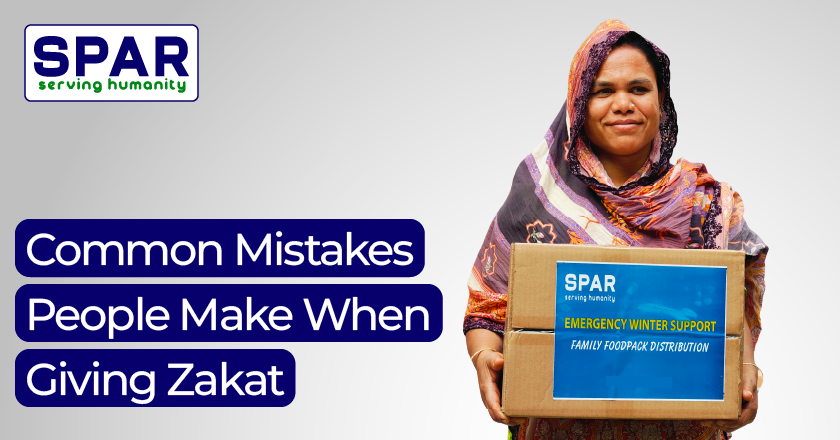
Common Mistakes People Make When Giving Zakat
Many Muslims give zakat with good intentions but miss key rules. One of the most common mistakes is giving to a wealthy relative to “keep it in the family.” This doesn’t count. Another mistake is paying zakat to build a mosque or fund a school. The eight categories in Surah At-Tawbah (9:60) are fixed. Buildings and projects are not in that list. According to Pew Research, Muslims globally give billions in zakat each year, but a large share goes through unverified channels. A third mistake is giving to a non-Muslim without identifying them as a muallaf (one whose heart is being won to Islam). The ruling on non-Muslims receiving zakat is strict. Most classical scholars say they don’t qualify unless this condition is met.
Can You Give Zakat to a Mosque or School?
No. This is one of the clearest points scholars agree on. Mosques, schools, and hospitals are not among the eight groups listed in Surah At-Tawbah. Imam al-Nawawi was firm on this. Zakat must go to a person, not a project. If you want to fund a school or a clinic, give sadaqah instead. Sadaqah has no category limits. But zakat has a fixed list. Many donors confuse the two. They’re not the same act.
Can You Give Zakat to a Non-Muslim?
Most scholars say no, with one exception. The category of muallaf includes non-Muslims whose hearts are being drawn toward Islam. But outside this group, the majority view is that zakat goes to Muslims only. Ibn Baz held this position. The Hanafi school agrees. So does the Shafi’i school in most cases. If you want to help a non-Muslim neighbour in need, give sadaqah. It carries its own reward. But for zakat, the recipient rules are strict.
Who Is Most at Risk of Being Missed by Zakat?
The groups most often left out are the stranded traveller and the indebted person. Most donors think first of the poor. But someone stuck far from home with no money is just as eligible. So is someone crushed by debt, even if they own property. According to World Bank data, over 1.1 billion people live in multidimensional poverty today. Many of them are in Muslim-majority regions. Bangladeshi families, Somali communities, and Rohingya refugees in Cox’s Bazar all include people who fall into more than one zakat category at once. The debtor in a village and the traveller stranded in a city both have a right to this wealth. But they rarely get it, because donors don’t think to look.
How Scholars Decide Who Qualifies Today
Classical scholars set the rules. But modern scholars apply them to new contexts. Someone today might carry credit card debt instead of a personal loan. A refugee may count as a stranded traveller. Ibn Uthaymeen addressed many of these cases in his fiqh rulings. The core test stays the same: does this person fall into one of the eight groups? Does giving to them serve the purpose of zakat? Scholars like those trained in the tradition of al-Nawawi urge donors not to guess. They say to check with a qualified scholar or give through a team that does this verification work. The quiet, careful work of confirming eligibility doesn’t make headlines. But it’s what makes a gift count.
What Knowing the Eight Categories Means for You
Zakat reaches the right people when donors know who qualifies. The eight categories in Surah At-Tawbah (9:60) cover the poor, the indebted, the stranded, and more. According to World Bank data, over 700 million people live on less than $2.15 a day. Many of them fall into more than one category at once. Knowing this helps you give with more care. It helps you ask better questions. And it puts your zakat where it was always meant to go: in the hands of those with a true right to it.
Does Property Change Who Can Accept Zakat?
Property alone does not disqualify someone. The test is nisab, not ownership. A family may own land but still lack cash to eat or pay a debt. Scholars like Ibn Uthaymeen addressed this clearly. If the property does not meet nisab value, or cannot be sold easily, the person may still qualify. This is why verified eligibility checks matter. They protect both the giver and the one who receives.
Can You Calculate Zakat and Choose Recipients Yourself?
Yes, a Muslim can do both. Zakat is a personal act of worship, not a state tax. You calculate it on savings, gold, and trade goods held for one lunar year above nisab. Then you find eligible recipients yourself, or work with a team that screens them. The key rule stays the same: the person must fall into one of the eight groups. Giving to family members in need is also allowed in most cases, as scholars confirm.
Zakat has a quiet power. It moves wealth to those who need it most. It does so with rules, not guesswork. At SPAR, we see how much this matters in the places we work. Families face debt, displacement, and loss at the same time. Knowing who can accept zakat helps them get what they are owed. See how this work continues.