
Zakat is an obligation to give 2.5% of your qualifying wealth once it reaches a certain level (nisab) and has been held for a full lunar year. It is different from Sadaqah which is voluntary. The nisab 2026 is roughly 85 grams of gold (approximately $7,650 USD at current prices) or 595 grams of silver (around $565 USD). Every sane, free, adult Muslim who reaches this level has to pay the price. The silver nisab is the stricter measure, and it is the one most scholars recommend – as it would cover more people in need. The most common mistake donors make is to pay on the wrong nisab.
How to Calculate Zakat: Quick Answer
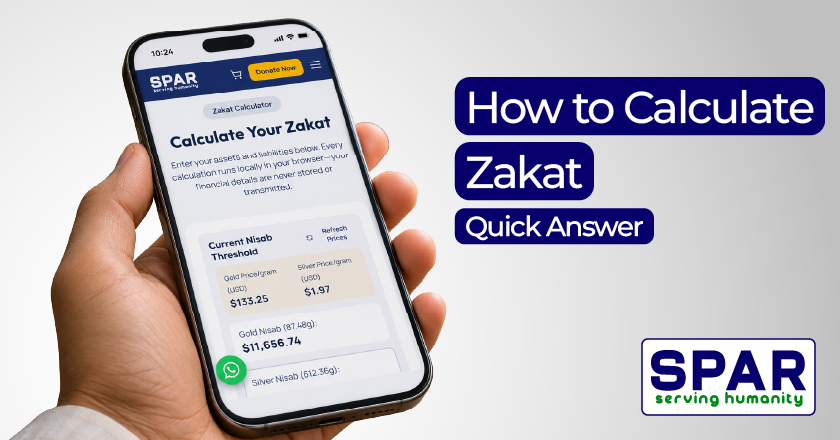
- What it is: Zakat is an annual 2.5% levy on qualifying wealth held above the nisab for one full lunar year.
- Who it applies to: Every adult Muslim of sound mind who owns wealth above the nisab threshold for 12 lunar months.
- How much: Multiply your total eligible wealth by 0.025 to get your Zakat amount in USD or your local currency.
- Nisab (gold): About 85g of gold, roughly $7,650 USD in 2026. Use this if you hold gold as your primary asset.
- Nisab (silver): About 595g of silver, roughly $565 USD in 2026. Scholars widely recommend this as the safer standard.
- Main rule: Wealth must complete a full lunar year (hawl) above the nisab. Dip below at any point, and the clock resets.
- Most common mistake: Using the gold nisab when the silver nisab applies, which means many donors who owe Zakat never pay it.
Why Calculating Zakat Correctly Matters in 2026
Zakat is the third pillar of Islam, yet Pew Research estimates that global Zakat giving falls far short of what’s actually owed each year. Scholars calculate the ummah’s total annual Zakat liability in the hundreds of billions of dollars, but a large share goes uncollected because donors use the wrong nisab, forget to include business inventory, or miscalculate the lunar year. The communities that depend on Zakat funds, from Bangladeshi families hit by seasonal flooding to Rohingya families in displacement, feel every gap directly. Getting the number right isn’t just a personal obligation. It’s a lifeline for real people. You can see how SPAR directs Zakat to verified families through our Zakat distribution work. In 2026, with gold and silver prices shifting, double-checking your nisab baseline before you calculate is more important than ever.
Zakat by the Numbers: What Most Donors Get Wrong
The 2.5% rate is common knowledge but people get confused about the wealth brackets. Classical fiqh texts, endorsed by scholars like Imam an-Nawawi, state that Zakat is obligatory on gold, silver, cash, trade goods, investment assets and certain agricultural produce. It won’t cover your house, your car, your clothes or work equipment. He has $ 10,000 USD cash in savings , $ 3,000 in gold jewelry ( as an investment ) and $ 2,000 in stock . All three are liable for Zakat . 10,000 + 3,000 + 2,000 = 15,000 x .025 = 375 USD . But if that same person is factoring in jewelry for personal use, then they are inflating the number and may feel resentful about an obligation they have overestimated. The World Bank data indicate that proper transfer of Zakat funds to low-income households may significantly decrease local poverty rates. The transfer works because clean math, grounded in the right categories, makes it work.
Does Zakat Apply to Gold Jewelry?
Gold jewelry is one of the most debated Zakat topics among Muslim women. The Hanafi school holds that all gold, worn or stored, meets the nisab and requires Zakat. The Shafi’i and Hanbali schools say personal-use jewelry is exempt. Most scholars today recommend paying Zakat on jewelry as a precaution, and the Hanafi view is the most widely followed globally. If your gold jewelry sits in a drawer most of the year, even the Shafi’i scholars would count it as a held asset. The safest path is to weigh your gold, check the current gold price in USD, and calculate 2.5% on its market value.
What About Gold Mixed With Other Metals?
Pure gold is 24 karats. Most jewelry runs at 18k or 22k. To find the Zakat-liable value, multiply the total weight by the karat fraction. For example, 10 grams of 18k gold equals 7.5 grams of pure gold. Then apply the current gold price per gram in USD. This method is clean and verifiable. Many scholars, including those citing the Maliki tradition, use this exact approach for mixed-metal pieces.
Silver Jewelry and the Nisab Gap
Silver nisab sits at 595 grams of pure silver. At current prices, that threshold is far lower in USD than gold nisab. A person with $200 in cash but $400 in silver jewelry may still owe Zakat, even if they feel cash-poor. According to classical fiqh, combining silver’s value with cash is valid when calculating whether nisab is met. This catches many donors off guard every year.
How to calculate zakat on Business Assets and Trade Goods
Zakat on business assets follows different rules than personal wealth. Trade goods, stock in hand, and money owed to your business all count toward your Zakatable total. You take the market value of your inventory on your Zakat anniversary date, add cash and receivables, then subtract short-term debts. The result is your net Zakatable business wealth. Apply 2.5% to that figure. According to classical scholars like Ibn Qudama, even goods bought for resale count at their current market price, not their purchase cost. This matters a lot when prices have risen sharply during the year.
What Business Assets Are Exempt?
Machinery, buildings, vehicles, and tools used in the business are not Zakatable. Only assets held for trade or sale are included. A bakery owner does not pay Zakat on the oven. But flour bought to sell as baked goods? That counts. A shop owner does not pay on the shelves. But the goods on those shelves? They count at market value. This distinction keeps the calculation fair and grounded in productive wealth, not fixed assets.
How to calculate zakat on Shares, Pensions, and Investments
Stocks and investment funds are a modern category that classical fiqh didn’t address directly. But contemporary scholars have reached a working consensus. If you hold shares purely as an investment, pay Zakat on the market value of those shares on your Zakat date. If the company holds significant trade inventory, some scholars say you may calculate based on the company’s Zakatable assets per share instead. For pension funds you cannot access yet, many scholars say Zakat is due only when the funds become accessible. Pew Research data shows Muslim investors represent a fast-growing share of global retail investment, making this question more pressing each year. Real clarity comes from knowing what you hold, when you hold it, and what rules your chosen madhab applies.
Common Mistakes When Calculating Zakat
Most Zakat errors come from three habits: using an outdated nisab figure, mixing exempt and non-exempt assets, and forgetting to apply the full lunar year test. The lunar year condition means wealth must stay at or above nisab for a full hawl. If your balance dipped below nisab for even a short period, no Zakat is due for that year. Many donors also forget that debts owed to you count as assets, while money you owe can offset your total. Fixing these three habits alone can shift a Zakat calculation by hundreds of dollars. Getting it right isn’t just about the math. It’s about the trust that sits at the heart of this obligation. The families who depend on Zakat across Bangladeshi, Palestinian, and Somali communities don
Your Zakat Calculation: What to Do Next
Knowing how to calculate Zakat brings clarity to one of Islam’s most binding duties. The core formula stays simple: add up your gold, silver, cash, trade goods, and debts owed to you. Subtract what you owe. If the net total clears the nisab and has stayed there for a full lunar year, 2.5% is due. The World Bank estimates over 1.8 billion Muslims globally, and Pew Research confirms Muslim wealth is growing across Asia, the Gulf, and diaspora communities. That growth makes accurate Zakat calculation more important each year. Check your nisab figure against the current gold or silver price before you finalise any amount.
Should You Use the Gold or Silver Nisab?
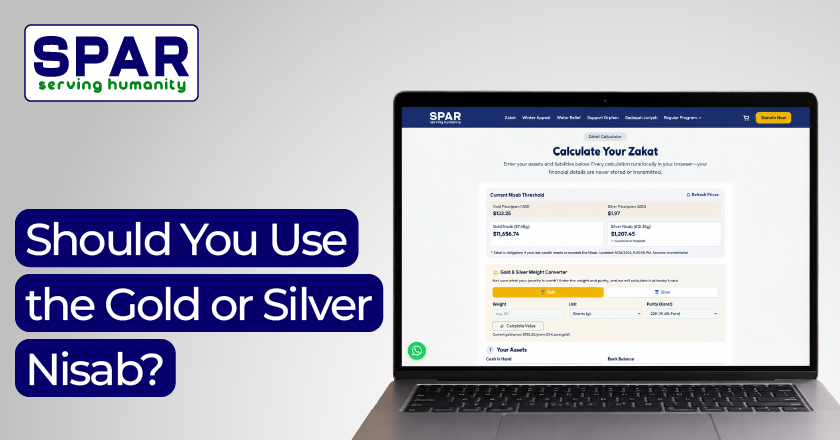
The silver nisab is much lower than the gold nisab. Using silver means more people owe Zakat. Many scholars say silver serves the poor better because it casts a wider net. Imam al-Nawawi and later scholars both accepted silver as the standard for those who want to be cautious. If your total assets fall between the two values, the silver nisab is the safer and more generous choice.
What to Do If You Missed Zakat in Past Years
Missing a year does not erase the debt. Zakat is still owed for every year it was due. Work back through each year. Estimate your assets as best you can for each hawl. Then pay the 2.5% for each missed year in full. Many scholars, including Ibn Uthaymeen, confirm that this missed obligation must be settled before any voluntary giving. Start with the oldest year and work forward.
Zakat sits at the heart of what it means to take care of one another. The families who depend on it, across Bangladeshi, Palestinian, Somali, and Rohingya communities, are not waiting for a big annual event. They are waiting on the steady, consistent choices that Muslims make all year long. At SPAR, that steady presence is what shapes our work. See how this work continues.