
Zakat is one of Islam’s five pillars, and Ramadan is the month most Muslims choose to pay it. But Ramadan doesn’t make zakat due. Zakat becomes due when a Muslim holds wealth above the nisab threshold for one full lunar year. The nisab in 2025 sits at about $450 USD based on 85 grams of gold, per classical fiqh. Every adult Muslim with savings above that line must pay 2.5% of their total wealth. Zakat al-Fitr, a separate and smaller obligation, is the one zakat that Ramadan itself triggers.
Ramadan and Zakat: Quick Answer
- What it is: Zakat is a 2.5% annual wealth tax on Muslims who hold savings above the nisab threshold for one lunar year.
- Who it applies to: Every adult, sane Muslim whose net wealth exceeds the nisab, about $450 USD (85g gold equivalent) in 2025.
- How much: 2.5% of total zakatable wealth. Zakat al-Fitr is a fixed amount, about 5–10 USD per person.
- When: Zakat is due on your lunar-year anniversary of reaching nisab. Zakat al-Fitr must be paid before Eid al-Fitr prayer.
- Main rule or exception: Ramadan doesn’t start the clock on zakat. The lunar year starts the day your wealth first hits nisab.
- Most common mistake: Many Muslims treat Ramadan as the zakat due date. It isn’t. Paying early in Ramadan is allowed, but your actual due date follows your nisab anniversary.
Why Ramadan and Zakat Matter Right Now
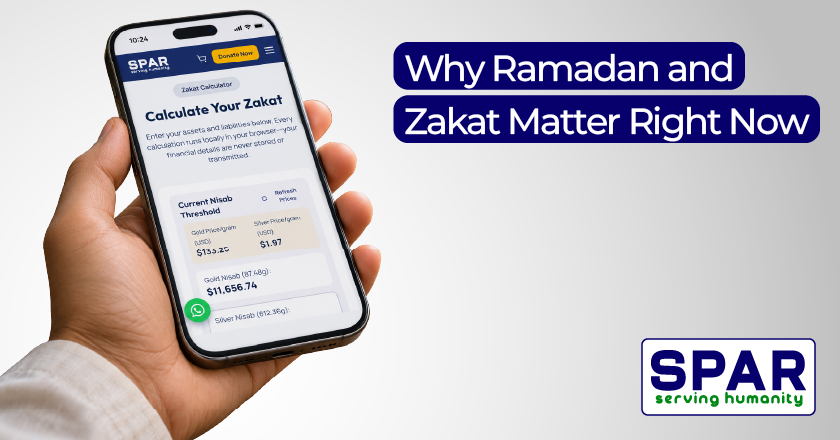
Zakat is the third-largest source of charitable giving in the world. The World Bank estimates global zakat potential at over $600 billion USD annually, yet a large portion never reaches those who need it most. When Muslims channel zakat through trusted, long-term programs, it doesn’t just feed families. It funds clean water, education, and medical care across regions facing ongoing crisis, from Bangladeshi villages to Rohingya communities in Cox’s Bazar to Palestinian families in besieged areas. SPAR’s zakat program connects donors to verified, on-the-ground work in the communities that need it most. With global need rising, getting zakat right, and getting it to the right places, matters more than ever.
Zakat and Ramadan: What Most People Don’t Know
Zakat and Zakat al-Fitr are two distinct acts of worship, and many Muslims confuse them. Zakat al-Fitr, also called Sadaqat al-Fitr, is a small fixed amount every Muslim pays at the end of Ramadan. It purifies the fast and feeds the poor before Eid. According to Sahih al-Bukhari (Book 24, Hadith 579), the Prophet Muhammad (peace be upon him) made Zakat al-Fitr an obligation on every Muslim, free or slave, male or female, young or old. Standard Zakat, by contrast, follows the hawl, the full lunar year, and applies only to those above nisab. Scholars like Imam al-Nawawi confirm in *Al-Majmu* that the two obligations run on separate clocks and carry separate rules.
Can You Pay Zakat Early During Ramadan?
Muslims can pay zakat before it’s due. Most scholars allow early payment by up to two years. This lets donors time their zakat to fall in Ramadan, when rewards are multiplied. Imam al-Nawawi confirms this in *Al-Majmu*, noting that early payment is valid as long as nisab is already met. The hawl still ends on its original date. The zakat paid early counts against that cycle. So a donor whose hawl ends in Sha’ban can pay in Ramadan and stay fully within Islamic law.
Does Early Payment Change the Amount?
The amount never changes based on when you pay. Zakat stays at 2.5% of qualifying wealth above nisab. Paying early in Ramadan doesn’t add or remove anything from that figure. What changes is the spiritual reward. The Prophet Muhammad (peace be upon him) said the reward for every good deed in Ramadan is multiplied. So the same $500 in zakat, paid in Ramadan, carries far greater weight than the same gift paid in another month.
What If Your Hawl Falls After Eid?
Some Muslims worry their hawl won’t align with Ramadan at all. That’s fine. You can still pay ahead, as long as nisab is met now. If your hawl ends in Muharram, you can pay your zakat in Ramadan and simply note that date. If your wealth later drops below nisab before the hawl ends, scholars say you may recalculate. When in doubt, ask a local scholar or imam. Getting the timing right matters, but Allah rewards sincere intent.
Common Mistakes Muslims Make With Ramadan and Zakat
Many Muslims make the same errors when paying zakat in Ramadan. The most common is treating Zakat al-Fitr and standard zakat as one payment. They’re not. Another mistake is forgetting to include all zakatable assets. Gold, silver, cash, trade stock, and certain investments all count. UNICEF estimates that over 700 million people live in extreme poverty worldwide. That scale means zakat paid correctly, on the full amount, reaches far more people than zakat paid on a partial figure. Getting the calculation right is as important as getting the timing right.
Forgetting Gold and Jewellery
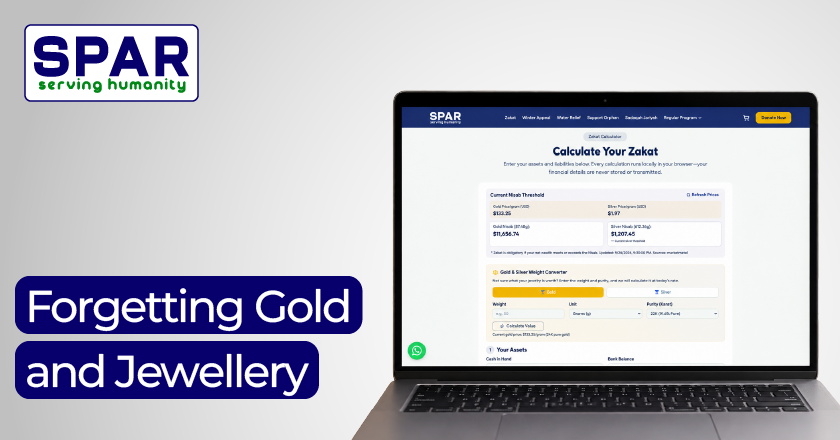
Gold is zakatable once it reaches 87.48 grams (nisab for gold). Many donors forget this. Some families hold gold as savings, not as wealth they think of day to day. But if that gold sits in a drawer past the hawl date, zakat is due on it. Scholars including Ibn Uthaymeen ruled that gold jewellery used for personal wear is still subject to zakat, though some scholars disagree. The safer view, adopted by many, is to include it in the calculation.
Paying on Last Year’s Figure
Wealth changes. Paying zakat on last year’s savings without recalculating is a common slip. If your wealth grew, your zakat figure should reflect that. Recalculate each year at the hawl date using your current holdings. Apps and online calculators can help, but always cross-check against the nisab value at the time of payment. The nisab in gold terms stays fixed at 87.48 grams. But its USD value shifts with market prices. Check it fresh each year.
Who Benefits Most From Ramadan and Zakat?
Zakat reaches eight specific groups named in Surah At-Tawbah (9:60). The first two are the poor and those in need, and they make up the vast majority of recipients worldwide. According to the World Bank, about 700 million people live on under $2.15 a day. Many of them are Muslim families in Bangladeshi villages, Rohingya families in Cox’s Bazar, Palestinian families in besieged areas, Somali communities rebuilding after drought, and Sudarian families displaced by conflict. These aren’t distant statistics. They’re the families that zakat, paid correctly and channelled well, was always meant to reach. The ummah’s quiet, consistent giving is what keeps real change moving forward.
What Ramadan and Zakat Mean for You Right Now
Ramadan and zakat are not two separate acts. They work together. Ramadan sharpens your intent. Zakat puts that intent into action. The World Bank estimates about 700 million people live on under $2.15 a day. Many are Muslim families waiting for the ummah to show up. Paying zakat in Ramadan is not just tradition. It is a choice to be part of something real. SPAR’s work across Bangladeshi, Somali, and Palestinian families runs on this kind of steady, year-round commitment. The giving matters. So does where it goes.
A subtle, story-driven close follows.
Zakat paid with care, in the right month, to the right cause, is one of the most powerful tools in Islam. Scholars like Imam al-Nawawi wrote that zakat is not charity. It is a right the poor hold over the wealthy. Ramadan makes that right feel urgent. It opens the heart and clears the mind. Teams like ours at SPAR carry the weight of that trust into the field, season after season. See how this work continues.