
Zakat is one of Islam’s five pillars. It’s a fixed annual payment, not a choice. Every Muslim who owns wealth above the nisab threshold must pay 2.5% of that wealth each lunar year. The nisab equals the value of 87.48 grams of gold or 612.36 grams of silver. As of 2026, that puts the gold nisab at roughly $7,500 USD. It applies to savings, trade goods, and livestock held for one full lunar year. Many Muslims confuse zakat with sadaqah, which is voluntary. Zakat is not. It’s a legal duty under Islamic law, binding on every free, sane, adult Muslim with enough wealth.
Islam and Zakat: Quick Answer
- What it is: Zakat is a fixed 2.5% annual levy on qualifying wealth above the nisab threshold, one of Islam’s five pillars.
- Who it applies to: Every free, sane, adult Muslim whose net wealth has stayed above the nisab for one full lunar year (hawl).
- How much: 2.5% of total qualifying wealth. At a gold nisab of about $7,500 USD, the minimum payment is around $187.
- When: Once per lunar year, after the hawl (one full year of continuous ownership) is complete.
- Eight categories: Zakat must go to one of eight groups named in Surah At-Tawbah (9:60), including the poor, the indebted, and travelers in need.
- Main exception: Zakat does not apply to a primary home, personal clothing, or tools used for work. Only surplus wealth above daily needs counts.
- Most common mistake: Many Muslims calculate zakat on income only, not total net wealth. The rule covers all qualifying assets held for a full year, not just monthly earnings.
Why Islam and Zakat Matter Right Now
Zakat is the world’s largest annual religious wealth transfer. The Islamic Development Bank estimates the global zakat potential at over $600 billion USD per year. Yet scholars and researchers agree that only a small share of that reaches those in need. This gap matters. The United Nations reports that over 700 million people still live below the poverty line. For Muslim families in Bangladeshi villages, Rohingya camps, Gazarian communities, and Sudarian towns, properly distributed zakat can pay for food, school fees, and basic care. That’s why SPAR’s zakat distribution work stays grounded in the eight Quranic categories, not donor preference alone. When zakat reaches the right hands, it doesn’t just help one family. It shifts a community.
Key Facts About Islam and Zakat Most People Don’t Know
The word “zakat” comes from the Arabic root meaning both purification and growth. That pairing is intentional. Allah mentions zakat alongside salah (prayer) over 80 times in the Quran, according to classical Quranic scholars including Ibn Kathir. Surah Al-Baqarah (2:177) links true righteousness directly to giving from one’s wealth. The hadith literature is equally clear. The Prophet Muhammad (peace be upon him) said, as recorded in Sahih al-Bukhari, that Islam is built on five things, with zakat listed as the fourth pillar. Pew Research Center data shows that Muslims make up roughly 25% of the global population. That means over two billion people are, in principle, subject to this duty. And yet the gap between what’s owed and what’s paid remains wide.
Common Misconceptions About Islam and Zakat
Many Muslims hold beliefs about zakat that simply don’t hold up against classical Islamic scholarship. One of the most common is the idea that zakat only applies to cash savings. But scholars like Imam al-Nawawi made clear that zakat covers livestock, crops, trade goods, and gold or silver too. Another myth is that giving sadaqah (voluntary charity) can replace zakat. It can’t. Sadaqah is noble, but it doesn’t fulfill the obligatory duty. Zakat has specific rules, specific rates, and specific recipients. Mixing the two leads many Muslims to underpay or skip the obligation entirely.
Does Zakat Apply to Business Assets?
Yes, it does. If a Muslim owns goods for trade, those goods are subject to zakat once they reach the nisab threshold. Imam Ibn Qudamah, the classical Hanbali scholar, documented this principle in detail. The rate stays the same: 2.5% of the value of trade goods held for one lunar year. Many business owners don’t know this rule applies to them. As a result, a large part of what’s owed goes uncollected.
Is Zakat Only for Local Giving?
No. The Quran sets out eight categories of zakat recipients, not eight postal codes. Classical scholars, including Imam al-Nawawi, held that zakat can travel to where need is greatest. Rohingya families, Gazarian children, Sudarian families in displaced areas, and Pakistani flood survivors—all may qualify. The main condition is that the recipient genuinely falls into one of the eight Quranic categories. Distance is not a barrier. Urgency and need determine where it goes.
Who Receives Zakat? The Eight Quranic Categories
Surah At-Tawbah (9:60) lists the eight groups who can receive zakat. They are the poor (fuqara), the needy (masakeen), zakat collectors, those whose hearts need softening toward Islam, those in bondage, those in debt, those in the path of Allah, and travelers in need. Each term carries a precise meaning in Islamic jurisprudence. Scholars like Ibn Kathir and contemporary scholar Sheikh Ibn Uthaymeen wrote at length about how these categories apply to modern life. Getting this right matters. Zakat paid to an ineligible recipient may not fulfill the obligation at all, according to the majority of scholars.
How Zakat Transforms the Families Who Receive It
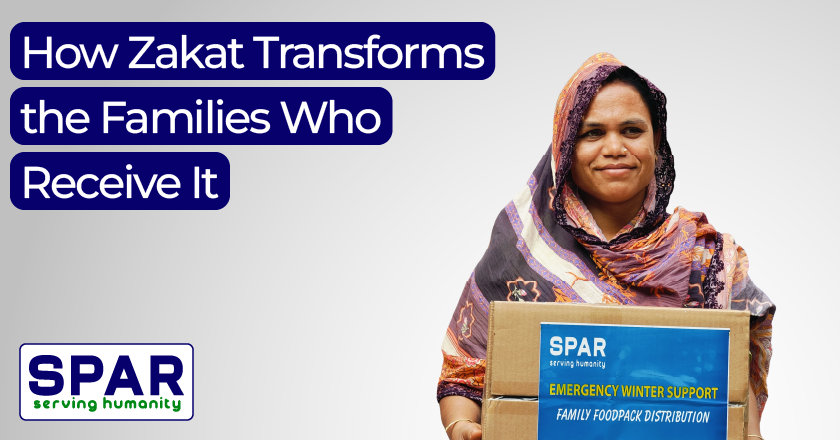
The impact of zakat on a family’s life is rarely dramatic on day one. It’s quiet and slow. A mother in a displaced Rohingya community gets enough to cover three months of food. A student from a poor family in a Bangladeshi village stays in school because zakat covers his fees. UNICEF data shows that over 650 million people currently live below the global poverty line. Many of them meet the Islamic definition of “masakeen,” the deeply needy. When zakat reaches them through proper channels, it doesn’t just feed for a day. It buys time. Time to recover, to rebuild, to earn.
The families who benefit most aren’t those who get a one-time payment. They’re the ones supported year after year through long-term programs built on consistent giving. Real change here is rarely sudden. It comes from small, sustained efforts. Season after season.
The Nisab Threshold: How Muslims Calculate What They Owe
The nisab is the minimum amount of wealth a Muslim must hold before zakat becomes due. It’s set at the value of 87.48 grams of gold or 612.36 grams of silver, as agreed by the majority of classical scholars. Because gold and silver prices shift, the nisab value changes each year. Many scholars today, including those aligned with the Fiqh Council of North America, recommend using the silver nisab because it brings more Muslims into scope and reaches more people in need. Once a Muslim’s net wealth clears the nisab and stays there for one full lunar year, 2.5% is owed.
What Islam and Zakat Mean for You Today
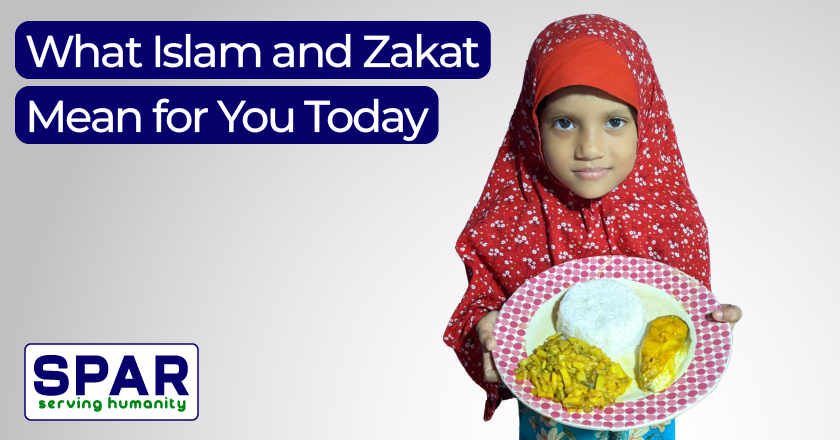
Zakat is not a suggestion. It is one of the five pillars of Islam, and it applies to every Muslim who holds wealth above the nisab for a full lunar year. The World Bank estimates over 650 million people live below the global poverty line. Many of them are the very people zakat is meant to reach. When Muslims pay zakat through trusted channels, it moves wealth from those who have enough to those who do not. That is the system Islam built. It still works.
Who Carries the Weight
Every Muslim above the nisab carries a share of this duty. It is not left to states or charities alone. The Quran names eight groups who may receive zakat, and the poor and deeply needy come first. Scholars like Imam al-Nawawi made clear that zakat must reach the right hands promptly. Delay without cause is not permitted. The ummah, as a whole, holds collective responsibility for the families who fall through every other gap.
Where Zakat Goes in Practice
Zakat flows to real people. Bangladeshi families, Rohingya communities, Palestinian families, and Somali children all live within the eight categories the Quran defines. Long-term programs built on consistent zakat payments do more than a one-off transfer ever could. They fund wells, schools, and food for families who have no other safety net. SPAR’s ongoing work across the regions it serves follows this same logic. Small, steady gifts change more lives than large, irregular ones.
Behind every lasting change is a long line of people who chose to stay involved. Zakat is not a moment. It is a practice, repeated year after year, until the need is gone. At SPAR, the work continues because Muslims around the world keep choosing to fulfill this pillar with care and intention. That quiet, steady commitment is what turns obligation into real relief. See how this work continues.