
Zakat is one of the Five Pillars of Islam. It is a set annual payment on wealth, not a free-will gift. The Quran links Zakat directly to Salah in over 30 verses, making it the only pillar besides prayer mentioned that often. Every Muslim who holds wealth above the Nisab threshold for one full lunar year must pay 2.5% of that wealth. The Nisab equals about $500 USD based on current silver rates. Most people confuse Zakat with Sadaqah, but Sadaqah is optional charity while Zakat is a divine obligation with set rules.
Zakat in Quran: Quick Answer
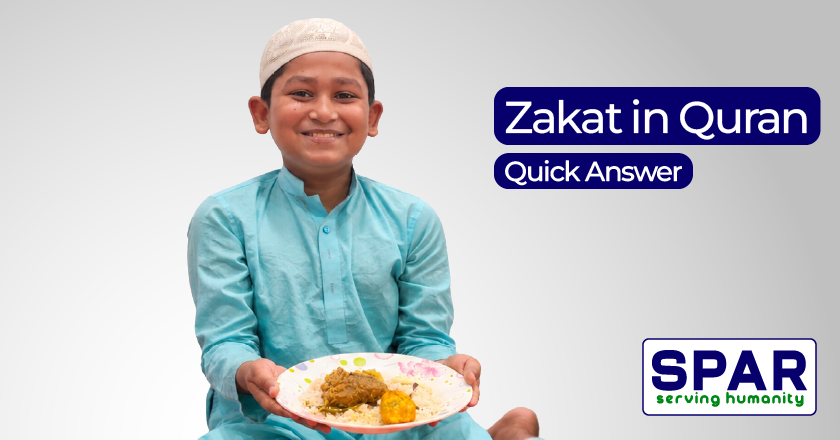
- What it is: A fixed annual alms tax, ordained in the Quran as one of Islam’s Five Pillars, not voluntary charity
- Who it applies to: Adult Muslims who own wealth above the Nisab threshold for one full lunar year
- How much: 2.5% of total saved wealth above the Nisab, roughly $500 USD based on silver value
- When: Paid once the wealth completes one lunar year (Hawl) above the Nisab level
- Main rule: Zakat only becomes due if wealth stays above Nisab for a full year without dropping below it
- Most common mistake: Many Muslims pay Zakat on gross income like a tax, but Zakat applies to net saved wealth held for one full year, not earnings
Why Zakat in the Quran Matters Right Now
The Quran pairs Zakat with Salah in verses like Surah Al-Baqarah (2:43) and Surah Al-Muzzammil (73:20), placing it at the heart of Muslim life. According to the World Bank, over 700 million people live on less than $2.15 USD a day. Scholars like Imam al-Nawawi noted that Zakat, when paid correctly, can reshape entire communities. Today, global Muslim wealth is growing fast, yet the gap between what the ummah owes and what it pays remains wide. That gap costs real families real meals. Our Zakat program at SPAR channels these funds into sustained, needs-based relief so the obligation becomes lived action.
Key Facts About Zakat in the Quran
The word “Zakat” appears 32 times in the Quran and 27 of those verses place it directly beside Salah, according to classical exegete Ibn Kathir. Eight categories of people can receive Zakat, listed in Surah At-Tawbah (9:60): the poor, the needy, those who collect it, those whose hearts need bonding, those in debt, those in bondage, those in the path of God, and travelers in need. Pew Research estimates the global Muslim population at 1.8 billion. Even a small rise in Zakat compliance could shift billions of dollars each year toward Bangladeshi, Somali, Palestinian, and Rohingya families who need it most. The obligation is both a right of the poor and a duty of the giver.
What the Quran Says About Who Receives Zakat
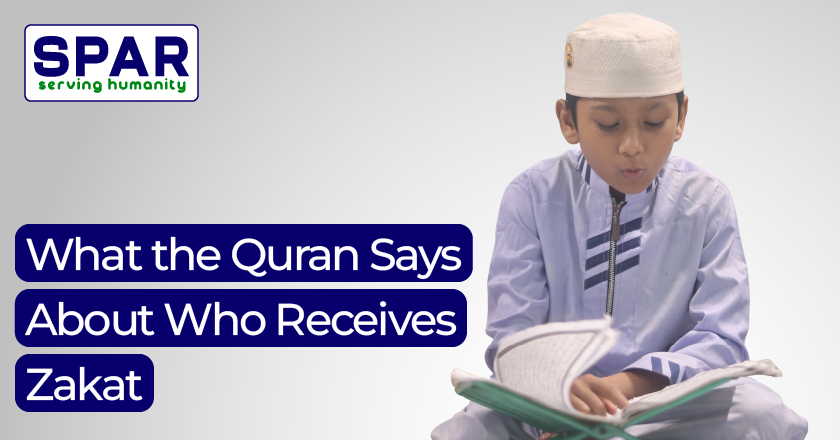
Surah At-Tawbah (9:60) names eight groups who can receive Zakat. They are the poor, the needy, those who collect it, those whose hearts need bonding, those in debt, those in bondage, those striving in God’s path, and travelers in need. Ibn Kathir, in his famous tafsir, says this verse leaves no room for personal preference. The giver does not choose freely. The Quran sets the categories, and scholars apply them. This structure stops wealth from pooling in the hands of a few. It moves money toward real need, by design.
Do the Poor and the Needy Count as Two Groups?
Yes. Scholars treat them as distinct. The poor person has some income but not enough to meet basic needs. The needy person has nothing at all. Imam al-Nawawi explains this split in his commentary on Sahih Muslim. Both groups have a legal right to Zakat. A person giving Zakat cannot skip either group simply because they seem less visible. Both have a Quranic claim.
Can Zakat Go to Travelers?
Yes. The Quran calls this group “ibn al-sabil,” meaning the son of the road. A traveler who runs out of funds during a journey can receive Zakat, even if they are wealthy at home. This rule shows the Quran’s concern for people in real, present hardship, not just chronic poverty. It is a practical mercy built into the system.
Common Mistakes Muslims Make with Zakat
Many Muslims pay Zakat once a year but calculate it on the wrong assets. The Quran ties Zakat to wealth that has grown and stayed above the nisab for a full lunar year. Gold, silver, cash, and trade goods all count. A home you live in does not. Ibn Uthaymeen and other scholars warn that leaving out assets like savings accounts or business stock is a common error. It leads to underpayment. The obligation then sits unmet, and the poor lose their rightful share. Checking your Zakat with a trusted scholar or a reliable calculator each year helps close that gap.
Is Zakat Required on Gold Jewelry?
This is one of the most debated points in Islamic law. The majority view, held by the Maliki, Shafi’i, and Hanbali schools, says Zakat is due on gold jewelry if it reaches the nisab and stays there for a lunar year. The Hanafi school agrees. Only a minority dissent. According to a Hadith recorded in Abu Dawud (Hadith 1563), the Prophet Muhammad (peace be upon him) indicated that gold and silver ornaments carry a Zakat duty. Most scholars today follow this position.
How Zakat in the Quran Connects to Social Change
The Quran pairs Zakat with Salah more than any other act of worship. This is not by accident. Prayer is the bond between a person and God. Zakat is the bond between a person and their community. Together, they form the backbone of a Muslim’s duty. The World Bank reports that wealth gaps in low-income countries are widening each year. Zakat, paid fully and fairly, is one of the few tools Islam gives the ummah to push back against that trend. It is not charity in the casual sense. It is a structured transfer, ordered by God, from those who have to those who need. Real change in Bangladeshi, Somali, and Palestinian families rarely comes from one large act. It comes from steady, consistent giving, year after year, from people who take this verse seriously.
What Happens When the Ummah Neglects Zakat
The Quran does not treat Zakat as optional. Surah At-Tawbah (9:34-35) warns those who hoard gold and silver without giving what is owed. The verse describes a painful outcome on the Day of Judgment. Ibn Kathir notes this passage directly. Neglecting Zakat is not a minor lapse. It is a breach of a pillar. Pew Research places the global Muslim population at 1.8 billion. Even a modest rise in Zakat compliance could shift billions of dollars each year toward families in acute need. The gap between what is owed and what is paid is not just a financial gap. It is a gap in lives.
What Zakat in the Quran Means for You Today
The Quran does not leave Zakat open to personal judgment. It names eight groups who must receive it, sets a fixed rate of 2.5% on savings, and ties it directly to Salah in over 30 verses. Pew Research puts the global Muslim population at 1.8 billion. If even a fraction more of that ummah paid Zakat fully, the shift in wealth reaching Bangladeshi, Somali, and Palestinian families would be real and lasting. The nisab threshold, the hawl period, and the eight eligible categories are not rules added later. They come from the Quran itself.
How Do You Know If Your Zakat Is Calculated Correctly?
Start with your total savings. Include gold, silver, trade goods, and cash held for a full lunar year. Apply the nisab threshold, which is roughly the value of 85 grams of gold or 595 grams of silver. If your savings sit above that line, you owe 2.5%. Scholars like Ibn Baz and Ibn Uthaymeen both stress that honest self-assessment is key. If you are unsure, consult a trusted scholar or use a verified Zakat calculator.
What Stops More Muslims from Paying Zakat in Full?
Lack of knowledge is the biggest barrier. Many Muslims do not know the nisab value for the current year. Others mix up Zakat with Sadaqah or assume their regular charity counts. The World Bank notes that financial literacy remains low in many Muslim-majority low-income countries. When Muslims learn the exact Quranic rules, compliance tends to rise. Clear teaching, honest nisab figures, and accessible guidance make a direct difference to families in need.
Behind every verse on Zakat is a promise: that wealth, when it moves, heals. The Quran’s command is not vague. It is structured, fair, and repeated across dozens of suwar. For families in Bangladeshi villages, Gazarian communities, and Rohingya settlements, that structure is not abstract. It is food, clean water, and a child in school. SPAR’s work stays close to that Quranic intent, season after season, in the regions where the need is greatest. See how this work continues.