
Payment of zakat in Islam is the annual act of giving 2.5% of one’s accumulated wealth to those in need. It’s one of the Five Pillars of Islam, making it a religious duty, not a choice. The obligation applies to any Muslim who holds wealth above the nisab threshold for one full lunar year. That threshold sits at the value of 85 grams of gold or 595 grams of silver. Scholars estimate over one billion Muslims worldwide are eligible to pay zakat each year.
Why Payment of Zakat in Islam Matters Right Now
Zakat isn’t charity in the ordinary sense. It’s a structured transfer of wealth built into Islamic law. According to the World Bank, about 700 million people globally still live below the poverty line. Zakat, if fully collected and distributed, could cover a large part of that gap. The Quran commands it directly in Surah Al-Baqarah (2:43): “Establish prayer and give zakat.” That verse puts zakat beside salah in weight. Scholars like Imam al-Nawawi confirmed it became obligatory in the second year after the Hijra. You can see how SPAR puts zakat to work through our zakat programs . The need hasn’t shrunk. It’s grown.
Key Facts About Payment of Zakat in Islam
Zakat applies to four main asset types: gold and silver, cash and savings, business inventory, and agricultural produce. The rate for most assets is 2.5%. Agricultural produce carries a different rate, either 5% or 10%, depending on irrigation method. A Muslim must hold assets above the nisab for a complete lunar year, called the hawl. The Pew Research Center puts the global Muslim population at around 1.8 billion. Even a fraction of that community paying zakat consistently would redirect billions of dollars each year directly to the poor. Ibn Baz, one of the most cited modern scholars on zakat, stressed that delaying payment beyond the hawl without cause is sinful. The rules aren’t complicated. But most Muslims have never seen them laid out plainly.
How to Calculate Your Zakat Payment
Calculating zakat starts with one number: your net zakatable assets minus any debts you owe. Add up your cash, savings, gold, silver, and business stock. Subtract what you owe to others. If the remainder stays above the nisab for a full lunar year, you owe 2.5% of that total. The nisab itself is pegged to either 85 grams of gold or 595 grams of silver. Most scholars recommend using the silver nisab, as it includes more people and better reflects the spirit of zakat. According to Pew Research Center, the global Muslim population sits at around 1.8 billion. If even a small fraction calculated and paid consistently, the flow of wealth to the poor would shift measurably.
Gold, Silver, and Cash
Gold and silver carry their own nisab thresholds. Cash, bank savings, and investment accounts follow the same 2.5% rule once they cross the nisab. Business inventory gets valued at market price, not cost price. So if stock sits on a shelf unsold, you still count it at what you could sell it for today.
Debts and Deductions
You can deduct short-term debts from your zakatable total. Long-term debts, like a mortgage, only reduce your zakat base by the amount due in the current year. Scholars from the Hanbali school, including Ibn Qudama, held that only immediate liabilities reduce zakatable wealth. So plan your calculation carefully each year.
Common Mistakes Muslims Make With Zakat Payment
Many Muslims pay zakat incorrectly without knowing it. The most common mistake is confusing zakat with sadaqah. Zakat is an obligation with fixed rules. Sadaqah is voluntary charity with no set amount. Paying sadaqah, no matter how generous, does not fulfil the zakat duty. Another widespread error is forgetting to include all asset types. Many people count only cash but forget gold sitting in a drawer or stock in a small business. Ibn Baz explicitly warned that forgetting eligible assets does not excuse the Muslim from liability. The obligation covers all zakatable wealth, whether remembered or not.
Delaying Payment Past the Hawl
Some Muslims delay payment out of habit or confusion. But once the hawl completes, the debt to the poor is due. Delaying without a valid reason is sinful, according to the majority of scholars. A small number of classical scholars allowed a short delay for logistical reasons, but none permitted ongoing, indefinite postponement.
Paying to Ineligible Recipients
Zakat must go to one of the eight categories named in Surah At-Tawbah (9:60). Paying it to a mosque building fund, for example, does not count. Paying it to a wealthy relative does not count either. The categories include the poor, the destitute, those in debt, and travellers who have run out of funds. Sticking to these categories protects the validity of your payment.
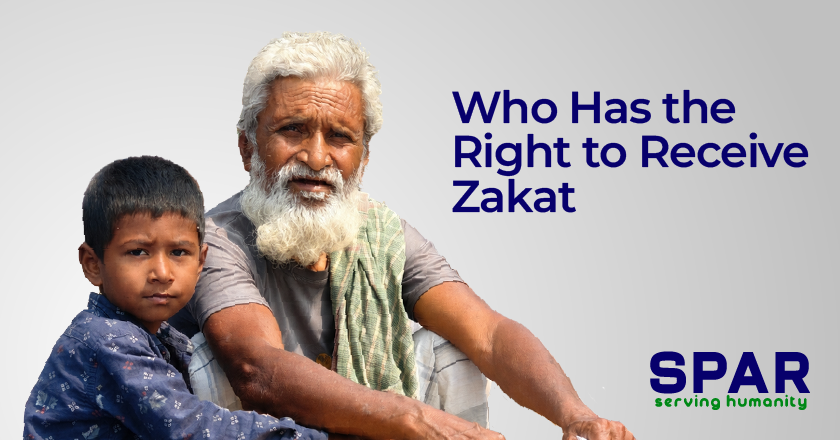
Who Has the Right to Receive Zakat
The Quran names the eligible recipients clearly. They are: the poor, the destitute, those appointed to collect zakat, those whose hearts are being reconciled, those in bondage, those in debt, those in the cause of Allah, and the stranded traveller. Scholars have discussed each category at length. Imam al-Nawawi, in his work Al-Majmu, outlined that the poor and destitute must lack enough to meet their basic needs. The destitute have less than the poor. Both categories cover a vast portion of humanity today. According to the World Bank, about 700 million people still live on less than $2.15 a day. Zakat is one of the few systems designed with exactly this group in mind.
How Zakat Reaches Those Who Need It Most
Zakat does not work in isolation. It needs a channel. Paying directly to a neighbour in need is valid. But reaching displaced Rohingya families, Sudarian communities in crisis, or Gazarian children separated from their parents requires something more organised. It needs teams on the ground with local knowledge and long-term presence. SPAR’s work across multiple regions is built on exactly that kind of quiet, sustained effort. No single payment transforms a community. But consistent, well-directed zakat, channelled through people who stay, builds real change over years. The families in the regions where SPAR serves don’t need a one-
What Paying Zakat Correctly Means for You
Zakat is not just a ritual. It is a transfer of right. The World Bank estimates that around 700 million people still live on less than $2.15 a day. Zakat, calculated correctly and paid on time, moves wealth toward exactly this group. Knowing your nisab, confirming your lunar year, and choosing a trustworthy channel are the three steps that make your zakat count. The families who receive it are not passive beneficiaries. They are people with rights that Allah placed in your wealth.
Does Your Payment Method Change the Reward?
It does not change the obligation. But it changes the reach. Paying by hand to a neighbour is valid. Sending through an organisation with field teams in displaced or conflict-affected communities multiplies the impact without adding to your duty. The key condition is that the recipient qualifies. If your chosen channel confirms this, your zakat is discharged. SPAR’s work reaches communities where that qualification is clear and the need is real.
What Happens When Zakat Is Consistently Paid?
Ibn Khaldun, the 14th-century Muslim historian and social thinker, observed that sustained redistribution builds stable societies. Zakat is not charity by sentiment. It is architecture by design. UNICEF estimates that over 333 million children live in extreme poverty worldwide. Consistent zakat payment, channelled well, does not solve that in one cycle. But it reduces it, year by year, in the communities that receive sustained attention.
Zakat does not announce itself. It moves quietly, from those who calculated carefully, through channels with real presence on the ground, to families who never make the news but carry real weight. At SPAR, the work continues across multiple regions because the ummah keeps showing up, year after year. The payment of zakat in Islam was never meant to be a one-time gesture. It was designed to be a permanent feature of a just world.