
Emergency food aid is short-term food assistance given to people who face sudden, severe hunger from conflict, disaster, or displacement. It differs from development food programs, which build long-term food security over years. The UN World Food Programme estimates that about 733 million people faced hunger in 2023, yet acute crisis-level hunger, the kind emergency aid targets, affects a smaller but far more urgent subset. Aid reaches people in the first 72 hours after a shock hits. One critical rule: emergency aid stops when the acute phase ends, which means families can fall back into crisis without follow-on support. In 2026, climate shocks and ongoing conflicts have pushed acute hunger to levels not seen in a generation.
Emergency Food Aid: Quick Answer
What it is: Short-term food assistance given immediately after conflict, disaster, or sudden displacement strips a family of its food supply.
Who it applies to: People in acute humanitarian crises, including displaced families, disaster survivors, and communities cut off from food markets.
How much: A standard emergency food ration costs about $0.50 USD per person per day, according to WFP operational data.
When: Delivered within 24 to 72 hours of a crisis event for maximum survival impact.
Where: Active in crisis zones across sub-Saharan Africa, South Asia, the Middle East, and beyond, including Bangladeshi, Somali, and Palestinian communities.
Main rule: Emergency aid covers immediate survival only. It does not rebuild livelihoods or address why hunger happened in the first place.
Most common mistake: Donors confuse emergency food aid with food development programs. They’re different systems, different timelines, and need separate, sustained funding.
Why Emergency Food Aid Matters Right Now
Acute hunger doesn’t wait. According to the UN Office for the Coordination of Humanitarian Affairs (OCHA), over 300 million people needed emergency food assistance in 2023, a figure that has grown every year since 2020. Climate shocks hit harvests hard. Floods in South Asia and drought cycles across sub-Saharan Africa push families into food crisis within days. Conflict cuts supply routes and empties markets overnight. Rohingya families in Cox’s Bazar, Somali communities hit by drought, and Gazarian families living under siege all face the same reality: they can’t wait for a long-term fix. You can see how our emergency relief work responds directly to these moments of crisis, moving food fast when it counts most. Without rapid response, child malnutrition sets in within weeks, and the window to prevent lasting harm closes fast.
Emergency Food Aid by the Numbers
The scale is hard to imagine. UNICEF reported in 2023 that 45 million children under five faced acute malnutrition globally, placing them one missed meal away from life-threatening decline. The World Food Programme puts the cost of reaching one person with emergency rations at about $0.50 USD per day, yet funding gaps regularly leave millions unserved. In 2022, the global humanitarian food response was underfunded by over $6 billion USD, according to OCHA’s Financial Tracking Service. Bangladeshi communities near flood-prone riverbanks, Sudarian villages after seasonal displacement, and Nigerian families in conflict-affected regions share the same funding shortfall. Speed matters as much as scale. Every 24-hour delay in food delivery after a disaster increases acute malnutrition rates in children under two. That’s not a warning. It’s a documented outcome.
Who Is Most at Risk During a Food Crisis?
Children under five face the biggest danger in any food emergency. UNICEF data shows severe acute malnutrition can kill a child within weeks of onset. But the risk doesn’t stop with children. Pregnant women, elderly people, and those with chronic illness all sit in the same danger zone. Displaced families, cut off from markets and farmland, have no backup. Rohingya communities in Cox’s Bazar, Somali families after failed rains, and Sudarian villages after seasonal flooding share one pattern: their margin is already thin before the crisis hits. When it does hit, there’s almost nothing left.
Why Children Bear the Worst of It
Malnutrition in the first 1,000 days of a child’s life causes damage that can’t be undone. Brain development, immune function, and physical growth all stall. The World Health Organization links stunting in early childhood to lower lifetime earnings, weaker immune systems, and higher rates of chronic disease in adulthood. A food emergency doesn’t just threaten a child’s present. It reshapes their entire future. That’s why emergency food aid for children isn’t charity. It’s early intervention with lifelong results.
Common Misconceptions About Emergency Food Aid
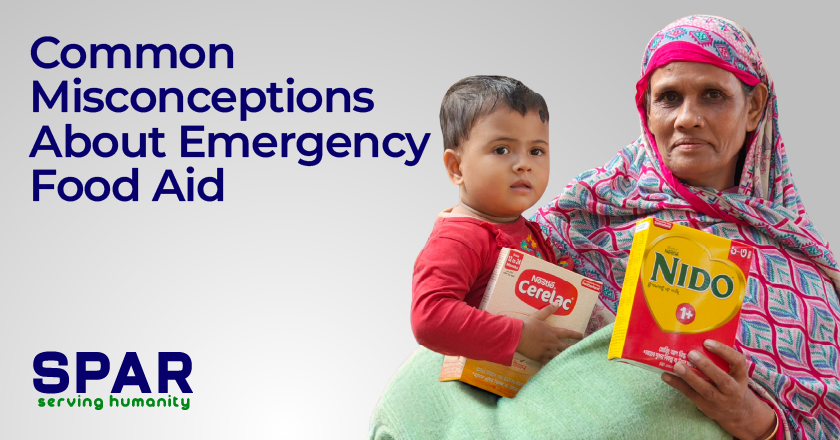
Many people think emergency food aid means handing out food bags for a few days. That’s not how it works. Real emergency food response includes nutrition screening, therapeutic feeding for severe cases, and coordination with local health workers. The UN’s Cluster System, used in major disaster responses, requires organizations to map supply chains, cold-storage needs, and distribution access before food moves. One-off food drops without these systems often miss the most vulnerable. They reach the mobile, not the bedridden. They reach those near roads, not those in remote or conflict-cut areas.
Cash Aid vs. In-Kind Food: Which Works Better?
Both tools have a place. The World Food Programme reports that cash-based aid works well where local markets still function. Families spend it on what they actually need, including medicine, not just food. But in-kind food rations matter most where markets have collapsed or roads are cut. Gaza, after sustained blockades, shows the limit of cash aid when there’s nothing to buy. The right choice depends on context, not preference. Effective emergency food programs assess market conditions first, then choose the method most likely to reach each family.
Root Causes That Drive Food Emergencies
Hunger crises don’t appear without warning. Three forces drive most of them: conflict, climate shocks, and economic collapse. The Food and Agriculture Organization of the United Nations reports that conflict was the primary driver of acute food insecurity for over 135 million people in 2022. Climate shocks, including droughts, floods, and cyclones, hit farming communities hardest. Bangladesh is one of the most flood-exposed countries on earth, and Bangladeshi smallholder farmers often lose an entire season’s crop in days. Economic collapse strips families of purchasing power before the first aid truck arrives. Emergency food aid responds to the symptom. Addressing these roots is the harder, longer work.
Why Seasonal Patterns Make It Worse
Hunger follows a calendar. In many regions, food stocks run lowest just before the harvest, in a period sometimes called the “lean season.” This is when prices peak and reserves run out. Children born in the lean season face higher risks of malnutrition from the first weeks of life. Organizations that track these seasonal cycles can pre-position food and funding before demand spikes. But that requires sustained planning, not reactive fundraising. The teams working on this don’t make headlines. They show up, month after month, mapping the calendar of need.
What This Means When the Next Crisis Hits
Emergency food aid saves lives. But it works best when systems are already in place. According to the UN’s World Food Programme, pre-positioned food stocks can cut response time by 40 to 60 percent in fast-moving disasters. Bangladeshi farming communities face this reality every monsoon season. A crop lost to flooding can push a family into acute hunger within weeks. Knowing how aid systems work, and which organizations maintain long-term field presence, matters. The difference between a slow response and a fast one is often built months before the crisis begins.
How Sustained Programs Change the Equation
Reactive aid feeds people today. Sustained programs build the capacity to feed people next year. Organizations with consistent field teams know the seasonal hunger calendar. They know which communities run low on food in which months. That local knowledge is hard to build quickly. SPAR’s ongoing work across the regions it serves reflects this approach. The aim is not just to respond fast. The aim is to arrive prepared.
What Donors and Communities Can Do Right Now
Awareness is the first step. Understanding the difference between emergency food aid and long-term food security helps people make informed choices about where to focus attention. UNICEF notes that sustained funding, not one-time giving, is what allows organizations to pre-plan. Communities that stay engaged year-round, not just during visible crises, give aid organizations the stability they need to act before disaster strikes.
Behind every food parcel delivered in time is a chain of decisions made long before the crisis. Someone mapped the hunger calendar. Someone pre-positioned the stock. Someone trained the local team. At SPAR, this quiet, prepared work runs through our programs across Bangladeshi communities and beyond. The headlines move fast. The need does not.