
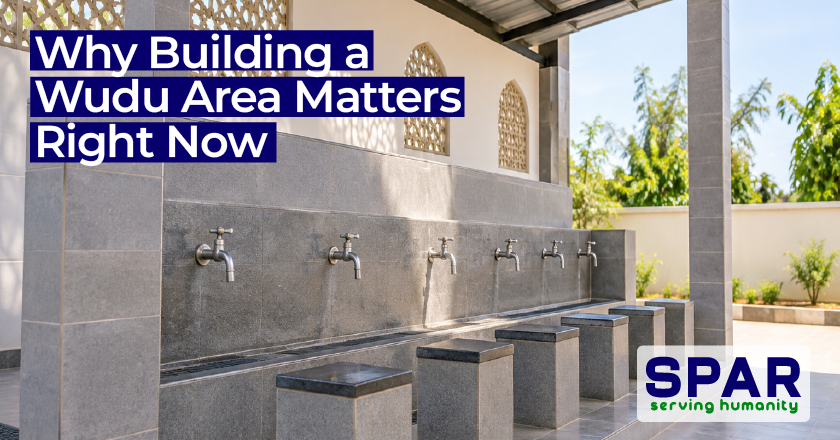
A wudu area is a dedicated space for ritual purification before salah. It’s not just plumbing. A proper wudu area separates clean water from waste, protects the user’s privacy, and meets the fiqh conditions that make wudu itself valid. Most mosques spend between $500 and $5,000 USD to build one, depending on scale and materials. Every Muslim who prays five times daily depends on access to a space like this.
Why Building a Wudu Area Matters Right Now?
Clean, functional wudu spaces are in short supply across many Muslim communities worldwide. According to UNICEF, over 2 billion people still lack basic handwashing facilities at home, and mosques in low-income areas often face the same gap. A poorly build wudu area creates real problems: invalid wudu due to impure water contact, slipping hazards, and lost congregation numbers. You can see how this affects the communities we serve through our clean water and sanitation work. Building right the first time saves money and protects the spiritual integrity of every prayer that follows it.
Key Facts About Wudu Area Construction Most People Miss
Drainage is the detail builders get wrong most often. Islam requires that used water (wastewater from wudu) flows away cleanly and doesn’t pool near the user’s feet. This is not just hygiene. Ibn Qudama and classical Hanbali scholars treat impure water contact as a condition that can invalidate the act of purification itself. The World Health Organization notes that poor drainage in communal wash spaces drives skin infections and waterborne illness. A functional wudu area needs a slope of at least 1 to 2 percent toward a dedicated drain. Budget around $200 to $800 USD for drainage work alone on a standard four-station setup.
What Materials Work Best When You Build a Wudu Area?
The best materials for a wudu area are non-porous, water-resistant, and easy to clean. Ceramic or porcelain tiles work well for floors and splash walls. They resist mildew, tolerate heavy water exposure, and can last decades with basic care. Avoid polished marble near foot zones. It looks clean but becomes dangerously slippery when wet. According to WHO guidance on communal wash facility design, non-slip textured surfaces reduce fall injuries by up to 26 percent. Stainless steel taps outlast plastic fittings in high-use settings. Budget around $150 to $400 for quality tap fixtures on a four-station build.
What About the Floor?
The floor bears the most risk. Use unglazed ceramic tiles with a grip rating of R11 or higher. These are standard for commercial wet zones and mosque builders should treat the wudu area the same way. Epoxy grout between tiles resists mould better than standard cement grout. Lay tiles at a slight angle toward the drain. This keeps water moving and stops it from pooling between feet. A good floor in a wudu area will likely outlast the rest of the structure.
What About the Walls?
Keep wall tiles going at least 1.2 metres high behind each tap station. Splash travels further than most builders expect. Below the tile line, use waterproof cement board rather than standard drywall. Standard drywall absorbs moisture and grows mould within months in a humid climate. Exterior-grade silicone sealant should fill every joint between the wall tile and the floor. This gap is where water silently damages a structure over years. Seal it once and check it annually.
How Many Stations Should a Mosque Wudu Area Have?
Plan for one wudu station per 25 to 30 regular congregants. This is the standard ratio used in mosque facility planning across South and Southeast Asia. Underbuild and you create queues before Fajr, which causes rushed wudu and missed rows of prayer. Overbuild and you waste budget that could go to other community needs. A Friday congregation of 150 men typically needs five to six stations on the men’s side. Count your average attendance across three or four weeks before finalising the number.
Common Mistakes When People Build a Wudu Area
The biggest mistake is treating drainage as an afterthought. Builders often spec the taps and tiles first, then realise the drain slope doesn’t work. By then, the floor is already laid and expensive to change. The second mistake is skipping a dedicated women’s wudu space entirely. Many older mosque designs placed it as a side note, if at all. This discourages women from attending congregational prayers. The third mistake is choosing single-handle mixer taps instead of separate hot and cold controls. Mixers fail faster in high-use settings and cost more to replace. Get the basics right at the start.
How Does Wudu Area Design Connect to Purity and Prayer Validity?
An improperly built wudu area can affect the validity of wudu itself. If used water pools near a user’s feet and contacts clean skin during the wash, scholars in the Hanbali and Shafi’i schools treat this as a potential source of ritual impurity. The Prophet Muhammad (peace be upon him) said: “Cleanliness is half of faith,” recorded in Sahih Muslim. Clean drainage is not just a construction detail. It is a condition of valid worship. This is why communities that take the time to build a wudu area properly, even on a limited budget, protect something far larger than a building. That protection comes from sustained attention. It doesn’t arrive in one day and it rarely arrives from one source.
What to Know Before You Build a Wudu Area
Get the structure right before the first tile goes down. Poor drainage causes standing water, which scholars in the Hanbali and Shafi’i schools identify as a risk to wudu validity. Seat height matters too. The WHO notes that accessible design reduces injury and increases use across all age groups. A wudu area that works well has dry floors, separate women’s facilities, and taps that children and older adults can reach. These are not extras. They are the foundation of a space the whole community will use for decades.
Does the Material Used for Drainage Affect Ritual Purity?
Yes. Used water must leave the wash area fast and clean. Grout lines in rough tiles hold bacteria and soap residue. Smooth, unglazed ceramic or sealed concrete keeps the surface clean. Separate drainage channels for each stall stop cross-contamination. The Hanbali position, as recorded by Ibn Qudama in *Al-Mughni*, holds that contact with used water invalidates wudu. Good drainage is a fiqh matter, not just a building one.
What Role Does Community Planning Play in Long-Term Use?
A wudu area built without community input often gets misused or neglected. Families know their own needs. In communities where SPAR works, local consultation shapes which features matter most, from the number of seats to the height of taps. UNICEF field data shows that water facilities designed with community input last longer and stay cleaner. Planning together is not a courtesy. It is part of how the space stays functional year after year.
Behind every well-built wudu area is a community that chose to plan carefully. The materials, the drainage, the separate women’s space — none of it happens by accident. At SPAR, this kind of steady, practical work is what we focus on, from Bangladeshi communities to Rohingya families in Cox’s Bazar. The goal is always the same: spaces that hold up, stay clean, and serve worshippers for generations. See how this work continues at sparproject.org/our-work.