
The best charity to donate to is one that spends most of its budget on direct aid, not admin or marketing. Most donors focus on a charity’s story. But the sharpest donors check three things first: how much reaches the people in need, who oversees the money, and whether the results can be verified. According to the World Bank, only 60–70% of humanitarian aid reaches intended recipients on average. The gap matters. A $100 gift to an efficient charity can deliver three times the impact of the same gift to a poorly managed one. The single most overlooked test: does the charity publish audited accounts? Most don’t.
Best charity to donate to: Quick Answer
What it is: A charity that puts most of its funds into direct aid, publishes audited accounts, and shows verifiable results.
Who it applies to: Any donor giving $10 or $10,000 — the same checks protect both.
How much goes to aid: Top-rated charities spend $85 USD or more of every $100 on programs, not admin.
When to check: Before every new giving decision, not just once — charity performance shifts year to year.
Main rule: Look for independently audited financial statements. A charity that won’t show them fails the first test.
Most common mistake: Donors judge by emotional marketing, not audited spend ratios — a charity with a great ad may send less than 50 cents per dollar to the field.
Key global context: UNICEF estimates 1.3 billion people live in acute poverty today — choosing well means your gift reaches those who need it most.
Why Finding the Best Charity to Donate to Matters Right Now
Donor trust is at a historic low. The Edelman Trust Barometer reported that fewer than half of global donors feel confident that charities use funds as promised. That’s a problem for the people who depend on aid most. Bangladeshi families, Rohingya refugees, and Palestinian communities in besieged areas can’t afford the gap between a donation and its arrival. When you find a charity with transparent governance and field accountability, your giving multiplies. SPAR’s work across multiple regions connects donors directly to long-term programs, not short-term relief cycles. Learn more about our ongoing humanitarian programs. Choosing carefully isn’t caution. It’s how real impact starts.
Best Charity to Donate to: What Most Donors Never Check
Most donors never read a financial report. But that’s exactly where the difference hides. According to UNICEF’s 2024 humanitarian funding data, overhead costs across the aid sector average 25–35% of total spend. The best charities push that number far lower. Field accountability matters just as much. Does the charity have staff on the ground? Do they publish project updates with named locations and dates? A charity working in Bangladeshi communities, Somali villages, or Gazarian displacement camps should show you the work, not just describe it. One more fact most donors miss: charities that publish annual impact reports raise 40% more in long-term recurring gifts, according to the Fundraising Effectiveness Project. That stability is what keeps programs running when crises hit.
What Separates a Good Charity From a Great One?
A good charity delivers relief. A great one delivers change. The difference lives in how they work, not just where they work. Great charities build local capacity. They train community members. They set up systems that keep running after the team leaves. According to the World Bank, development aid tied to local ownership produces outcomes that last three to five times longer than external-led programs. That’s not a small gap. When you choose a charity, ask whether they’re building something that stays. Short-term relief matters. But lasting impact is what makes a donation worth giving.
Do Field Staff Make a Difference?
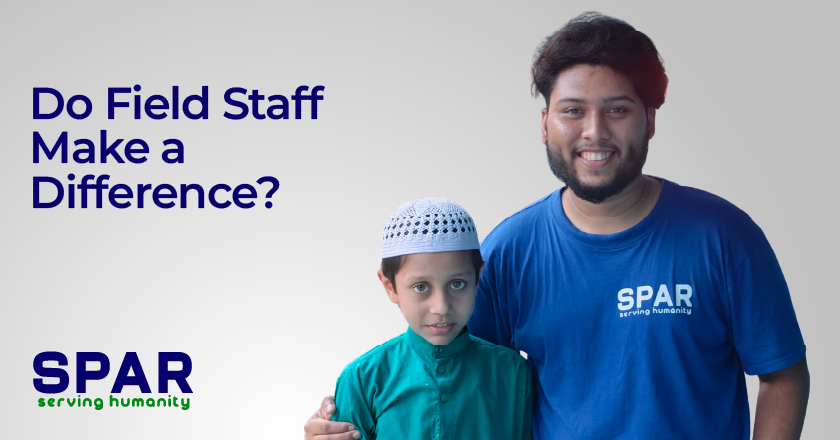
They make all the difference. Charities with permanent field teams spot problems early. They adjust when plans don’t work. They build trust with local families over months, not days. A charity operating out of an office two countries away can’t do that. When SPAR’s teams work alongside Bangladeshi, Somali, and Palestinian communities, they learn what each family actually needs. That learning shapes every program decision. It’s slow work. But it’s real work. And it’s the kind of work that doesn’t show up in a glossy brochure.
Does Charity Size Matter?
Bigger is not always better. Large charities sometimes spend more on operations and less on programs. Smaller charities can be agile and responsive. What matters most is the ratio of program spend to total spend. UNICEF notes that high-performing humanitarian organizations keep program costs above 80% of total expenditure. Size alone tells you nothing. A focused charity working in a few regions, doing deep work, often outperforms a sprawling operation spread thin across dozens of countries.
Common Misconceptions About Choosing the Best Charity to Donate to
Most donors believe that emergency appeal charities do the most good. That’s not always true. Emergency appeals fund visible crises. But chronic suffering, the kind that doesn’t make news, often goes unaddressed for years. Rohingya families in displacement camps, Palestinian children without schooling, Sudarian communities without clean water: these are not new emergencies. They’re long-term needs. The Fundraising Effectiveness Project found that charities focused on sustained programs retain donor trust longer and produce more measurable results. The best charity to donate to isn’t always the one you see on the news.
Who Is Most Affected When Donors Choose Poorly?
Children bear the heaviest cost. UNICEF estimates that 333 million children worldwide live in extreme poverty. When donors give to charities that waste funds or lack accountability, that money doesn’t reach them. It disappears into overhead, failed projects, or mismanaged logistics. Orphaned children and vulnerable families in Gazarian, Bangladeshi, and Nigerian communities depend on sustained support. Not one-off appeals. When a donor picks carelessly, a child waits longer. When a donor picks well, a family gets support that keeps coming, season after season. That quiet, consistent presence is what rebuilds lives.
The Role of Long-Term Programs vs One-Time Relief
One-time relief saves lives in a crisis. Long-term programs change the conditions that cause the crisis. Both matter. But the ratio in global giving skews too far toward emergency response. According to the UN Office for the Coordination of Humanitarian Affairs, less than 2% of global humanitarian funding goes toward long-term resilience programs. That leaves millions of families stuck in cycles of dependency. Charities that run multi-year programs in water access, orphan care, and food security break those cycles. Real change here is rarely sudden. It comes from small, sustained efforts, season after season.
What This Means When You Choose Where to Give
Choosing the best charity to donate to is not a small decision. It shapes real outcomes for real families. The UN estimates over 700 million people still live in extreme poverty. That number doesn’t shrink without sustained, accountable giving. Look for charities with clear program reporting, long-term field presence, and work that runs between crises, not just during them. SPAR’s programs across Bangladeshi, Gazarian, and Somali communities reflect that model. Consistent, targeted work in water access, orphan care, and food security is where lasting change begins.
How Transparency Affects the Families Who Need Help Most
Transparency isn’t just a governance term. It’s the link between a donor’s intention and a child’s reality. When a charity publishes clear program outcomes, donors can trust their support is landing. When it doesn’t, that trust breaks, and so does the giving. Families in Sudarian and Rohingya communities don’t benefit from vague reports. They benefit from charities that show their work and keep showing up.
What Long-Term Commitment Looks Like in Practice
Short-term relief addresses a crisis. Long-term programs address the cause. A family that receives emergency food aid survives a season. A family enrolled in a sustained food security program builds the ability to feed itself the next season too. SPAR’s approach focuses on that second outcome. Programs in Nigerian, Pakistani, and Bangladeshi communities run year-round, not just when a headline prompts action.
Behind every measurable change is a long line of people who chose to stay involved long after the headlines moved on. Finding the best charity to donate to means looking past the campaign imagery and asking who stays. At SPAR, the work across the communities we serve continues because of that quiet, sustained commitment. The programs run. The teams stay. And families get the kind of support that builds something real. See how this work continues.