To give zakat correctly, a Muslim calculates 2.5% of all net savings and assets held above the nisab threshold for one full lunar year, then distributes that amount to one or more of the eight categories of recipients named in Surah At-Tawbah (9:60). Zakat is not the same as sadaqah. Sadaqah is voluntary and can go to anyone, but zakat is a religious obligation with strict rules on timing, amount, and who may receive it. The current nisab is roughly $520 USD, based on 85 grams of gold. Every adult Muslim who holds wealth above this threshold for one full lunar year must pay. Missing the one-year holding period (hawl) is the single most common calculation error. In 2026, with gold prices elevated, more Muslims cross the nisab threshold than in previous decades, making this question more urgent than ever.
How to Give Zakat: Quick Answer
- What it is: Zakat is the annual 2.5% wealth tax obligatory on Muslims whose net assets exceed the nisab threshold for one full lunar year.
- Who it applies to: Adult Muslims of sound mind who hold savings, gold, silver, or business assets above the nisab for 12 lunar months.
- How much: 2.5% of total zakatable wealth. At $10,000 USD in net savings, that’s $250 USD owed.
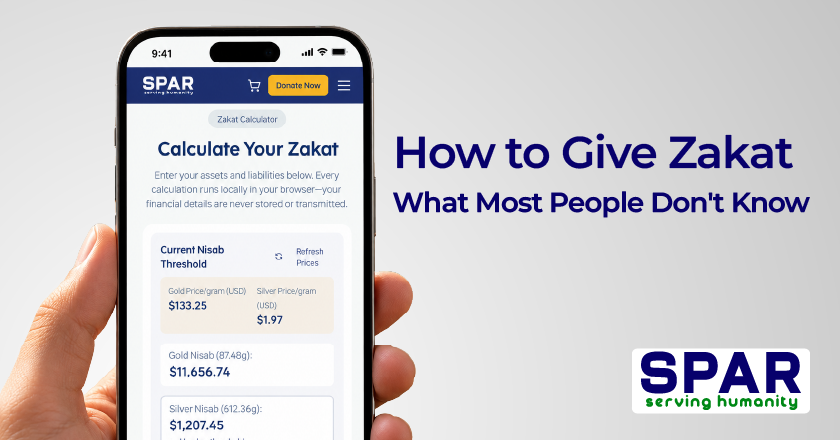
- Nisab value: About $520 USD (gold standard, 85g) or about $38 USD (silver standard, 595g) as of 2026.
- When: After one full lunar year (hawl) of owning wealth above the nisab, calculated on the same date each year.
- Main rule or exception: Debts you owe can be deducted before calculating. You pay zakat only on net wealth, not gross assets.
- Most common mistake: Using the silver nisab instead of the gold nisab inflates your zakat obligation significantly. Most contemporary scholars prefer the gold standard for savings.
Why Giving Zakat Correctly Matters Right Now
Zakat is one of the five pillars of Islam and one of the most precise financial obligations in religious law. Getting it wrong doesn’t just affect your worship. It affects the families who depend on it. The World Bank estimates that over 700 million people still live on less than $2.15 USD a day. Muslim scholars and economists consistently argue that if zakat were calculated and distributed correctly across the ummah, it could close a large share of that gap. That’s not a theoretical claim. It’s a mathematical one. SPAR’s work, including our zakat distribution programs, channels zakat funds directly to verified recipients across multiple regions. Understanding the rules isn’t just a personal act of worship. It’s how your giving reaches the people it’s meant for.
How to Give Zakat: What Most People Don’t Know
Zakat covers more than cash savings. According to classical fiqh, zakatable assets include gold and silver (even jewelry, in the view of Imam Abu Hanifa), business inventory valued at market price, investment shares, and rental income in some schools. According to Pew Research, there are roughly 1.8 billion Muslims in the world. If even a fraction miscalculate by excluding business assets, the global zakat shortfall runs into billions of dollars each year. The Quran names eight categories of eligible recipients in Surah At-Tawbah (9:60), and scholars like Imam al-Nawawi in Al-Majmu clarify that all eight are valid, but the payer may choose where the need is greatest. Most Muslims don’t realise they can direct their zakat to a specific cause or region, provided the recipient qualifies under
Who Qualifies to Receive Zakat?
The Quran names eight categories of eligible recipients in Surah At-Tawbah (9:60). These are the poor, the destitute, zakat collectors, those whose hearts need softening, people in debt, those in bondage, travelers who run out of money, and those working in the path of Allah. Scholars like Imam al-Nawawi confirmed that all eight categories remain valid today. You don’t have to split your zakat eight ways. You can direct the full amount to one category, as long as that need is real and verified. Most Muslims don’t know this. It changes how you think about giving.
Can You Choose Where Your Zakat Goes?
Yes. Classical scholars agree the payer may specify a category or region. Ibn Qudamah’s Al-Mughni confirms this position. If you know of families in a particular area facing severe hardship, you can direct your zakat there. The condition is that the recipient must qualify under one of the eight categories. Choosing where it goes isn’t optional worship. It’s responsible worship. SPAR’s work connects donors to verified recipients across regions where need runs deepest, from Bangladeshi communities to Rohingya families in Cox’s Bazar.
What About Zakat on Business Assets?
Business inventory counts as a zakatable asset. You value it at market price on your zakat date, then add it to your total. Investment shares also count, based on the underlying asset value. According to Imam Abu Hanifa’s school, gold jewelry is zakatable too, even if worn regularly. Many Muslims skip these categories by mistake. That omission doesn’t just affect their worship. It pulls real money out of the system that families depend on.
Common Mistakes People Make When Calculating Zakat
Most zakat errors happen before a single dollar moves. People use incorrect nisab thresholds, forget to include business stock, or miscalculate the hawl by starting from the wrong date. Some exclude gold jewelry because they wear it. Others count money they owe as assets without subtracting their own debts. According to research published by the Islamic Finance News platform, zakat payment gaps in Muslim-majority countries are significant, with collection rates well below what theoretical wealth calculations suggest. The fix is straightforward. Know your full asset list, confirm the current nisab, and subtract only what you genuinely owe.
Debts and Zakat: What You Can Deduct
You can subtract short-term liabilities from your zakatable wealth. This means credit card balances, money you owe to friends, or bills due within the year. You cannot deduct long-term mortgages in full, though some scholars allow deducting the current year’s installment. The key principle, agreed across the four major madhabs, is that zakat applies to surplus wealth, not wealth already owed. Get the principle right before you calculate. An overpayment is a noble act, but an underpayment leaves an obligation unfulfilled.
How to Give Zakat Through an Organisation
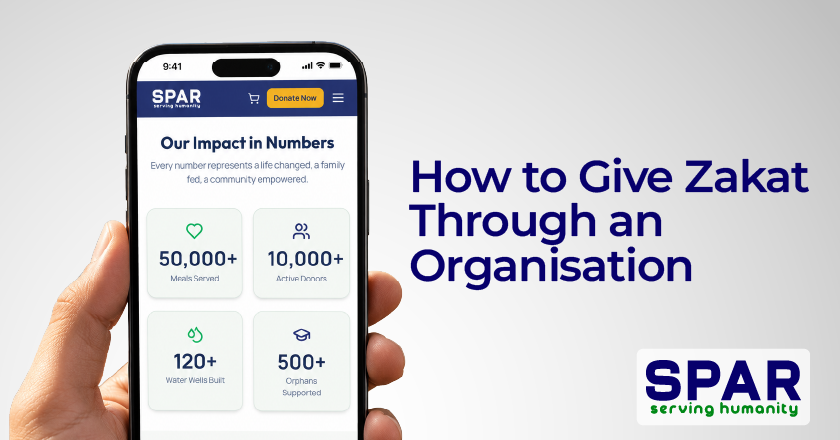
Giving zakat through a trusted organisation is valid under Islamic law. The Quran (9:60) lists zakat collectors as a valid category, which scholars interpret as authorizing intermediaries. The organisation must verify recipient eligibility and maintain clear distribution records. When choosing where to send your zakat, ask specific questions. Do they verify recipients against the eight Quranic categories? Do they separate zakat funds from general charity? Will they confirm distribution? These aren’t difficult questions. Any trustworthy organisation will answer them without hesitation. SPAR’s zakat programs operate with this standard of accountability, putting funds directly into the hands of verified recipients.
What Happens If You Miss a Year of Zakat?
Missed zakat remains a debt on your soul and your wealth. Scholars across all four schools agree: if you missed zakat in a previous year, you must pay it back. You calculate the amount you owed in that year, based on what you held then. Then you pay it in full, even if your financial situation has changed. Ibn Baz issued clear rulings on this issue, stating that delayed zakat must be discharged as soon as the person becomes aware of the obligation. The good news is that Allah accepts both repentance and late payment. The obligation doesn’t expire. It waits.
Your Zakat Is Ready to Send—Here’s What to Do Next
Knowing how to give zakat correctly removes the biggest barrier most Muslims face: uncertainty. The calculation is fixed at 2.5% of qualifying wealth held above the nisab threshold. The eight recipient categories are defined clearly in Surah At-Tawbah (9:60). The obligation runs on a lunar year cycle. What remains is choosing a trustworthy channel and acting. According to the World Bank, over 700 million people live in extreme poverty globally. Zakat, properly distributed, reaches exactly this population. SPAR’s long-term programs connect verified recipients with funds from Muslims who took the time to get it right.
Paying Zakat on Time vs Paying It Late
Paying zakat on time is the stronger act. Scholars, including Ibn Baz, ruled that delay without valid reason is sinful, though the debt remains. A valid reason includes genuine uncertainty about the nisab or hawl. Once both conditions are met, payment should follow without waiting. Late zakat still counts and still helps. But the spiritual reward is greater when payment is prompt and intentional. Make a habit of calculating on the same date each year.
Keeping Your Zakat Records
Record what you paid, when you paid it, and to whom. This protects you from double-counting in future years. It also helps you track your hawl date accurately going forward. If you use an organisation, request written confirmation of receipt and distribution. Good records remove guesswork from future calculations. They also show Allah that you treated this obligation with the seriousness it deserves.
Zakat is not a one-time decision. It is a yearly act of accountability, a reset built into the faith. The families who receive it do not know your name. But they feel the difference. SPAR’s ongoing work across the regions where we are present continues because Muslims around the world chose to stay engaged, year after year, without fanfare. See how this work continues.