Zakat must go to one of eight specific categories named in the Quran (Surah At-Tawbah, 9:60), and paying outside these categories does not fulfil the obligation. It differs from sadaqah, which is voluntary and unrestricted. A Muslim owes zakat at 2.5% of savings held above the nisab threshold for one full lunar year. Nisab equals about $450 USD based on the silver standard, though this figure changes with market prices. Every adult Muslim who holds wealth above nisab must pay. Missing the correct recipient category is the single most common error that nullifies a zakat payment.
Where to Pay Zakat: Quick Answer
- What it is: Zakat is the obligatory 2.5% annual payment on savings above the nisab threshold, one of Islam’s Five Pillars.
- Who must pay: Any adult Muslim whose net savings exceed nisab (about $450 USD) for one full lunar year.
- How much: 2.5% of total qualifying wealth above nisab, calculated once per year.
- When: Due after one full lunar year (hawl) of holding wealth above nisab; many pay during Ramadan.
- Valid recipients: Only the 8 Quranic categories in Surah At-Tawbah 9:60, including the poor, the destitute, and those in debt.
- Main rule: Paying zakat to someone outside the 8 categories does not count as fulfilling the obligation.
- Most common mistake: Treating zakat like a general charity donation and giving it to any good cause, rather than a qualified recipient.
Why Where You Pay Zakat Matters Right Now
Zakat is not a donation. It’s a transfer of a legal right. Imam Al-Nawawi, in *Al-Majmu*, made clear that misdirected zakat must be repeated. That distinction carries real weight today. According to Pew Research, roughly 1.8 billion Muslims are alive globally, and many lack reliable guidance on valid recipients. In regions where SPAR works, poor families often qualify under multiple Quranic categories at once, yet many donors remain unsure which category applies. You can see how SPAR approaches verified zakat distribution through our zakat programs at sparproject.org/zakat. Getting the recipient right is what makes your payment valid, not just generous.
Key Facts About Where to Pay Zakat
The Quran names eight recipients in one verse. They are: the poor (al-fuqara), the destitute (al-masakin), zakat collectors (al-amilin), those whose hearts are inclined toward Islam (al-mu’allafah), enslaved people seeking freedom, those in debt (al-gharimin), those striving in the cause of Allah (fi sabilillah), and stranded travellers (ibn al-sabil). Scholars at Al-Azhar University and classical jurists like Ibn Qudamah in *Al-Mughni* agree that the first two categories, the poor and the destitute, receive the largest share in most contexts. The World Bank estimates about 700 million people globally live below $2.15 USD per day, and a significant portion of that number lives in Muslim-majority regions where valid zakat recipients are plentiful. Knowing the categories isn’t just academic. It’s the difference between a valid obligation and one you’ll need to repeat.
Can You Pay Zakat Through an Organisation?
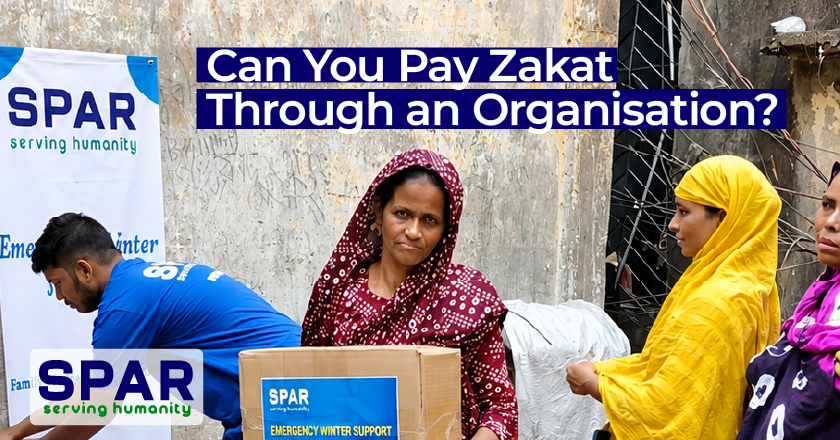
Yes, you can pay zakat through a trusted organisation. Classical scholars like Imam al-Nawawi confirmed that zakat is valid when paid through a reliable intermediary. The organisation acts as a collector, one of the eight Quranic categories, and distributes on your behalf. This is actually the default method for most Muslims today. It removes the burden of finding valid recipients yourself. It also ensures funds reach people in verified need, across regions you may never visit. The key condition is that the organisation must identify real recipients from the eight Quran-approved categories before distribution.
What Makes an Organisation Trustworthy for Zakat?
A trustworthy organisation does three things well. First, it identifies recipients from the Quran’s eight categories with documented verification. Second, it separates zakat funds from sadaqah and general donations. Third, it provides clear reporting on how funds were used. Look for transparency in their distribution process, not just in their fundraising. Receipts should be available on request. An organisation that cannot explain its recipient-verification process should not handle your zakat. This applies whether the organisation works locally or serves Bangladeshi, Palestinian, or Somali communities abroad.
What About Paying Zakat Directly to a Poor Person?
Direct payment is valid and has strong scholarly support. If you personally know someone who qualifies, giving them zakat face-to-face is fully accepted. Ibn Baz and other scholars noted that direct payment avoids administrative overhead entirely. But most donors today don’t have regular contact with people in genuine zakat-qualifying need. And genuine need, as defined by fiqh, means a person lacks the nisab threshold in total assets, not just cash. Organisations exist because direct access to verified recipients is rare for most donors in higher-income communities.
Does Where You Live Affect Where You Pay Zakat?
Your location affects the logistics of paying zakat, but it doesn’t change the obligation or the valid recipients. A Muslim in Dhaka and a Muslim in Kuala Lumpur follow the same fiqh. What changes is access. In some countries, the local poor may not be as visible. In others, established local distribution channels exist. UNICEF estimates that about 333 million children globally live in extreme poverty, many of them in Muslim-majority regions. You can direct your zakat locally or internationally, as long as recipients meet the Quranic conditions. Many scholars, including those at Al-Azhar, permit cross-border zakat transfer.
Common Mistakes People Make When Choosing Where to Pay Zakat
The biggest mistake is treating zakat like a general donation. Zakat has specific rules. Giving to a mosque building fund, for example, does not fulfill your zakat obligation under the majority scholarly position. A mosque is not one of the eight categories. Another common error is giving to someone who earns above the nisab level but appears visibly poor. Apparent need isn’t the fiqhi measure. A third mistake is splitting zakat across too many channels without verifying any of them. Spreading funds widely feels generous, but it can dilute your obligation if even one channel is invalid. Verify first. Then give.
Is Paying Zakat to a Mosque Valid?
Under the majority Sunni scholarly view, paying zakat to a mosque does not fulfill the obligation. The mosque, as an institution, is not among the eight recipients named in Surah At-Tawbah. Scholars like Ibn Uthaymeen were explicit on this point. Sadaqah to a mosque is rewarded. But it cannot replace zakat. This is one of the most common misunderstandings among Muslims who want to support their local community. If supporting a mosque is your goal, do that separately. Keep your zakat directed to one of the eight valid human categories.
What Knowing Where to Pay Zakat Actually Changes
Zakat is not a formality. It is a right that specific people hold over your wealth. When you understand where to pay zakat, you stop guessing and start fulfilling an obligation with clarity. According to the Quran (9:60), the eight valid categories are fixed. That list has not changed in over 1,400 years. Your choice of channel determines whether your zakat counts at all. Choosing a verified organization with field presence in active need zones, like SPAR’s ongoing programs, means your obligation reaches real people in genuine hardship.
How Do You Know If an Organization Is Using Zakat Correctly?
Ask directly. A trustworthy organization tells you whether your funds go to zakat-eligible categories. They separate zakat accounts from general sadaqah. They can show field presence in areas of documented need. If an organization cannot answer these questions, that is a sign to look elsewhere. Zakat deserves the same care you give any serious financial decision.
What Role Does Intention Play in Valid Zakat?
Intention (niyyah) is a condition for zakat, not just a recommendation. You must intend at the time of giving that this payment is your zakat. According to classical scholars, including Imam al-Nawawi, niyyah distinguishes zakat from voluntary charity. Without it, the payment counts as sadaqah but does not fulfill your annual obligation. State your intention clearly before transferring any funds.