
Online zakat donation is that you can pay your annual obligatory zakat through any verified digital platform or charity website instead of hand. It is unlike sadaqah which is a voluntary charity without a fixed amount or condition. The Zakat Foundation estimates that less than 40 percent of eligible Muslims around the world pay their full zakat annually, leaving over $200 billion USD uncollected worldwide. Zakat is payable by every Muslim who has wealth in excess of the nisab threshold for a complete lunar year. The main rule: the platform must belong to one of the eight Quranic categories in Surah At-Tawbah (9:60). In 2026, digital giving has made it possible to fulfil this obligation in minutes, but the channel doesn’t change the conditions.
Online Zakat Donation: Quick Answer
What it is: The obligatory annual Islamic wealth tax paid digitally to a verified charity or platform.
Who it applies to: Adult Muslims with wealth above the nisab (~$472 USD in gold or ~$344 USD in silver terms, 2026 estimates).
How much: 2.5% of total zakatable wealth held above the nisab for one full lunar year.
When: Due after one full lunar Hijri year (hawl) of holding wealth above the nisab.
Main rule: The online platform must distribute to one of the eight categories named in Surah At-Tawbah (9:60) to count as valid zakat.
Most common mistake: Muslims calculate zakat on income only — but savings, gold, silver, and business stock all count toward zakatable wealth.
Why Online Zakat Donation Matters Right Now
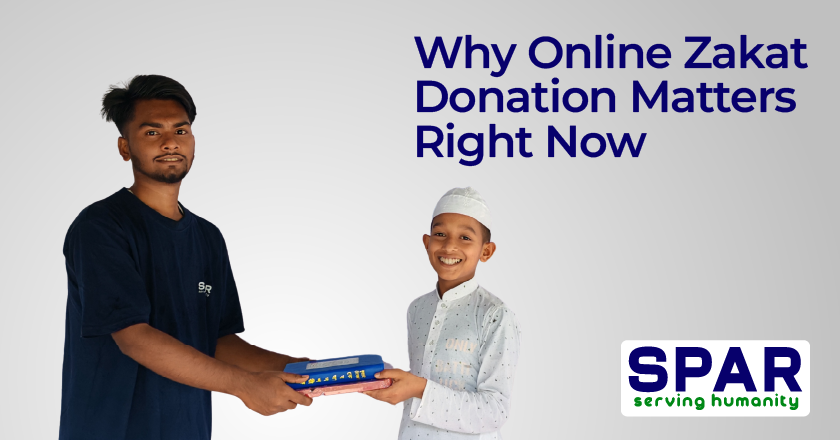
Digital giving has changed how the ummah fulfils one of Islam’s Five Pillars. According to the World Bank, over 1.8 billion people currently live without reliable access to basic services, and zakat remains one of the most powerful tools for closing that gap. Online zakat donation makes the obligation faster, more traceable, and easier to direct toward verified programs. SPAR’s work connects donors to our zakat distribution program, where funds reach families across Bangladeshi, Rohingya, Palestinian, and Somali communities. The ease of online giving doesn’t reduce the obligation’s weight. But it does remove every practical barrier that once caused delay. With verified platforms now offering receipts and real-time updates, there’s no reason to wait until Ramadan if your hawl falls in another month.
Online Zakat Donation: What Most People Don’t Know
Most Muslims think of zakat as a Ramadan ritual. But the obligation falls on your personal hawl anniversary, not the Islamic calendar’s most-celebrated month. According to Pew Research, Muslim charitable giving spikes by over 70% during Ramadan — meaning vast amounts of zakat and sadaqah get conflated and miscalculated in the same window. The nisab value also shifts constantly. It’s pegged to gold or silver prices, so a donor’s eligibility can change year to year. Scholars including Imam Ibn Qudamah and contemporary authorities such as Sheikh Ibn Uthaymeen consistently ruled that the silver nisab (about $344 USD) offers broader coverage for modern wealth structures. Online zakat donation platforms that show a live nisab calculator are not just convenient — they’re more accurate than manual estimates made once a year.
Is Online Zakat Donation Actually Valid in Islamic Law?
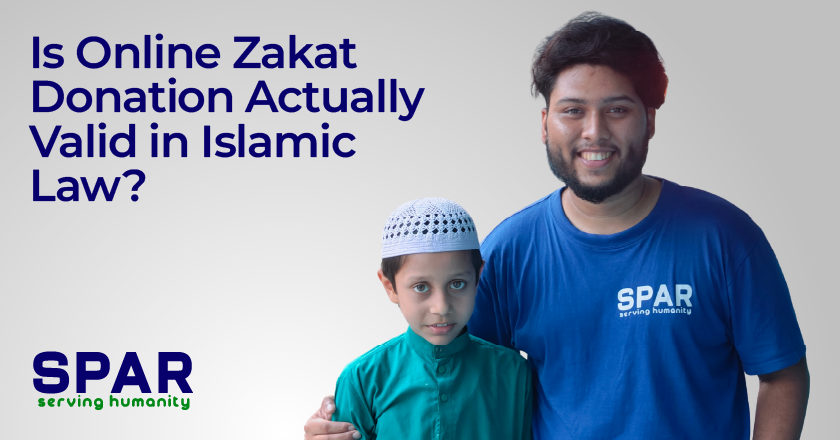
Islamic law fully recognises online zakat donation. The requirement is rooted in transfer of ownership, not transfer of manner. Classical scholars defined the discharge of zakat as when the rightful recipients are given their share. That is digital transfers. One of the most cited authorities of the modern era Sheikh Ibn Uthaymeen said that the methods of giving zakat can change without the ruling being changed. What matters is that the recipient is from one of the eight categories named in Surah At-Tawbah (9:60), and that the amount meets the nisab threshold at the time of transfer.
Does the Intention (Niyyah) Still Count?
Niyyah remains essential in online zakat. You must hold the intention to give zakat before or during the transfer. Paying through a digital platform doesn’t remove that requirement. Many platforms prompt donors to state their intention at checkout. This isn’t just good UX design. It’s a reflection of sound Islamic practice. Imam al-Nawawi, in his work on acts of worship, stressed that niyyah distinguishes zakat from ordinary charity. Without it, the payment may count as sadaqah but not fulfill the obligatory zakat.
What About Delayed Processing Times?
Bank processing delays don’t invalidate an online zakat donation. Scholars distinguish between the moment of commitment and the moment of receipt. If a donor initiates the transfer before their hawl deadline and the funds reach the recipient within a reasonable window, the zakat obligation is fulfilled. This mirrors rulings on cheques and bank drafts from earlier scholarly discussions. The intention and initiation carry the weight. Platforms that issue a confirmation receipt at the point of payment give donors a clear record of when the obligation was discharged.
Who Needs Zakat the Most Right Now?
The eight categories of zakat recipients are fixed in the Quran. But within those categories, need is acute for displaced families, orphans, and people trapped in long-term poverty. UNICEF estimates that over 333 million children globally live in extreme poverty. Many of them are Muslim. Rohingya communities, Sudarian families in conflict-affected areas, Gazarian children, and Somali households all sit within the ummah’s zakat responsibility. The poor (fuqara) and the needy (masakin) form the largest eligible group. For most online donors today, their zakat reaches these communities faster than any previous generation could manage.
Common Mistakes Muslims Make With Online Zakat
The most common mistake is paying zakat on the wrong asset base. Many donors calculate only on savings and forget shares, business inventory, or outstanding loans owed to them. A second mistake is using the gold nisab when the silver nisab applies to their wealth type. The silver nisab is lower, about $344, and scholars like Sheikh Ibn Uthaymeen and contemporary fiqh bodies advise using it for money and trade goods. A third mistake is conflating sadaqah donations made during Ramadan with the zakat obligation. They serve different purposes and carry different legal weights in Islamic jurisprudence.
How Sustained Giving Differs From One-Time Zakat Payments
Zakat is an annual obligation. But the communities it reaches often need consistent, multi-year support to move out of chronic need. A single year’s payment can fund emergency relief. But lasting change, whether in education, clean water, or food security, comes from committed programs that run season after season. The families in the regions where SPAR works don’t need one intervention. They need a sustained presence. Real change here is rarely sudden. It comes from small, consistent efforts. Season after season. That’s what separates a community rebuilt from a crisis merely survived.
What Online Zakat Donation Means for Your Obligation This Year
Online zakat donation has changed how Muslims fulfill one of Islam’s five pillars. You can now calculate, verify, and complete your zakat in minutes. The process is faster. But the responsibility hasn’t changed. UNICEF estimates over 333 million children live in extreme poverty globally. Your zakat reaches them through programs built for the long term. At SPAR, the work runs season after season across Bangladeshi, Palestinian, Somali, and Rohingya communities. Zakat paid online carries the same weight as any other valid payment. The method is new. The obligation is ancient.
What Happens After You Pay Zakat Online
Your payment reaches a distribution team. That team works within a fiqh framework to identify eligible recipients from the eight categories named in Surah At-Tawbah (9:60). Reputable platforms send confirmation within 24 hours. Most hold zakat funds in separate accounts to prevent mixing with sadaqah. Ask before paying. A trustworthy organization answers that question clearly. SPAR’s approach keeps zakat funds separate and directed to verified recipients.
How to Know Your Online Zakat Donation Was Accepted
Islamic jurisprudence does not require a receipt for zakat to be valid. What matters is sincere intention (niyyah) and correct calculation. Scholars like Imam al-Nawawi taught that intention precedes the act. A confirmation email serves as a practical record. Receipts are available on request. If you paid to a verified, trustworthy organization and held the right intention, your obligation is fulfilled.
Behind every lasting change is a long line of people who chose to stay involved. Online zakat donation makes that easier. But the real power is in the consistency. At SPAR, the work in Bangladeshi villages, among Rohingya families, and across Palestinian communities continues because donors keep showing up, year after year. One payment matters. A habit of giving matters more. See how this work continues at sparproject.org/our-work.