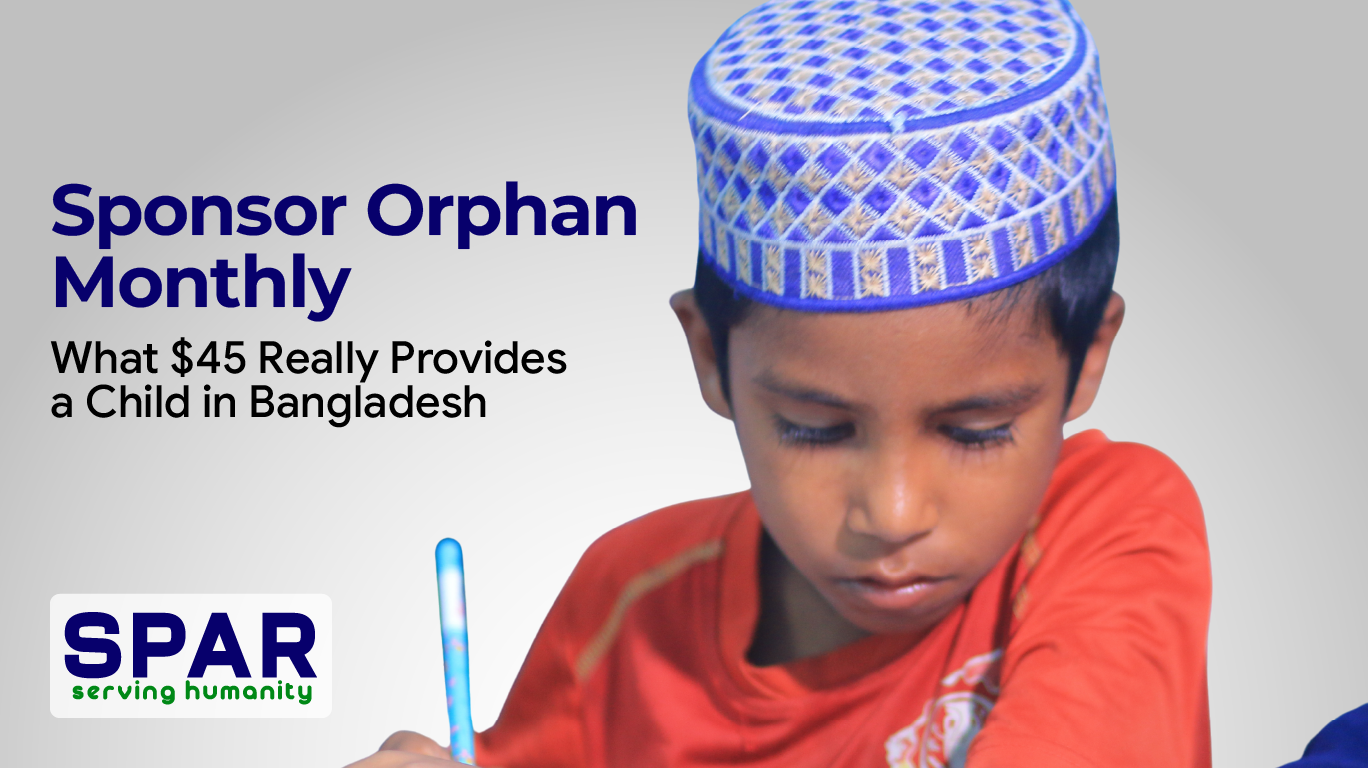
Sponsoring an orphan monthly means committing a fixed amount each month to cover a named child’s core needs. It’s not a one-off gift. It’s a structured, ongoing relationship between a donor and a child in need. UNICEF estimates there are about 140 million orphans worldwide. Most of them lack consistent adult support. Monthly sponsorship fills that gap in a way single donations can’t.
Why Sponsor Orphan Monthly Programs Matter Right Now
Conflict, displacement, and poverty don’t stop. They push more children into vulnerability every year. According to UNICEF, about 15,000 children under five die each day from preventable causes, and orphaned children face those risks at a higher rate. Without steady support, many can’t stay in school, get medical care, or eat properly. Monthly programs like SPAR’s orphan sponsorship program address this by creating a reliable income stream for a child’s care. It’s not about charity in the abstract. It’s about a real child knowing help will arrive again next month.
Sponsor Orphan Monthly: What Most People Don’t Know
Most donors assume a monthly pledge means a large financial commitment. It doesn’t. Many programs set sponsorship at around $30 to $50 USD per month, enough to cover food, schooling, and basic health needs in low-income regions. But here’s what most people miss: consistency matters far more than the amount. A World Bank report found that predictable income, even small, helps households plan, invest, and avoid crisis debt. That same logic applies to orphan care. A child sponsored for twelve months builds stability. A single donation, however generous, can’t do that.
Does Consistency Matter More Than the Amount You Sponsor?
Consistency matters far more than the size of your monthly pledge. A child who receives $30 every month for a year builds real stability. A child who receives $360 in a single payment does not. UNICEF research confirms that regular income allows households to plan food, healthcare, and schooling at the same time. Irregular support, even when generous, forces families into short-term decisions. They spend on the immediate crisis. They can’t save. They can’t plan. When you sponsor orphan monthly, you give a child something a one-time gift rarely can: a predictable future.
How Small Monthly Amounts Add Up
A $30 monthly pledge becomes $360 in a year. That’s enough, in many low-income regions, to cover basic school fees, two meals a day, and occasional medical visits. The World Bank notes that even modest predictable income reduces a household’s chance of falling into crisis debt. For orphaned children without a working parent, this math is especially important. There’s no safety net to fall back on. The monthly pledge becomes the safety net itself.
What Happens When Sponsorship Stops
When monthly support ends without warning, the effects appear fast. Children drop out of school first. Then meals get skipped. Then health visits stop. Charity and social protection researchers call this “support shock,” where a sudden loss of aid reverses months of progress. Orphaned children in low-income regions are especially exposed to this cycle. This is why the model of sponsoring orphan monthly, not just once, matters so much. Progress needs time to stick.
Who Are the Children Most at Risk?
The children most at risk are orphans under age 14 living in low-income regions with no extended family support. According to UNICEF, more than 140 million children globally are classified as orphaned. Most have lost one parent, not both. But even a single parent’s death can push a child out of school and into labor. Girls face added risk. They’re more likely to be pulled from education to perform domestic work or, in some regions, married early. Boys face pressure to earn. Both outcomes cut their futures short.
How Does Orphan Sponsorship Work in Practice?
When you sponsor orphan monthly, a portion of your pledge goes to a child’s specific needs: schooling, meals, and basic healthcare. The program tracks these costs and allocates funds where gaps exist. Sponsoring organizations match donors to beneficiaries based on regional need. SPAR’s ongoing work across the communities it serves follows this model, directing support to children with the least access to family income. The sponsorship doesn’t require the donor to manage anything. It works in the background, month after month, quietly keeping a child in school.
Who Coordinates the Delivery?
Field teams handle the local side. They track each child’s schooling, health records, and household situation. They flag when a child needs extra help. They report back to the program. The donor never needs to follow up directly. The structure exists so that consistent support reaches the right place without the donor needing to re-engage each month.
How Funds Reach Families
Most programs transfer funds through local partner networks or directly to verified guardians. Costs vary by country. In Bangladesh and similar low-income regions, $40 per month covers most of a child’s core needs for that month. These aren’t rough estimates. Field teams price local food, school fees, and clinic visits regularly to keep allocations accurate.
Real change here is rarely sudden. It comes from small, sustained efforts. Season after season. The families SPAR supports don’t need a single large gesture. They need to know someone will still be there next month.
What Monthly Orphan Sponsorship Actually Does
Monthly orphan sponsorship converts a single act of generosity into a reliable system. UNICEF estimates over 140 million children worldwide have lost one or both parents. Most don’t need a dramatic rescue. They need a consistent presence. A set amount each month, around $40, keeps a child fed, enrolled in school, and connected to basic healthcare. That stability is what changes outcomes over time. Families don’t rebuild in a single month. They rebuild because someone stayed.
Why Consistency Matters More Than Amount
A larger one-time gift rarely beats a smaller monthly one. Field programs plan around predictable income. When funds arrive each month, teams can book school fees in advance, schedule health check-ups, and restock food supplies without gaps. A child who misses two weeks of school due to a funding delay can fall behind. That gap compounds. Steady monthly support removes that risk at the root.
What Happens When Sponsorship Stops
Gaps in support hit children hard. A child pulled from school mid-term rarely re-enrolls in the same grade. Health routines break down. Guardians absorb the shortfall with whatever they have, often by cutting meals or skipping clinic visits. Long-term sponsorship programs exist to prevent exactly this. The goal is a child who finishes school, not one who attends until the funding runs out.
Behind every child who stays in school is someone who chose to stay involved. Not once. Month after month. SPAR’s ongoing programs serve families across multiple regions, from Bangladeshi communities to displaced Rohingya populations and beyond. The work continues because people keep showing up for it. See how this work continues.