

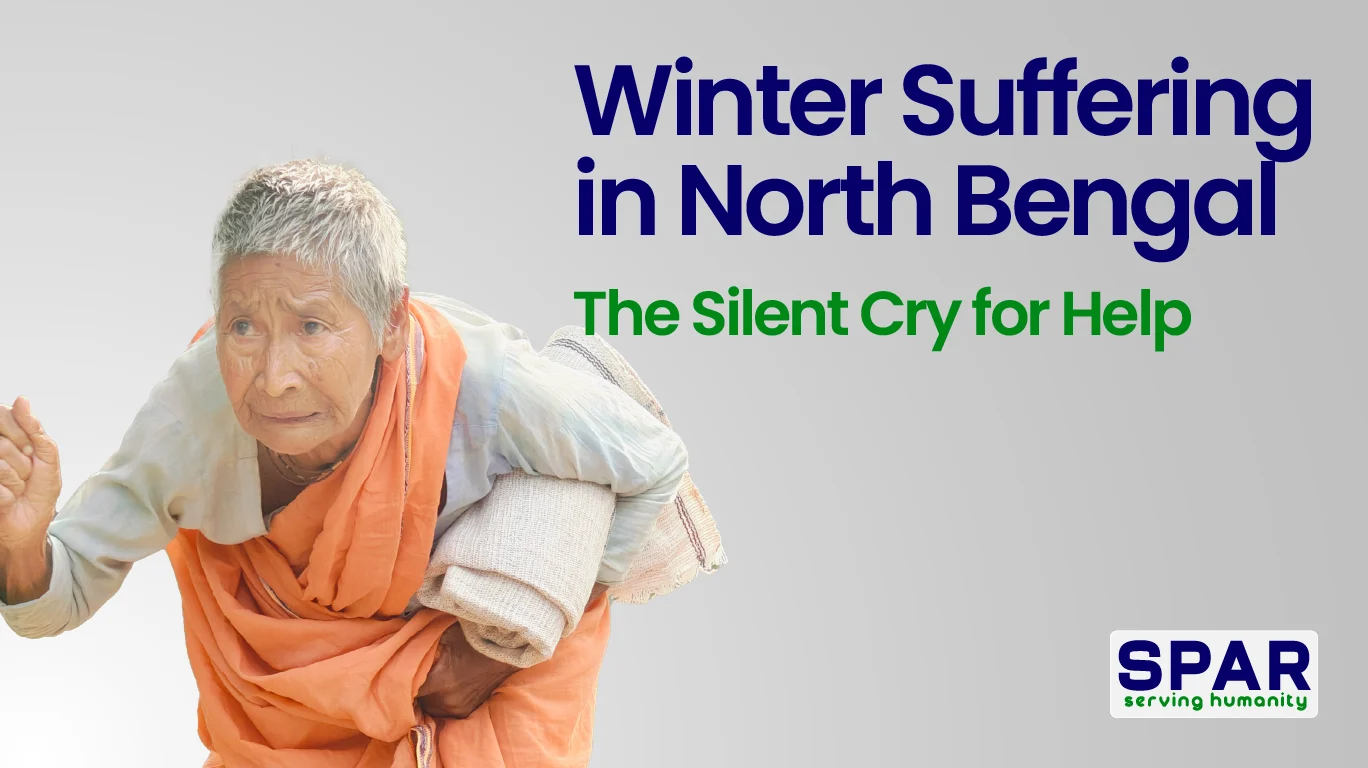
Winter Suffering in North Bengal: The Silent Cry for Help
The sun vanishes in the north. For weeks in January, a thick wall of white fog covers everything.
In Dhaka, people enjoy the cool weather. They wear fashionable jackets. They play badminton at night. But a few hundred kilometers away, the story changes completely.
Here, the winter suffering in North Bengal is not a nuisance. It is a war for survival.
Imagine waking up on a cold mud floor. A thin straw mat offers no protection. The icy wind cuts through the bamboo walls. It bites your skin. This scenario is the daily reality for millions in Rangpur, Kurigram, and Panchagarh. The temperature drops near freezing. But the human cost rises even higher.
In this article, we will take you to the front lines of this crisis. We will share real stories. We will show you why this region bleeds in silence. And we will show you how to help.
Why Is the North So Cold?
Why do the headlines always mention Tetulia or Dinajpur?
It is simple geography. North Bengal sits right next to the Himalayas. When the icy winds rush down from the mountains, they hit these districts first.
But the winter suffering in North Bengal is not just about wind. It is about poverty.
This region is poor. Many people work as day laborers. They live in weak shelters. They have no heaters. They have no warm water. When the cold wave hits, it hits people who are already on their knees. They have no defense against nature.
A Morning in the Mist: Rahim’s Story
To understand the pain, look at Rahim. He is 65 years old. He pulls a rickshaw van in Kurigram.
At 5:00 AM, the world looks grey. You cannot see your hand in the fog. Rahim coughs. His body shakes. He wears a torn sweater with holes in the elbows.
He must go out. If he stays home, his grandchildren do not eat.
“The handle of the van feels like ice,” Rahim says. “My fingers go numb. But I kept pedaling. The cold burns my chest. But hunger hurts more.”
This is the face of the crisis. It is a cruel choice: freeze outside or starve inside.
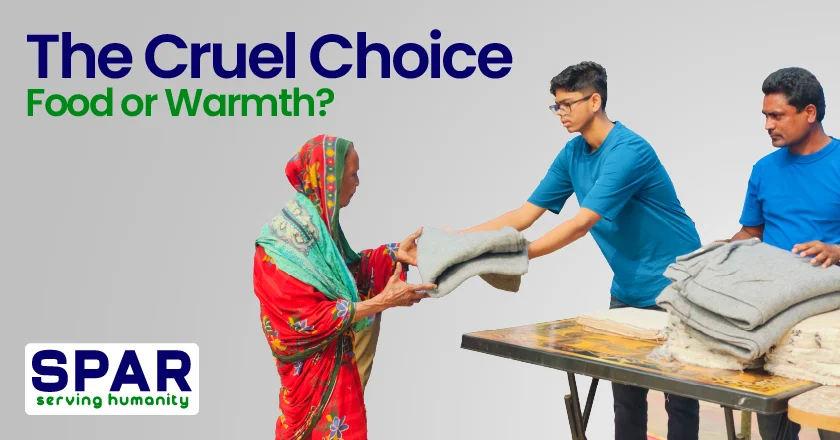
The Cruel Choice: Food or Warmth?
For us, a blanket is cheap. We have extra ones in our closets.
For a village family, a decent blanket costs 400 taka. That is three days of wages.
When a father gets paid, he stands in the market. He looks at the warm blankets. Then he looks at the rice.
He does the math.
- One blanket = warmth for one person.
- 5 kg of rice = food for the whole family.
He chooses the rice. He always chooses the rice. He walks home shivering. He hopes his old, torn quilts will last one more winter. He hopes his children will survive the night.
This poverty drives winter suffering in North Bengal. The cold is the weapon, but poverty is the trigger.
The Children Suffer Most
Witnessing the children’s suffering is heartbreaking.
Visit a hospital in Rangpur this January. The children’s ward is full. Mothers sit on the floor because there are no beds. They hold babies struggling to breathe.
Pneumonia is the silent killer.
Malnourished bodies cannot fight the cold. A simple cough turns into a lung infection fast.
Cold diarrhea also strikes.
A virus called rotavirus loves this weather. Kids run barefoot on the cold ground. They get sick. Their parents have no money for a doctor. So they wait. Occasionally, they wait too long.
We see kids in thin cotton shirts in 8-degree weather. Their hands turn blue. They do not play. They just sit and shiver.
No Work, No Pay
We forget that the cold stops the economy.
In North Bengal, people work outside.
- Farmers plant rice in the mud.
- Fishermen go to the river.
- Builders carry bricks.
When the cold wave strikes, work stops. You cannot plant rice in freezing mud. Your hands cannot hold a hammer.
For a day laborer, fog means unemployment. If the sun hides for 10 days, they earn nothing.
This trap deepens the winter suffering in North Bengal. The weather steals their job. Without a job, they cannot buy medicine or clothes.
The Elderly in Pain
Grandmothers and grandfathers suffer in silence.
Old age brings joint pain. Arthritis flares up in the damp cold.
Imagine an old woman in a village hut. She sleeps on the damp floor. Her knees swell. Her back screams in pain. Every movement hurts.
She needs heat. She needs a thick blanket. But she is the last priority. The food goes to the working son. The warm clothes go to the kids.
She lies there in a thin sari. She waits for the sun. Many elderly people die in their sleep during these cold waves. Their weak hearts simply give up.
The Deadly Fires
Desperate people do dangerous things.
To fight the cold, villagers light fires. They gather straw, dead leaves, and plastic trash. They light these fires inside their small huts.
They sit around the flames to thaw their frozen hands. But this is deadly.
- Smoke: The toxic smoke fills their lungs. It causes asthma and breathing problems.
- Accidents: Every year, children fall into these fires. Women’s saris catch fire.
They risk burning themselves just to feel a moment of heat. That is the level of their desperation.
The Isolated “Char” Islands
The “Char” areas are islands in the middle of the river. They are the ground zero of this crisis.
The wind from the river hits these islands hard. The houses here are made of tall grass and tin. There are no walls to block the wind.
Aid trucks rarely reach here. The roads are sandy. The boats are slow. When the government gives out blankets on the mainland, the Char people get left behind. They are the invisible victims.
How SPAR Project Helps
At the SPAR Project, we refuse to ignore this. We believe warmth is a human right.
We go where others do not. We travel to the remote villages. We take boats to the Char islands.
Our Mission:
- Quality Blankets: We do not give cheap, thin cloth. We give heavy, double-layer blankets. They actually stop the cold.
- Winter Kits: We give sweaters and socks to orphans. We protect them from pneumonia.
- Dignity: We do not throw blankets from a truck. We visit homes. We look people in the eye. We give with respect.
When you donate to us, you do not just buy wool. You buy a night of sleep for a suffering child.
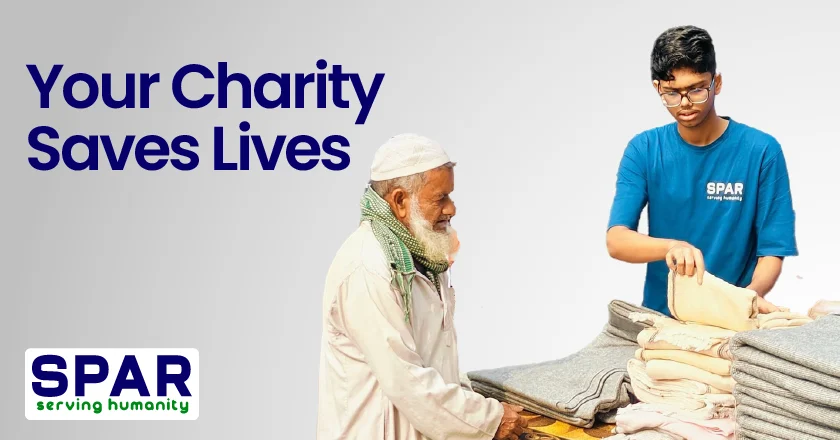
Your Charity Saves Lives
Islam teaches us to help those in need.
The Prophet Muhammad (PBUH) said that charity is a shade for the believer.
Currently, the people of North Bengal need shade from the cold.
- Your Zakat can buy blankets.
- Your Sadaqah can buy medicine.
Do not wait. The crisis is happening today. Every day you wait is another night of torture for a poor family.
Final Thoughts
The sun will eventually shine again in February. But for many, it will be too late.
We cannot change the weather. We cannot stop the wind. But we can change our lives.
We can ensure Rahim has a sweater tomorrow morning. We can ensure a grandmother sleeps warmly tonight.
Let’s turn our feelings into action. Be the warmth they pray for.
[Donate a Blanket Now—Stop the Pain]
Why is it colder in North Bengal?
It is close to the Himalayas. The mountains send cold winds directly into districts like Rangpur and Dinajpur. The geography traps the fog there.
What is the greatest danger in winter?
Pneumonia. It kills many children and old people. The cold weakens their lungs, and they contract severe infections.
Can I donate old clothes?
Yes, if they are clean and whole. Do not donate torn or dirty clothes. However, money is often better. We can buy brand-new, heavy blankets in bulk for a lower price.
How much does a blanket cost?
A good, heavy blanket costs between 300 and 500 taka. A small donation of $5 can keep a person warm for years.
Can I use Zakat for this?
Yes. Zakat is for the poor. Buying warm clothes for those who freeze is a perfect use of Zakat.
What are Char areas?
They are small sandy islands in the rivers. The people there are impoverished. They live in flimsy huts and face the strongest winds.
How does my donation help?
We use your money to buy supplies immediately. We drive to the affected areas. We hand the blankets directly to the people who need them most. We provide proof of your donation.

 Secure
donation
Secure
donation