

What Is Fidya and Kaffarah? Simple Rules And 2026 Rates
Ramadan brings peace and spiritual focus. But sometimes, life happens. You might get sick. You might face a health crisis. Or maybe, you make a mistake and break your fast when you shouldn’t.
Now, you feel worried. You ask yourself, “How do I fix this?”
Islam offers a solution. It provides a way to make up for missed days. We call these solutions Fidya and Kaffarah.
But many people get confused. They ask, “What is Fidya and Kaffarah?” Are they the same thing? Do I pay both?
The answer is simple: No, they are different. They apply to different situations.
- Fidya is for people who cannot fast due to health reasons.
- Kaffarah is for people who broke a fast on purpose.
In this guide, we will explain the rules in plain English. We will look at the 2026 rates. Most importantly, we will show you how your payment to the SPAR Project feeds hungry families in Bangladesh.
Let’s clear up the confusion right now.
The Basics: Fidya vs. Kaffarah
Think of these two terms as “religious payments.” You pay them to help the poor. This payment acts as a substitute for your fasting.
However, your reason for missing the fast decides which one you pay.
- Fidya (Compensation): You pay this when you have a valid medical excuse and you cannot make up the fast later.
- Kaffarah (Penalty): You pay this when you break a fast intentionally without any valid excuse.
Fidya helps those who are physically weak. Kaffarah creates a path to forgiveness for a mistake.
What is Fidya? (For Those Who Cannot Fast)
Fidya is a small donation. You are required to pay Fidya if your body cannot handle the stress of fasting.
Who Must Pay Fidya?
You are required to pay Fidya if you belong to any of the following groups:
- The Elderly: You are old and weak. Fasting makes you ill. You will not get strong enough, too fast, in the future.
- The Chronically Ill: You have a long-term sickness (like severe diabetes). Doctors say you cannot fast safely.
- Permanent Disability: Your health condition stops you from fasting permanently.
What If I Am Just Temporarily Sick?
This is a common mistake. If you have the flu or a temporary fever, you do not pay Fidya.
Why? You will recover. Once you recover, you simply fast the days you missed. You only pay Fidya if you have no hope of making up the days later.
Pregnant or Nursing Mothers
Scholars have different views here. However, most agree on one thing: if you fear for your baby’s health, you do not fast. You should make up these days (Qada) later when you can. Fidya is typically reserved for individuals who are physically unable to fast again in the future.
What is Kaffarah? (For Intentional Breaks)
Kaffarah is different. It is a serious penalty. It applies when you disrespect the month of Ramadan by breaking a silence on purpose.
When Do You Pay Kaffarah?
You must pay this if you:
- Eat or drink during fasting hours intentionally.
- Have marital relations during the day.
- Break your fast without a valid reason (like travel or sudden illness).
What’s the Penalty?
Due to the seriousness of the mistake, correcting it is more difficult. To fix one broken fast, you must do one of two things:
- Fast for 60 Days Straight: You must fast two lunar months consecutively. If you miss day 59, you must start over from day 1.
- Feed 60 Poor People: If your health does not allow you to fast for 60 days, you must feed 60 hungry people for every single fast you broke.
Most people today choose the second option. They pay money to a charity like SPAR Project to feed 60 people on their behalf.
Quick Comparison: Which One Do I Pay?
Are you still curious about the differences between Fidya and Kaffarah? Look at this simple table.
| Situation | You Pay | Why? |
| You are old/sick and cannot fast ever again. | Fidya | You have a valid excuse. |
| You broke a fast on purpose (ate/drank). | Kaffarah | You have no excuse. |
| You pay for: | 1 person per day. | 60 people per day. |
| Can you fix it by fasting later? | No (health won’t allow). | Yes (60 days straight). |
2026 Rates: How Much Does It Cost?
The cost depends on the price of food. You must pay enough to provide two full meals for a poor person.
Fidya Rates (Estimate)
- Cost: Approx. $5 to $10 USD (or £5 GBP) for each missed day.
- Example: If you cannot fast for the whole month (30 days), you pay about $150.
Kaffarah Rates (Estimate)
This is more expensive because you feed 60 people.
- Calculation: $5 (meal cost) x 60 people = $300 per broken fast.
- Example: If you broke 2 fasts intentionally, you pay $600.
Note on SPAR Project Rates:
We work in Bangladesh. The cost of food is lower there than in the US or UK. Your $5 donation goes a very long way. It buys rice, lentils, oil, and spices. It provides a nutritious, filling meal for a family that might otherwise starve.
Real-Life Examples
Let’s look at some real situations. See which category fits you.
Scenario 1: The Diabetic Patient
- Situation: Uncle Ahmed has severe diabetes. His doctor told him fasting is dangerous. He misses all 30 days.
- Solution: He pays Fidya. He cannot make up the fasts. He pays for 30 meals.
Scenario 2: The Moment of Weakness
- Situation: Sarah started her fast. At 2:00 PM, she felt hungry and decided to eat a sandwich. She was not sick; she just gave up.
- Solution: She owes Kaffarah. She must either fast 60 days or pay to feed 60 poor people.
Scenario 3: The Emergency
- Situation: Bilal fainted at work. He drank water to recover.
- Solution: He pays nothing right now. He had a medical emergency. He simply fasts one day after Ramadan to make up for it (Qada).
Scenario 4: The Over sleeper
- Situation: You slept through Suhoor (the pre-dawn meal) and woke up late. You decided not to fast that day because you were hungry.
- Solution: Such an act is a sin, but usually, it requires Qada (making it up) and sincere repentance, not the major Kaffarah penalty. Kaffarah is for breaking a fast you started.
Where Does Your Money Go?
When you donate your Fidya or Kaffarah, you fulfill a religious duty. But you also do something beautiful. You feed a human being.
At SPAR Project, we take this responsibility seriously. We do not mix your funds. We use Fidya and Kaffarah donations strictly for food.
We help:
- Destitute Families: People living in extreme poverty in Bangladesh.
- Orphans: Children with no father to provide for them.
- Widows: Women who struggle to put food on the table.
We cook hot meals. We distribute food packs. We ensure your donation reaches the stomach of a hungry person.
How to Pay Online (Step-by-Step)
You do not need to go to a bank. You can pay securely online in minutes.
- Count Your Days: How many days did you miss?
- Check Your Reason: Is it health (Fidya) or intentional (Kaffarah)?
- Visit Our Page: Go to the [SPAR Project Donation Page].
- Select the Fund: Choose “Fidya” or “Kaffarah” from the list.
- Enter Amount:
- For Fidya: Enter $5 x Days Missed.
- For Kaffarah: Enter $300 per broken fast.
Complete the payment. We handle the rest. We will distribute the food on your behalf.
Don’t Let Guilt Stop You
If you owe Kaffarah, you might feel guilty. You might feel like a “bad Muslim.”
Stop that thinking.
Allah (God) is the Most Merciful. He established Kaffarah as a method to purify your life. By paying Kaffarah, you acknowledge your mistake. You fix it. You turn a negative action into a positive one.
By feeding 60 poor people, you bring joy to their lives. Your mistake becomes their dinner.
Do not delay. The best time to fix your fasts is right now.
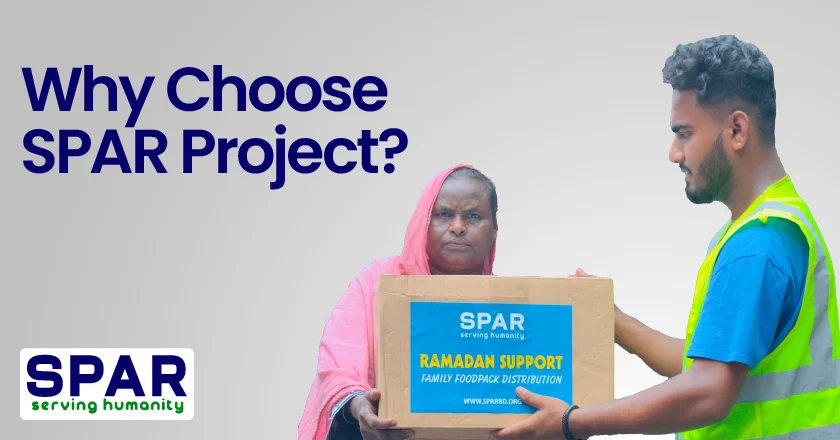
Why Choose SPAR Project?
You have many options. Here is why thousands of donors trust us:
- We Are Local: We operate directly in Bangladesh. We know the communities. We know who needs help the most.
- Zero Waste: We keep our costs low. We maximize the amount of food your money buys.
- Sharia Safe: We understand the rules. We ensure your Fidya and Kaffarah follow Islamic laws strictly.
Final Thoughts
Ramadan comes once a year. But our duties to Allah and the poor last forever.
Understanding what Fidya and Kaffarah are is the first step. The next step is action.
If you cannot fast due to old age, pay your Fidya with pride. You are still worshipping Allah.
If you made a mistake, pay your Kaffarah with hope. You are seeking forgiveness.
Clear your debts. Purify your wealth. Feed the hungry.
[Pay Your Fidya & Kaffarah Here]
What is the main difference between Fidya and Kaffarah?
Fidya is for people with a valid medical excuse who cannot fast. Kaffarah is a penalty for people who break their silence deliberately without an excuse.
Can I give cash instead of food?
Yes. You donate cash to an organization like SPAR Project. We act as your agent. We use your cash to buy food and feed the poor, which fulfills the requirement.
Do I pay Fidya if I am pregnant?
Usually, no. If you miss fasts due to pregnancy, you should make them up later when you can. Fidya applies only if you can never make them up. Consult a scholar for your specific health situation.
Can I pay for my deceased parents?
Yes. If your parents passed away and had missed fasts due to illness, you can pay Fidya using their estate or your own funds. It is a beautiful act of kindness for them.
How much is Fidya in 2026?
It varies by location, but it is typically the cost of two meals. At SPAR Project, we recommend $5 USD per day.
When is the deadline to pay?
You should try to pay before Eid al-Fitr. This allows the poor to have food for the Eid celebration. However, if you missed the deadline, you can still pay it anytime.
Can I give Fidya to my brother or sister?
You can only give it to them if they are poor (Zakat-eligible). You cannot give Fidya to your wife, parents, or children, as you are already responsible for their care.



 Secure
donation
Secure
donation