


Surah for Protection from Evil Eye: Quranic Guidance
It’s true, and you need to know about it because it can have a big impact on your mental and physical work. What is it? It’s the bad eye.
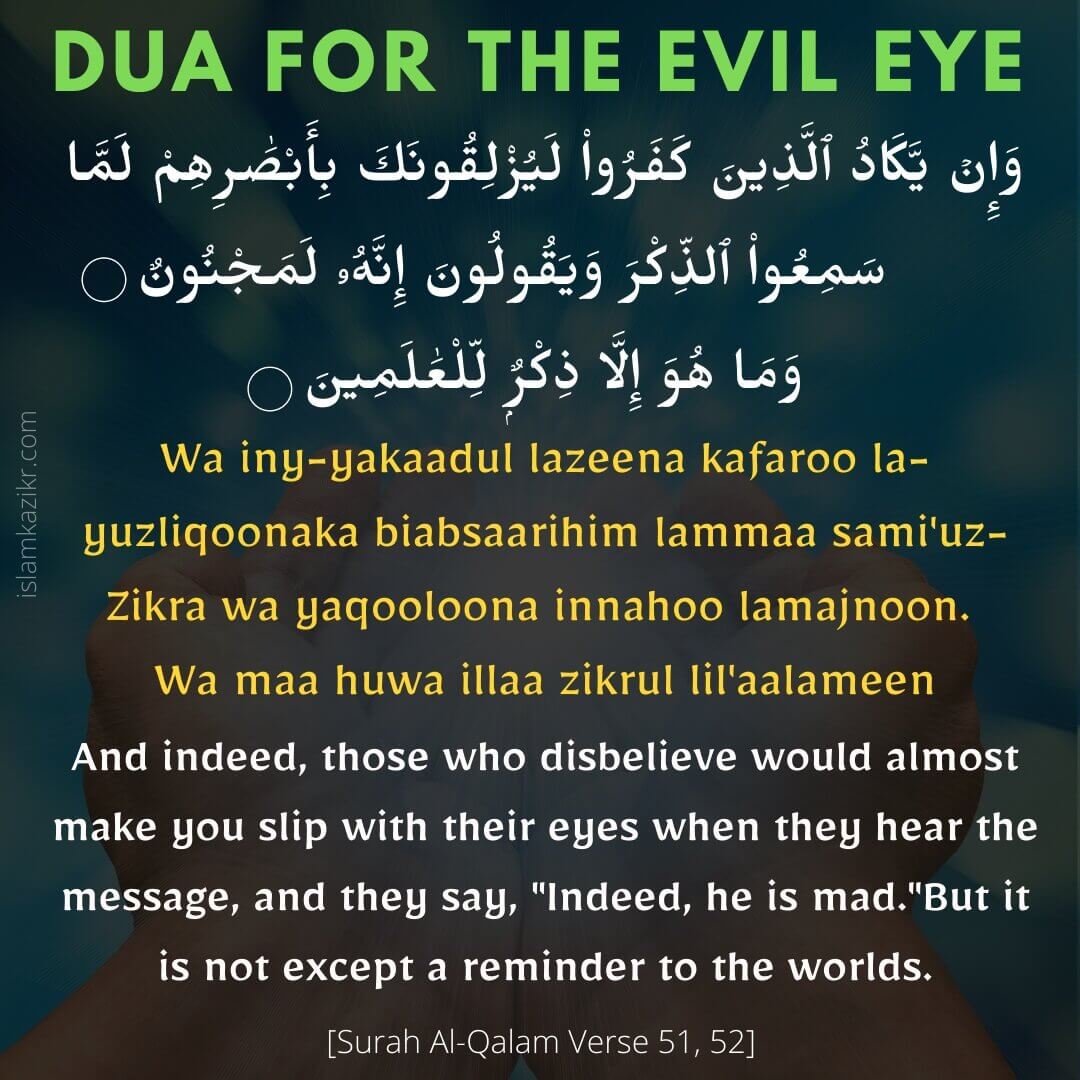
Allah (SWT) says: And indeed, those who disbelieve would almost make you slip with their eyes when they hear the message, and they say, ‘Indeed, he is mad.’ [Quran,68:51]
So, is evil eye real? Yes.
The Prophet Mohammad (PBUH) said: The evil eye is real, and if anything were to overtake the divine decree (al-qadar) it would be the evil eye [Muslim]. Let’s find out what the evil eye means and how to keep yourself and your work safe, in shaa Allah!
What Does The Bad Eye Mean?
The Arabic word al-‘ayn (translated as the evil eye) refers to when a person harms another with his eye. It starts when the person likes a thing, then his evil feelings affect it by means of his repeated looking at the object of his jealousy.
It’s not for nothing that Allah taught His Prophet to seek refuge with Him from the evil of the envier in a surah you should use yourself for protection: Wa min sharri haasidin idhaa hasad— And from the evil of the envier when he envies. [Quran.113:5]
What’s The Difference Between Having The Evil Eye And Being Jealous?
Everyone who puts the evil eye on another is envious, but not every envier puts the evil eye on another. The word haasid (envier) is more general in meaning than the word ‘aa’in (one who puts the evil eye on another), so seeking refuge with Allah from the one who envies includes seeking refuge with Him from the one who puts the evil eye on another.

The evil eye is like an arrow which comes from the soul of the one who envies and the one who puts the evil eye on another towards the one who is envied and on whom the evil eye is put; sometimes it hits him and sometimes it misses.
If the target is exposed and unprotected, it will affect him, but if the target is cautious and armed, the arrow will have no effect and may even come back on the one who launched it [Ibn al Qayyim, Zaad al-Ma’aad].
The last 3 Sūrahs of the Qur’ān are the strongest protection against envy, evil eye, magic and jinn. It is Sunnah to read them three times in the morning and evening, three times before going to sleep, once after every Salāh, and when one is ill.
Ibn al-Qayyim (raḥimahullāh) wrote: ‘These Sūrahs are extremely effective in repelling magic, evil eye, and the rest of the evils. The need for a slave to seek Allah’s protection with these Sūrahs is greater than his need for eating, drinking and clothes.’
The following aḥādīth demonstrates the importance the Prophet Muhammad (PBUH) would give to these Sūrahs:
Best Ruqyah
‘Ā’ishah (raḍiy Allāhu ‘anhā) narrated that whenever theProphet Muhammad (PBUH) would become sick, he would recite [the last 3 Sūrahs of the Qur’ān] and then blow over his body. She says:
“During his last illness from which he passed away, theProphet Muhammad (PBUH) used to blow over himself. But when his sickness intensified, I used to (recite and then) blow over him using his own hands because of their blessings.” (Bukhārī)
In another hadīth, she mentions that whenever anyone from his family would become ill, he would blow over them with these three Sūrahs. (Muslim)
The Best Shield
Sūrah al-Nās and Sūrah al-Falaq are the best protection against envy, evil eye, and the shayāṭīn. This can be seen in the following hadīth:
Anas (raḍiy Allāhu ‘anhu) said: “Prophet Muhammad (PBUH) used to seek refuge in Allah (SWT) from the jinn and the human evil eye until the Mu’awwidhatayn were revealed. When they were revealed, he adopted them and abandoned everything else.” (Tirmidhī)
TheProphet Muhammad (PBUH) said: “No seeker has sought protection with anything like them.” (Abū Dāwūd)
‘Uqbah (raḍiy Allāhu ‘anhu) reported that the Prophet Muhammad (PBUH) said: “Shall I inform you of the best words with which you can seek Allah’s protection?” I said: “Yes.” He said: “Sūrah al-Falaq and Sūrah al-Nās.” (Aḥmad)
In The Morning And Evening
Prophet Muhammad (PBUH) said: “Recite Sūrah al-Ikhlās and al-Mu’awwidhatayn (Sūrah al-Falaq and Sūrah al-Nās) three times in the morning and the evening. It will suffice you in all respects.” (Tirmidhī)
Before Going To Bed
‘Ā’ishah (raḍiy Allāhu ‘anhā) narrated that when the Prophet Muhammad (PBUH) retired to bed every night, he would hold his hands together and then blow into them.
He would recite [Sūrah al-Ikhlās, Sūrah al-Falaq and Sūrah al-Nās) ] into them. Then he would wipe them over whatever he could of his body, starting with his head and face and the front of his body, and he would do that three times. (Bukhārī)



 Secure
donation
Secure
donation