

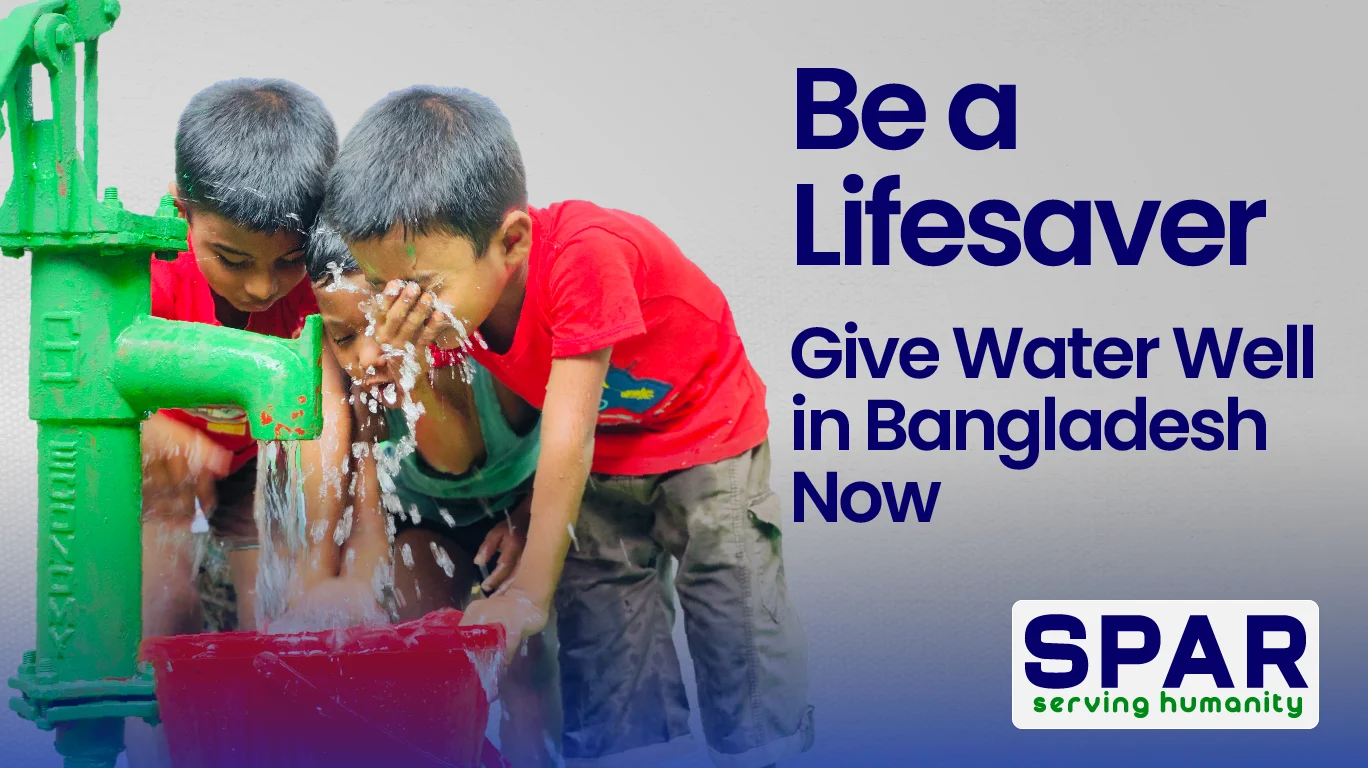
Be a Lifesaver – Give Water Well in Bangladesh Now
Millions of people in Bangladesh still live without safe drinking water. Hundreds walk miles a day to fetch water from ponds and rivers. Most of this water is dirty. They drink it because they have to. They become sick, impoverished, and desperate.
When you Donate water well in Bangladesh, you help to interrupt that cycle. Safe water for hundreds of people daily is provided by just one well. Children stay healthy. Mothers find relief. Villages grow stronger. In this guide, we’ll tell you why water wells matter, why they change lives, and how your support ensures those changes are sustainable.
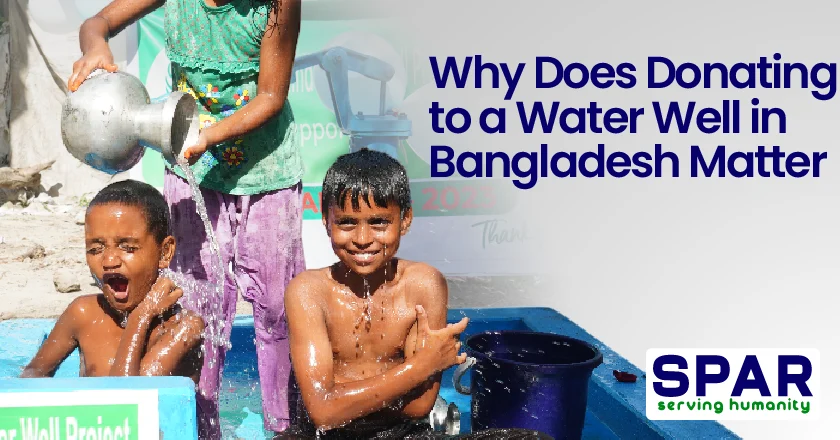
Why Does Donating to a Water Well in Bangladesh Matter
A Country in Need
Bangladesh is one of the most water-stressed countries in the world. Rural areas are hit hardest. Lots are already contaminated with arsenic or salt. The rest rely on unsanitary surface water. The outcome, nevertheless: sickness, undernourishment, and lost time.
Faith and Charity Combined
Water is one of the most diversified gifts in Islam. The Prophet Muhammad ﷺ said, “The best charity is (giving) water to drink.” When you donate to a water well, this is what you call Sadaqah Jariyah: a form of charity that grants you ra eward for as long as people drink from it.
A Long-Lasting Gift
Unlike food or cash, a well doesn’t disappear. Handle it carefully, and it will be a part of families for generations. Your gift will continue to make a difference for many years after you are gone.
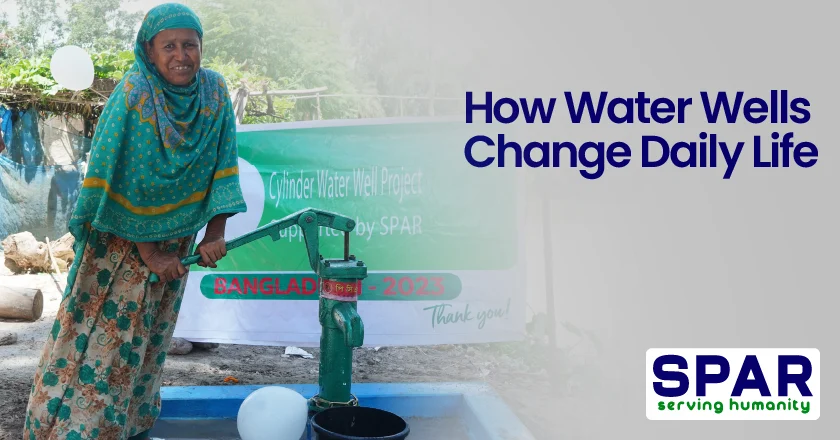
How Water Wells Change Daily Life
Health Improves
Dirty water breeds diseases like cholera, diarrhea, and typhoid. These wells save children and adults from sickness. Families stay stronger.
Education Gets a Chance
Kids miss school fetching water. Girls suffer the most. Its liberating well is close to home. They can go to school and learn to build a better future.
Safety Restored
Women and children were endangered as they traveled long distances to collect water. A well within close proximity guarantees safety, dignity, and peace of mind.
A Boost to Local Income
Water brings opportunity. Families raise vegetables, fruit,s and animals and operate small businesses. Villages experience growth, not poverty.
Types of Wells You Can Donate
Shallow Hand-Pump Wells
These are cheap to install and do the job in situations where groundwater is fairly near to the surface. They allow small villages to receive cheap cash in a hurry.
Deep Tube Wells
The latter make their way into safe water below ground. They keep longer; they feed more people. Perfect for larger communities.
Solar-Powered Wells
Strong and sustainable. They use clean energy to pump water to schools, mosques, and entire villages.
The Impact of Your Donation
One Well, Many Lives
More than 100 people use a single well every day. That’s hundreds of lives that would be enriched by one act of giving.
Villages Transformed
Villages with wells have fewer illnesses, improved school attendance and stronger local economies. It has been said that water is the first step toward growth.
Rewards That Continue
A well is an investment for years. Each sip, each sip, is part of your continual reward.
Why Choose SPAR Project
With the SPAR Project, who you give water wells in Bangladesh, your money goes directly to work. You get photos, updates, and reports. And you get to look into the faces of the people you’ve helped. SPAR values transparency and trust. Donors see that their gift makes a tangible difference.
Group Donations Multiply Impact
You don’t necessarily need a full well to fund alone. Families, friends, and communities can rally. Every donor shares the blessing. Together, you change lives.
How to Donate Water Wells in Bangladesh
Step 1- Go to the SPAR Project’s official website
Select the water well program.
Step 2: Choose Your Amount
Choose to fully fund a well, or give toward the cost.
Step 3: Donate Securely
Make a safe online donation.
Step 4: Get Proof of Impact
Get updates and pictures of the finished well.
Real Stories of Hope
Donated wells have already changed the lives of people in the villages throughout Bangladesh. Mothers no longer spend hours walking for unsafe water. Children are busy in classrooms rather than lugging buckets. The families grow food for their homes and local markets. Poverty begins to fade. That’s what happens when people like you choose to donate a water well in Bangladesh.
Final Thought
Clean water is life. Without it, there is no health and safety, and no education. When you donate a water well in Bangladesh, you give so much more than water. You give dignity. You let children dream. You have helped families develop. And you gain the eternal reward of Sadaqah Jariyah.
This is your opportunity to make a difference. Start with one well. The consequences will be felt for generations.
What is the meaning of “donate water well in Bangladesh”?
It is paying for the building of wells that provide safe water to poor families.
Why is Bangladesh a priority?
Because millions of people drink unsafe water every day, which is contaminated with arsenic or salt.
What is the cost of a water well?
It depends on what kind of well. Shallow wells are less expensive, deep wells and solar wells are more so, but much more enduring.
Can I donate with others?
Yes. When given as a group donation, the cost to a few individuals can be averaged down to $300, a day’s wage to two recipients.
Can I get up-to-date once I donate?
Yes. SPAR Project gives out reports and photos to let you know what your donation accomplished.
Is it considered Sadaqah Jariyah?
Yes. Each time someone takes a drink from the well, you get blessings.
How long does a well last?
With proper care, a well can serve communities for decades, or even longer.
 Secure
donation
Secure
donation