


Hadith About Fitrah: Your 2026 Guide to Zakat al-Fitr
Ramadan 2026 is a time for deep worship and helping others. As the month ends, every Muslim prepares for Eid al-Fitr. Part of this preparation involves a special charity called Zakat al-Fitr. Many people search for a specific hadith about fitrah to learn the correct rules. This charity is a duty for every Muslim, regardless of age or gender. It cleanses our fasts and provides food for those in need.
At the SPAR Project, we make it easy for you to fulfill this duty. We deliver your donations to struggling families in Bangladesh. By following the Sunnah, you ensure your Ramadan ends with a great reward and a pure heart.
1. What Exactly is Zakat al-Fitr?
Zakat al-Fitr is a small amount of food or money given at the end of Ramadan. People often call it “Fitrah” for short. It is different from the annual Zakat in your savings. While wealth in Zakat depends on how much money you have, Fitrah is a duty for every person.
The goal is to help the poor celebrate Eid. No one should go hungry while others are feasting. It is a beautiful way to show that the Muslim community is one big family. Giving demonstrates your concern for those who are less fortunate than you.
2. The Core Hadith About Fitrah
To determine the rules, we look at the sayings of Prophet Muhammad (SAW). One famous hadith about fitrah comes from a companion named Ibn Umar (RA). He reported that the Prophet (SAW) made Zakat al-Fitr mandatory.
He stated that every Muslim must provide one “Sa’” of dates or barley. This rule applies to slaves, free people, men, women, young, and old. This hadith tells us that no one is exempt if they have the means. It sets a clear standard for the entire world to follow. Even if a child is born on the last day of Ramadan, the head of the house pays for them.
3. Why the Prophet (SAW) Required This Charity
There is another critical hadith about fitrah narrated by Ibn Abbas (RA). He explained that the Prophet (SAW) gave two reasons for this gift. First, it purifies the person who fasted.
During Ramadan, we can make mistakes. We might say something rude or waste time. Fitrah acts as a cleanser for these errors. Second, the Prophet (SAW) said it provides food for the poor. It ensures that every hungry person can eat a good meal on Eid day. It turns our spiritual worship into a practical act of kindness.
4. Who Is Required to Pay?
The rules for Fitrah are very simple. Muslims with excess food must pay. The head of the family usually pays for everyone they support.
This group includes:
- Yourself
- Your spouse
- Your children
- Your parents (if you support them)
- Any other dependents in your home
Because the amount is small, almost everyone can participate. This makes the reward of the Ramadan campaign accessible to all. It teaches us that giving is not just for the rich; it is for everyone who has a little extra.
5. Measuring the Amount: What is a Sa’?
In the past, people did not use scales to weigh food. They used a volume measure called a “Sa’.” A Sa’ is about four double-handfuls of grain.
Today, we convert this to modern weights. Most scholars say a Sa’ is roughly 2.5 kilograms to 3 kilograms of food. If you are giving rice, wheat, or flour, you must give this weight for every person in your house. At SPAR Project, we use these precise weights to make sure your duty is fulfilled correctly. We buy the food in bulk to help as many people as possible in Bangladesh.
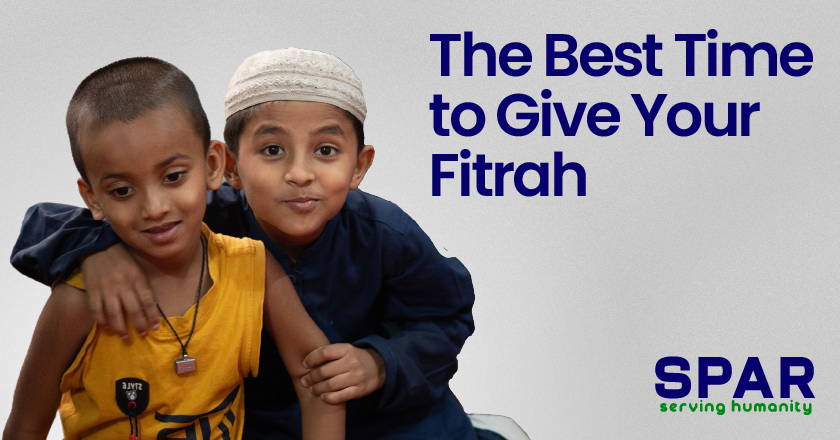
6. The Best Time to Give Your Fitrah
Timing matters a lot for this charity. The Prophet (SAW) commanded that people should pay it before they go to the Eid prayer. If you wait until after the prayer, it is just a regular charity. It will not count as Zakat al-Fitr.
To be safe, most people give their Fitrah a few days before Ramadan ends. This gives charities like SPAR Project time to buy the food and move it to remote areas. When you give early, you ensure the food reaches the table of a poor family exactly when they need it most—on Eid morning.
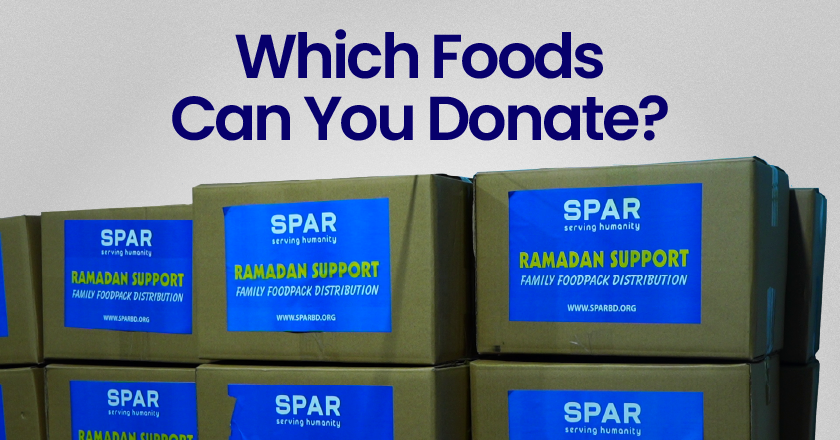
7. Which Foods Can You Donate?
The original Hadiths mention specific items like dates, barley, raisins, and dried cheese. However, scholars agree that you should provide the “staple food” of your area.
A staple food is what people eat most often to survive. In Bangladesh, the most important food is rice. In other places, it might be wheat or corn. You should always give high-quality food. Do not give something you would not eat yourself. The best charity is when you give away the things you love.
8. Can You Pay with Cash in 2026?
Many people ask if they can give money instead of bags of rice. The answer is yes. While the Prophet (SAW) gave food, many scholars allow the cash equivalent today.
Giving cash is often more beneficial. It allows charities to buy food locally. This supports local farmers and saves money on transport. For 2026, the cost of Fitrah is usually around $5 to $10 per person. When you donate this amount online, we act as your agent. We take your money and buy the required food for those in need.
9. The Difference Between Fitrah and Wealth Zakat
It is easy to mix up these terms. Here is a simple way to remember:
- Fitrah (Zakat al-Fitr): Paid only in Ramadan. It is a small, fixed amount for every person. It focuses on the individual.
- Wealth Zakat (Zakat al-Mal): Paid any time of year once you have savings for a full year. It is 2.5% of your total wealth. It focuses on your assets.
Both are required, but they serve different roles. Fitrah is about the person, and Zakat is about the money. Both help build a better world.
10. How SPAR Project Uses Your Fitrah in Bangladesh
Bangladesh is a beautiful country, but many people face hard times. High prices and floods make life difficult. Your Fitrah can be the light at the end of the tunnel for a family in need.
We use your donations to:
- Buy high-quality rice and lentils.
- Package food kits for families.
- Deliver kits to widows and orphans in rural villages.
- Ensure every child has a meal to enjoy on Eid.
When you give through us, you are following the hadith about fitrah in the best way. You are making sure the “food for the poor” reaches the people who are truly hungry.
11. Avoiding Common Mistakes
One common mistake is forgetting to pay for a new baby. Remember, if the baby is born before sunset on the last day of Ramadan, you must pay for their expenses.
Another mistake is waiting until the very last minute. If you wait too long, you might miss the Eid prayer deadline. Finally, please ensure that you accurately calculate the number of people. It is better to give a little more than to give too little. Any extra money you give will count as Sadaqah and bring you more rewards.
12. The Joy of Giving
The end of Ramadan is a time of joy. We celebrate our strength and our faith. But true joy comes from sharing. When you fulfill your Fitrah duty, you feel a sense of peace. You know that somewhere in the world, a family is eating because of you. This is the heart of Islam. We take care of each other. We fast together, and we feast together.
Final Thought
Following the hadith about fitrah is a simple but powerful act. It connects you to the Sunnah and to the global Ummah. As you look forward to Eid al-Fitr 2026, make your intention clear. Calculate your family’s amount and give it with a happy heart. Your small gift of food or money creates a big impact in Bangladesh. Let the SPAR Project help you finish your Ramadan with excellence.
Is Fitrah required for individuals who are unable to fast?
Yes. Even if you did not fast due to health or travel, you must still pay Fitrah. It is a duty for every Muslim who has enough food.
Can I offer Fitrah to a non-Muslim?
Most scholars say Fitrah is specifically for the Muslim poor. This arrangement ensures the needs of the Ummah are met during the religious holiday. For helping others, you can use your voluntary Sadaqah.
Who is the “head of the household”?
This is usually the person who pays the bills and buys the food for the family. It can be the father, the mother, or an adult child who supports the parents.
Can I give Fitrah to a local mosque?
Yes, provided that the mosque participates in a program that distributes food to the underprivileged prior to the Eid prayer. Please ensure they are informed that it is Fitrah so it can be handled appropriately.
How much is Fitrah for one person in 2026?
The amount changes based on food prices. Usually, it is between $5 and $10. Check the SPAR Project website for the exact rate for this year’s campaign.
Can I pay for my Fitrah months in advance?
Most scholars prefer that you pay during the month of Ramadan. The best time is the last few days of the month.
Does the money go to the poor or to the charity’s costs?
At SPAR Project, we ensure your Fitrah goes directly to providing food. We use separate funds for our admin costs so your religious duty is fully met.


 Secure
donation
Secure
donation