

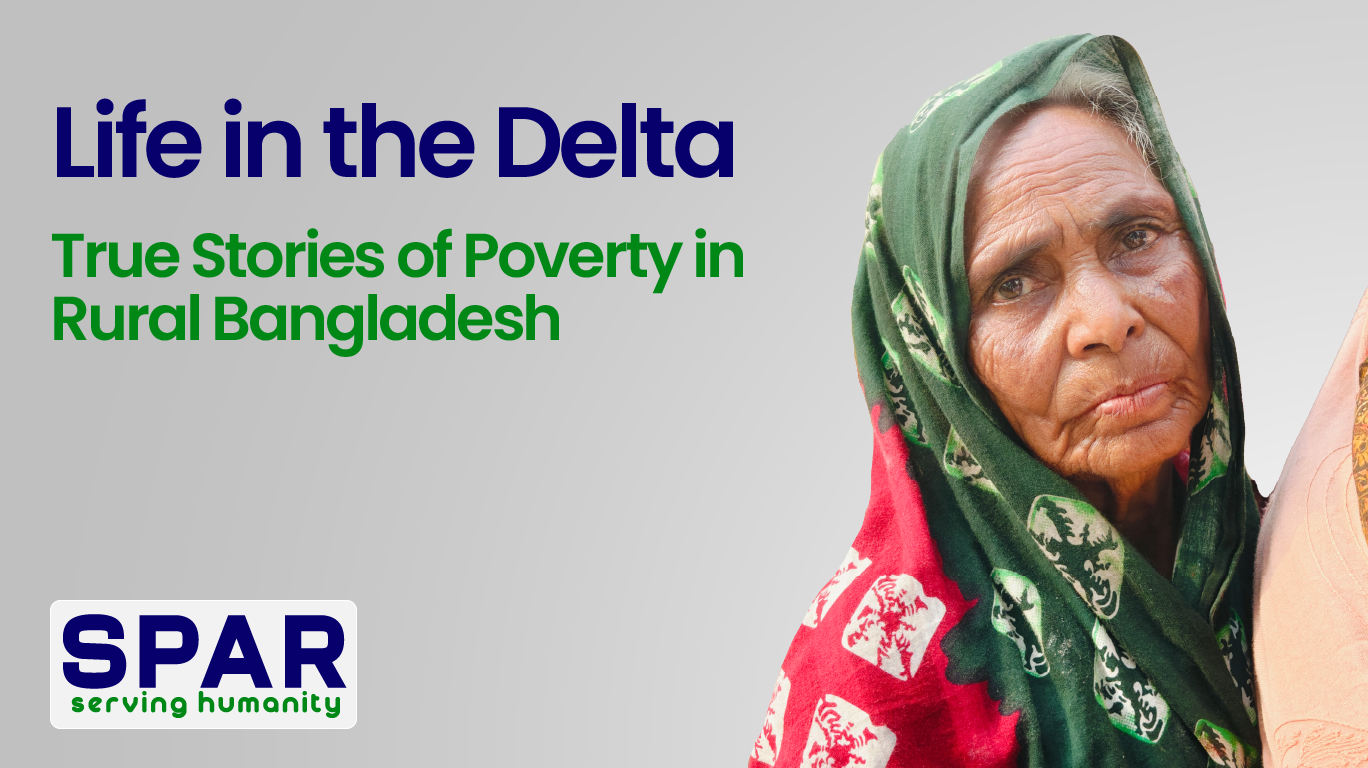
Life in the Delta: True Stories of Poverty in Rural Bangladesh
Bangladesh is a land of green fields and wide, winding rivers. It looks like a paradise from far away. However, the reality on the ground is much harder for millions of people. These stories of poverty in rural Bangladesh show the daily struggle for survival. In quiet villages, families wake up with empty plates and heavy hearts. They fight against floods, rising prices, and a lack of jobs.
At SPAR Project, we meet these families every day. We see their pain, but we also see their strength. We share these stories to build a bridge of empathy. When we understand the struggle, we can provide better help. Let’s look at the real faces of those living on the edge of the delta.
1. The River That Steals Everything
For many villagers, the river is both a friend and a thief. Abul is a farmer in the northern district of Kurigram. He once owned a small patch of land and a sturdy house. Then, the Great Brahmaputra River began to grow. During the last monsoon, the water rose fast. It ate his crops. Then, it swallowed his home.
River erosion is one of the most common stories of poverty in rural Bangladesh. When the land vanishes, the family loses their only way to make money. Abul now lives in a tiny shack made of bamboo and plastic. He has no land left to farm. He works as a day laborer when he can find a job. Some days, he earns nothing. His children often go to bed hungry. The river took his past, and now it threatens his children’s future.
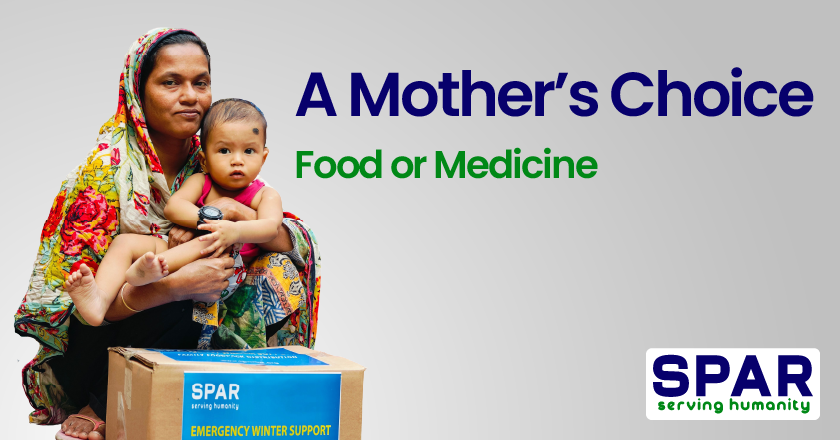
2. A Mother’s Choice: Food or Medicine
In a small village near Sylhet, we met a woman named Fatema. She is a widow with three young kids. Her husband died two years ago from a simple fever. He could not afford a doctor. Now, Fatema carries the whole burden alone. She sews quilts for neighbors to earn a few taka.
One morning, her youngest son woke up with a deep cough. Fatema looked at her small jar of coins. She had enough for a small bag of rice or a bottle of medicine. She could not buy both. This is the “debt of poverty” that many mothers face. She chose the rice so her children would not cry from hunger. She sat up all night, holding her sick son and praying for the sun to rise. Her story shows how a lack of healthcare keeps families trapped in misery.
3. The Silent Season of Hunger
In northern Bangladesh, there is a time called “Monga.” This is the season before the main rice harvest. During these months, there is no work in the fields. Without work, there is no money. There would be no food without money. It is a quiet, desperate time for thousands of families.
We spoke to a group of men sitting under a banyan tree. Their eyes were sunken, and their ribs showed through their shirts. They eat only one meal a day—usually just plain rice with a bit of salt. They cannot afford fish or vegetables. This seasonal hunger stunts the growth of young children. It makes them weak and prone to illness. The “Monga” is a recurring nightmare that haunts the rural poor every single year.
4. When Inflation Hits the Village
The global rise in prices hits the poor the hardest. In the markets of rural Bangladesh, the cost of oil, salt, and eggs has doubled. For a family earning 300 taka a day, this is a disaster. We visited a small tea stall owner named Karim. He told us that he no longer buys milk for his children.
“I sell tea to others, but my kids drink plain water,” Karim said with a sigh. High inflation turns basic needs into luxuries. Families stop buying soap. They stop buying notebooks for school. They focus only on the next meal. These stories of poverty in rural Bangladesh are becoming more common as the cost of living climbs. Poverty is not just about having no money; it is about watching your hard work buy less and less every day.
5. The Girl Who Left School to Work
Education is the best way out of poverty. However, for many families, a child in school is a “cost” they cannot pay. Twelve-year-old Sumi loved her math classes. She dreamed of becoming a teacher. But when her father hurt his back and could not work, Sumi’s life changed.
She had to drop out of school. Now, she spends her days picking tea leaves or helping in the fields. She earns a tiny wage to help her mother buy lentils. Sumi’s dream is fading away in the dust of the village roads. When a child leaves school, the cycle of poverty continues for another generation. We lose a teacher, a doctor, or a leader because of a few dollars a month.
6. Living with Salt: The Coastal Struggle
In the south, the problem is not too much water but the wrong kind of water. Sea levels are rising. Saltwater is flowing into the rice fields. This salt kills the crops. Farmers who once grew food for their families now see their land turning white and dry.
Liton is a farmer in Satkhira. He tried to grow rice three times last year. Each time, the salt killed the young plants. Now, he tries to farm shrimp, but it requires expensive tools he does not own. He is deep in debt to a local moneylender. The salt in the soil has stolen his livelihood. He worries that his village will soon be underwater forever. He is a “climate refugee” waiting for the end.
7. The High Price of a Rainy Day
In the village, there is no insurance. There are no savings accounts. A single “rainy day” can ruin a family for years. If a cow dies, the family loses their milk and their plow. If a roof collapses, they have no place to stay.
We met a family who lost their only cow to a lightning strike. The father had to take a loan from a “loan shark” to buy a new one. The interest rate is so high that he can never pay it back. He works 14 hours a day just to pay the interest. He is a slave to a debt he did not choose. This hidden side of poverty keeps families in chains even when they work as diligently as they can.
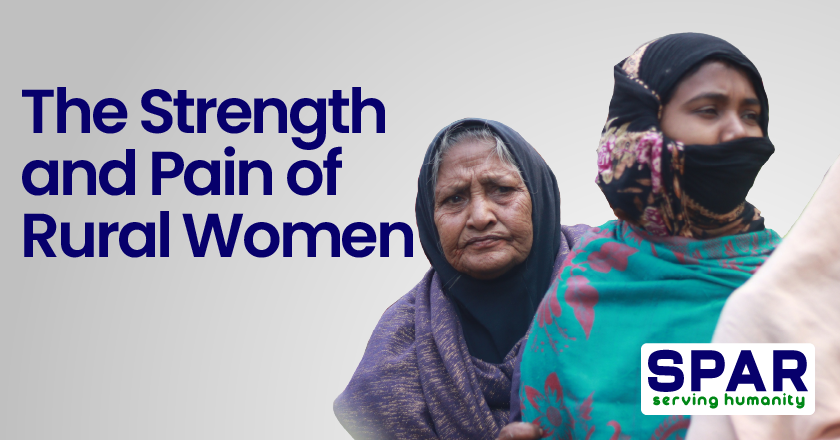
8. The Strength and Pain of Rural Women
Women are often the pillars of the rural home. They manage the cooking, the cleaning, and the kids with almost nothing. We saw a woman named Nasreen cooking over a small fire. She was using dried leaves because she could not afford wood.
She told us how she saves every grain of rice. “If I save a handful today, my kids can eat tomorrow,” she explained. Women in rural areas face the most pressure. Women often eat last and consume the least amount of food. They suffer from anemia and exhaustion. Nevertheless, they are the ones who dream of a better life for their daughters. Their resilience is wonderful, but they should not have to be this strong just to survive.
9. Breaking the Cycle with Sustainable Aid
Giving a bag of rice helps for a week. However, the stories of poverty in rural Bangladesh need a permanent end. This is why “sustainable aid” is so important. Instead of just food, we can offer a family a goat or a cow. The animal provides milk to drink and babies to sell.
We can build deep-water wells that provide clean water for decades. We can provide “climate-resilient” seeds that grow in salty soil. When we give a person the tools to work, we give them back their dignity. They stop being “beggars” and start being “providers.” This is the core mission of the SPAR Project. We want to turn stories of struggle into stories of success.
10. Your Zakat: A Lifeline for the Forgotten
For a Muslim, Zakat is a duty. For a poor family in Bangladesh, it is a miracle. Your Zakat can pay off the debt of a farmer like Liton. The donation can be used to buy medicine for Fatema’s son. It can put Sumi back in her school uniform.
At SPAR Project, we handle your Zakat with outstanding care. We find the families who are truly suffering in silence. We don’t just give them a handout; we give them a future. We use your donations to build houses for widows and schools for orphans. Your kindness is the light that pierces the darkness of rural poverty. You are empowered to change the ending of these stories.
Final Thought
The stories of poverty in rural Bangladesh are heart-wrenching, but they are not the end. Every person we met sparkled with hope. They want to work. They want to learn. They want their children to have a better life than they had. Poverty is a heavy weight, but together, we can lift it. Your support is not just money; it is a message to these families that they are not alone. Let’s work together to make the green fields of Bangladesh a place of plenty for everyone.
Why is poverty so high in rural Bangladesh?
Poverty is high due to frequent natural disasters like floods and cyclones. Lack of education, poor healthcare, and rising food prices also keep families trapped in a cycle of struggle.
How does climate change affect these villages?
Climate change causes river erosion in the north and saltwater flooding in the south. This phenomenon destroys farmland and homes, forcing people to become refugees in their own country.
Can a small donation really make a difference?
Yes! In rural areas, a few dollars can buy a week’s worth of food or a child’s school supplies for a month. Small gifts add up to create significant changes for a family.
What is the “Monga” season?
Monga is a seasonal period of poverty and hunger in northern Bangladesh. it happens between the planting and harvesting of rice when there is no work available for laborers.
How does SPAR Project choose which families to help?
We conduct field research to identify the most vulnerable people. We focus on widows, orphans, the elderly, and those who have lost their homes to natural disasters.
Is my Zakat donation tax-deductible?
In many countries, donations to registered charities like SPAR Project are tax-deductible. Check your local laws to see how your gift can also help you during tax season.
How can I help besides giving money?
You can help by sharing these stories on social media. Raising awareness helps more people understand the crisis. You can also volunteer your time or skills to help us grow our mission.


 Secure
donation
Secure
donation